Did you know the UK government is once again reviewing the state pension age? Every six years, an official review takes place to determine whether the current age, now 66, still reflects modern life expectancy, workforce trends, and economic realities. With the latest state pension age review UK set to conclude by 2029, there’s growing public interest, and concern, about what changes may lie ahead.
Work and Pensions Secretary Liz Kendall recently announced not just the review, but also the revival of the Pension Commission to examine why future pensioners could be financially worse off than today’s retirees.
With nearly half of working-age adults saving nothing for retirement, and many young people struggling with housing costs and wages, this review carries serious weight. What could it mean for you, and how should you prepare?
Why Is The UK Government Reviewing The State Pension Age?
The UK government is conducting a formal review of the state pension age, currently set at 66. Under legislation, a review must be carried out every six years to examine whether the pension age reflects current life expectancy, demographic shifts, and economic pressures.
The last review concluded in 2023, setting the timeline for the next review to be completed by 2029. This review will assess whether the current pension system is fair, sustainable, and adequate for future retirees, especially as the population ages and financial pressures mount.
Key factors considered in the review include:
- The rise in life expectancy over recent decades
- The affordability of the state pension system for the government
- Workforce participation trends and the retirement landscape
What Does Liz Kendall’s Announcement Mean For Pensioners?
Work and Pensions Secretary Liz Kendall has highlighted serious concerns around the future of pensions. She has revived the Pension Commission, which was originally introduced under Sir Tony Blair’s government in 2002, to explore why future pensioners are likely to be financially worse off compared to today’s retirees.
Her announcement addressed several critical issues:
- Almost 45% of working-age adults are not contributing to any pension savings
- Women approaching retirement have, on average, only half the private pension wealth of men
- Over three million self-employed individuals are not saving anything for retirement
Despite these worrying statistics, Kendall has reassured the public that the pensions triple lock, guaranteeing that the state pension rises annually by the highest of wage growth, inflation, or 2.5%, will remain in place and is not part of the review.
How Could The State Pension Age Review Affect Retirement Plans?
The state pension age review UK is particularly important for those planning to retire after 2050. Experts have already warned that future pensioners could face an annual income reduction of around £800 compared to current retirees if changes are not implemented.
Potential impacts on retirement plans could include:
- A gradual increase in the state pension age to reflect longer life expectancy
- Greater reliance on private pension savings to supplement state pensions
- Reforms in workplace and personal pension schemes to encourage earlier and higher saving levels
While the government has not made final decisions, the Pension Commission will explore long-term solutions to address gaps and inequalities in the pension system.
What Challenges Are Driving The Pension Review?
Multiple economic and social challenges are pushing the government to act. First, the cost of living crisis has led many people to prioritise immediate needs such as food and housing over long-term savings.
As Liz Kendall noted, many workers today are more focused on putting food on the table and keeping a roof over their heads than thinking about retirement.
Second, the gender pension gap is a serious issue:
- Women in their late 50s typically have just over £100 per week in private pension income, compared to £200 for men
- This gap reflects historical disparities in pay, career breaks for childcare, and part-time work
Third, the decline in pension saving among the self-employed is another major concern. Only one in five self-employed individuals is saving into a pension today, compared to about half in the late 1990s.
These challenges pose significant risks for future pensioner poverty if left unaddressed.
What Policy Changes Are Being Considered In The Review?
Liz Kendall has made it clear that certain key elements, such as the pensions triple lock and employer or employee contribution rates, will remain unchanged during the current Parliament.
However, several policy areas are under discussion:
- Lowering the age and earnings threshold for auto-enrolment into workplace pensions to bring more young and lower-income workers into pension saving
- Exploring new incentives or schemes to boost pension participation among the self-employed
- Reviewing how private and state pensions can work together to deliver better retirement outcomes
These proposals aim to address both the adequacy of retirement income and the fairness between different groups in society.
How Will Young People Be Affected By The Pension Review?
Young adults today are under mounting financial pressure. Rising housing costs, stagnant wages, and high rents make it difficult for them to save for retirement.
Liz Kendall specifically pointed out that many young people “haven’t got a hope” of buying a home and are burdened by rent, leaving little room for long-term saving. Without action, this generation faces a higher risk of pensioner poverty in the decades to come.
To address this, the Pension Commission is considering:
- Lowering auto-enrolment thresholds to capture more young workers
- Introducing flexible saving schemes tailored to gig workers and freelancers
- Enhancing public awareness of the importance of starting to save early
What Are Experts And Politicians Saying About Pension Reform?
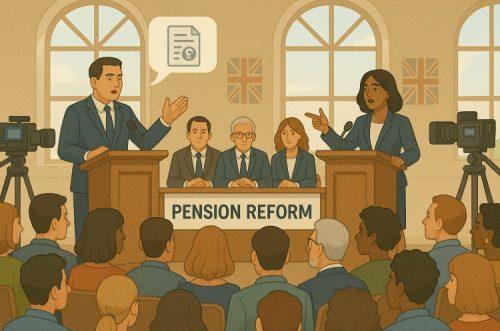
The state pension age review UK has sparked debate across political and expert circles. Nigel Farage, leader of Reform UK, has openly stated his belief that the UK’s retirement age will inevitably need to rise to keep pace with increasing life expectancy.
Experts caution, however, that simply raising the pension age could:
- Disproportionately harm manual and low-paid workers, who may not be able to continue working into their late sixties or beyond
- Exacerbate inequality between those with generous private pensions and those reliant solely on the state pension
- Undermine public trust in the pension system if reforms are not communicated clearly and fairly
To help compare key aspects of the current system and potential reforms, here is an overview table.
| Aspect | Current System | Possible Reforms Under Review |
| State Pension Age | 66 years | Gradual increases after 2029 |
| Auto-Enrolment Threshold | Age 22+, £10,000+ salary | Lower age and earnings thresholds |
| Self-Employed Savings | Voluntary, low participation rates | Incentives or new saving schemes |
| Triple Lock Protection | Guaranteed annual increase | No change currently planned |
| Contribution Rates | Set by law, no change this Parliament | Review possible in future Parliaments |
What Should You Do To Prepare For Possible Pension Changes?
While the government’s review is underway, individuals can take proactive steps to strengthen their retirement prospects.
Some recommended actions include:
- Reviewing existing pension plans, both private and workplace schemes
- Increasing pension contributions where affordable, especially if you are self-employed or under 40
- Seeking advice from a financial adviser to assess your long-term savings needs
- Keeping informed about policy updates to understand how upcoming changes might affect your situation
By taking action now, you can help safeguard your financial security in retirement, regardless of how the pension system evolves.
Conclusion
The state pension age review UK is more than just a routine government process — it’s a crucial examination of how we, as a society, support people in later life.
With pressures from rising life expectancy, gender and income inequalities, and declining pension savings among the self-employed, the outcome of this review could reshape retirement for millions.
While Liz Kendall has assured the public that the pensions triple lock remains secure, discussions around auto-enrolment thresholds, incentives for younger and self-employed workers, and the possibility of raising the pension age will continue to spark debate.
For individuals, this is a time to stay informed, assess personal pension contributions, and consider long-term planning. Although policy changes may take years to materialise, preparing now can help secure a more stable and comfortable retirement, no matter what decisions emerge.
FAQs
What is the current state pension age in the UK?
The current state pension age is 66 for both men and women. It’s reviewed every six years, with the next review completing in 2029.
Will the state pension age increase after this review?
While no decision has been made, experts predict a gradual rise in the pension age to reflect increasing life expectancy.
How does the pension triple lock work?
The triple lock ensures the state pension increases annually by the highest of inflation, wage growth, or 2.5%.
Why are young people struggling to save for retirement?
High living costs, rising rents, and stagnant wages make it difficult for young people to save, contributing to fears of future pensioner poverty.
What is auto-enrolment and how might it change?
Auto-enrolment automatically enrolls eligible workers into workplace pensions. The review may lower the age and salary thresholds to expand coverage.
How can the self-employed improve their pension savings?
The government may explore new schemes to encourage or support pension saving among the self-employed, who currently have low participation rates.
Where can you get help with pension planning?
You can consult a financial adviser, use government pension calculators, or speak to your workplace pension provider for tailored advice.
Sources