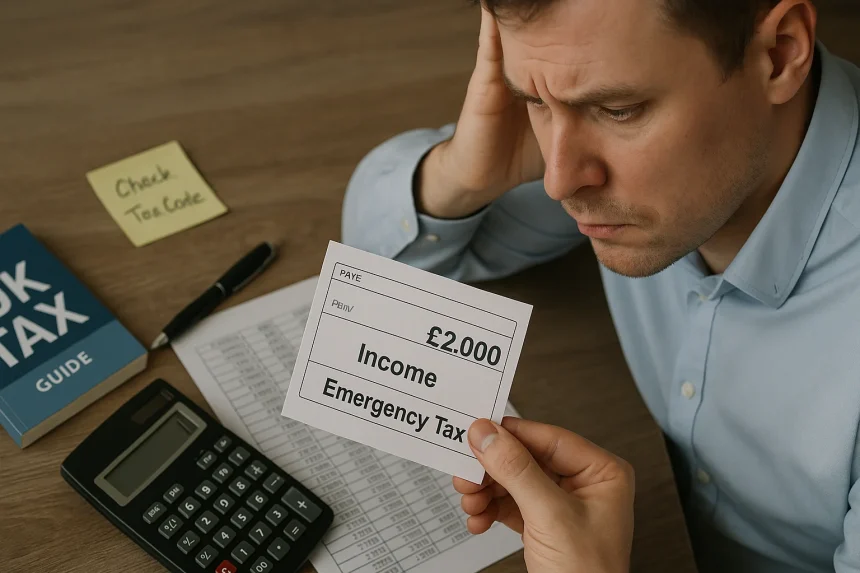
Have you just started a new job and noticed your payslip shows a surprising deduction from your £2,000 salary? If so, you might be wondering why you’ve been taxed more than expected.
This is often due to something called emergency tax, which is a temporary tax code applied when HMRC doesn’t have your complete employment information. It can result in more tax being taken until your correct tax code is assigned.
In this guide, you’ll learn how emergency tax works in the UK, why it’s applied, and most importantly, how much emergency tax you might pay on a £2,000 wage.
Whether you’ve changed jobs, started working mid-year, or didn’t hand in a P45, we’ll walk you through what this means for your income. Plus, we’ll show you how to correct your tax code and claim back any overpaid tax quickly and efficiently.
What Is Emergency Tax and Why Does It Exist in the UK?
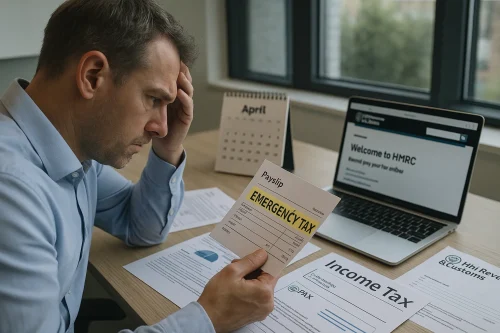
Emergency tax in the UK is a temporary taxation measure used when your employer doesn’t have all the necessary details to apply the correct tax code. Instead of halting your pay or delaying it, HMRC issues a default code which usually results in more tax being deducted than you actually owe.
The purpose is to ensure you’re taxed fairly in the long run, but it can feel like a financial blow in the short term. There are several common reasons why you may be put on emergency tax. You might not have provided your P45 from a previous employer.
You may have started a job part-way through the tax year, or your employment record hasn’t yet been updated by HMRC. Additionally, if you’ve recently come back to work after a break, your new employer might not have enough details to assign your correct code.
Until your employer receives the correct coding notice from HMRC, emergency tax is used to prevent under-taxation, even if it results in temporary overpayment.
How Do Emergency Tax Codes Work?
Emergency tax codes are designed to calculate your tax on a non-cumulative basis. This means each payslip is treated in isolation, without considering your earnings or tax-free allowance from previous periods. When this happens, you may notice codes such as 1257L W1, 1257L M1, or 1257L X on your payslip.
These emergency codes function as follows:
- 1257L W1: Weekly pay, treated as if each week is your first
- 1257L M1: Monthly pay, treated as if each month is your first
- 1257L X: Pay frequency unknown or irregular, non-cumulative approach
Under these codes, you do not receive the full annual personal tax-free allowance (£12,570) spread across your income. Instead, HMRC only applies a portion of the allowance based on your current pay period, which often leads to higher tax deductions.
This setup ensures HMRC collects enough tax while awaiting your full employment information. Once your employer receives an updated tax code from HMRC, your deductions will reflect your correct cumulative allowance and tax will be adjusted automatically.
How Much Emergency Tax Will I Pay on £2000?
If you’re on an emergency tax code and receive £2,000 in wages, the amount of tax deducted depends on the tax band HMRC applies. Most people under emergency codes are taxed at the basic rate of 20 percent.
This means you could expect a deduction of around £400, leaving you with £1,600 take-home pay. However, if your income places you in a higher tax bracket, the deduction could be more significant.
Here’s how different rates could impact your £2,000:
- 20% (Basic rate): £400 tax, £1,600 net pay
- 40% (Higher rate): £800 tax, £1,200 net pay
- 45% (Additional rate): £900 tax, £1,100 net pay
These figures assume your personal allowance is not being applied or only partially considered due to the emergency tax code. Emergency tax is not always permanent, so these deductions may not reflect your final tax position for the year.
Emergency Tax Deduction Table for £2,000 Earnings

To provide a clearer view of how much emergency tax you might pay on a £2,000 wage, below is a simplified table. This breakdown assumes you’re under various tax rate scenarios and explains what your estimated take-home pay could look like.
| Scenario | Emergency Tax Rate Applied | Approx. Tax Deducted | Estimated Take-Home |
| Basic rate (most common) | 20% | £400 | £1,600 |
| Higher rate (for high earners) | 40% | £800 | £1,200 |
| Additional rate (top earners) | 45% | £900 | £1,100 |
These values help you understand the potential range of tax deductions under emergency codes. While most people will fall under the basic 20 percent rate, those with significant income or dual employment may temporarily fall into higher brackets. Once corrected, any overpaid tax is typically refunded.
Does Previous Income or Employment Impact How Much Emergency Tax You Pay?
Yes, your prior income and job history significantly influence the amount of emergency tax deducted. HMRC may assume you’ve already used a portion, or all, of your personal allowance if you’ve worked earlier in the same tax year.
Factors that can affect how much emergency tax you pay include:
- Having multiple jobs in a tax year
- Overlapping employment periods
- Part-year earnings from a previous employer
- Not providing a P45 to your new employer
- Breaks in employment or self-employment
When these situations occur, the emergency tax system doesn’t have a full view of your financial activity. As a result, the tax system may overcompensate to prevent underpayment, leading to higher deductions on your £2,000 payment.
This is another reason why updating HMRC with accurate records is essential. Once your history is known, adjustments are made and any extra tax you’ve paid can be recovered automatically or via claim.
How to Stop Emergency Tax and Fix Your Tax Code?
Stopping emergency tax requires updating your employment details promptly and ensuring your employer has all necessary documentation. The most straightforward way to resolve the issue is by submitting your P45 from your previous employer. This document contains your prior earnings and tax paid, helping your new employer assign the right code.
If you don’t have a P45, you can complete the HMRC Starter Checklist, which provides similar information. Make sure to review your payslip regularly for any codes ending in W1, M1, or X as they indicate emergency tax.
Another crucial step is setting up and checking your HMRC Personal Tax Account online. This allows you to view your current tax code and update details directly.
Employers also play a role by submitting accurate payroll information to HMRC. Once your correct tax code is processed, the emergency code is replaced and your deductions are corrected.
Can You Claim a Refund on Emergency Tax?

Yes, if you’ve overpaid due to emergency tax, you are eligible to claim a refund. In many cases, HMRC automatically issues refunds once your correct tax code is in place. However, you should monitor your payslips to ensure the adjustments are reflected.
You may be entitled to a refund if:
- You were on emergency tax and your code has since been corrected
- Your income was lower than what HMRC initially assumed
- You started or left work mid-year and paid tax disproportionately
Refunds typically come through future PAYE adjustments, where your employer reduces your tax on upcoming payslips. If your code isn’t corrected before the end of the tax year, HMRC may issue a direct refund after the year closes.
Always keep an eye on your tax status. If you think you’ve overpaid and haven’t been refunded, you can request one through your HMRC Personal Tax Account or by contacting them directly.
Is There a Fixed Emergency Tax Rate?
Many people mistakenly believe that emergency tax is applied at a flat 20 percent rate, but that’s not entirely accurate. Emergency tax is not a separate tax rate, but rather a temporary application of existing UK income tax bands without full consideration of your personal allowance.
This means your £2,000 could be taxed at different rates depending on HMRC’s assumptions about your income. For most individuals, the basic rate of 20 percent will apply under emergency coding.
However, if the system calculates that you’ve already used your personal allowance or are earning more, it may apply higher rates such as 40 percent or 45 percent.
The key thing to understand is that emergency tax doesn’t introduce new rates, it simply alters how existing ones are applied due to missing employment information. Once this data is corrected, the appropriate tax code is reinstated and any overpayment can be refunded to you.
Conclusion
Emergency tax can be frustrating, especially when you see a larger-than-expected deduction from your £2,000 income. However, it’s important to remember that this tax is temporary and usually the result of missing or delayed information provided to HMRC. Once your employer receives the correct details, the proper tax code is applied, and any overpaid tax is refunded.
Understanding how emergency tax works empowers you to act quickly. From checking your tax code and submitting your P45 to using HMRC’s online tools, you have several ways to ensure you’re not overpaying longer than necessary.
If you find yourself on an emergency code, take the necessary steps to correct it and rest assured that your money isn’t lost, it’s just waiting to come back to you.
FAQs
Can I stop emergency tax before my next payday?
Yes, if your employer receives your P45 or HMRC updates your code quickly, the next payslip may reflect the corrected amount.
How long does HMRC take to update my tax code?
HMRC usually updates your tax code within a few days to a couple of weeks after receiving the necessary information.
Will emergency tax be refunded automatically?
Yes, overpaid emergency tax is typically refunded automatically through PAYE adjustments or at the end of the tax year.
Do I need to contact HMRC for a refund?
Not always. If your code has been corrected mid-year, your employer will adjust future payslips. If not, you can contact HMRC to claim.
Why is my take-home pay less than expected?
Emergency tax often reduces your take-home pay temporarily until your tax code is corrected.
Can I get emergency taxed on a second job?
Yes, if HMRC hasn’t been informed about your multiple jobs, your second job may be placed on an emergency or BR code.
Is there a calculator to check my emergency tax?
Yes, HMRC provides an online emergency tax calculator to estimate how much tax you may owe under temporary coding.