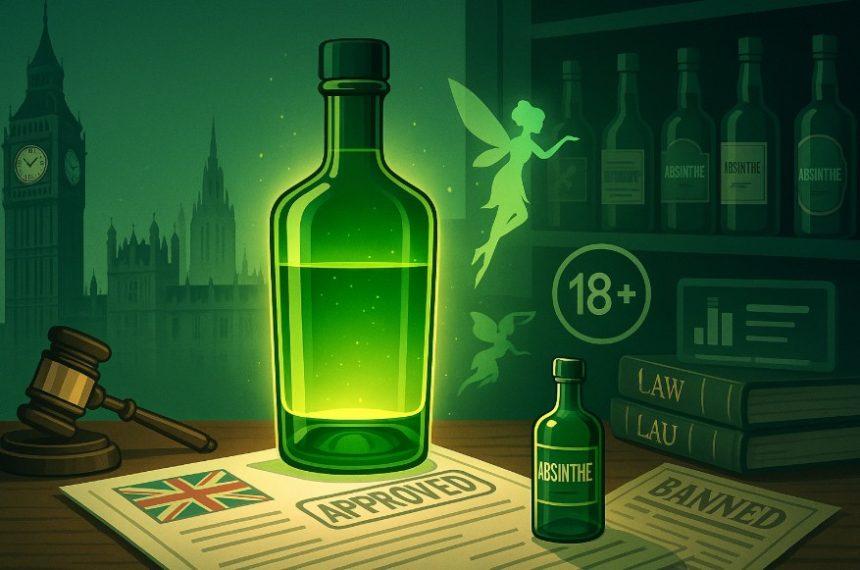
Have you ever wondered if absinthe is legal in the UK? Known for its vibrant green hue and notorious reputation, absinthe has long been shrouded in mystery, myths, and a misunderstood history.
Once blamed for hallucinations and madness, it has now become a sought-after drink for adventurous spirit lovers. With its association to famous writers and artists, absinthe has always carried an air of mystique, often sparking curiosity about its legal status and safety.
As absinthe makes a quiet but notable return to bars and shops, many in the UK are asking questions about its legality, strength, and whether the tales of “green fairy” madness hold any truth.
This guide is designed to give you clarity. From its origins and cultural significance to its availability and regulations in Britain, we cover everything you need to know about absinthe in the UK.
What Is Absinthe and Why Is It So Controversial?
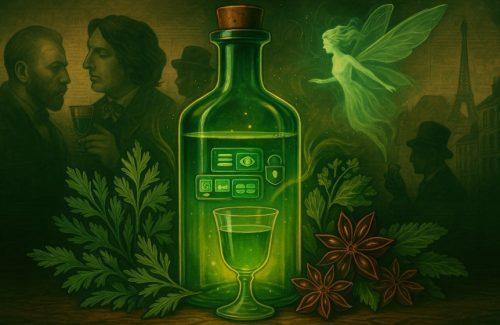
Absinthe is a highly alcoholic, herbal spirit typically green in colour and traditionally made from a blend of botanicals.
The most prominent ingredients in its recipe are:
- Wormwood (Artemisia absinthium): The plant responsible for its name and the source of the chemical compound thujone, often wrongly blamed for hallucinations.
- Anise: Provides a sweet, licorice-like flavour.
- Fennel: Adds an aromatic bitterness that balances the spirit.
The alcohol content of absinthe usually ranges from 55 percent to 75 percent ABV, making it one of the strongest spirits available.
The controversy around absinthe began in the late 19th and early 20th centuries. Nicknamed “la fée verte” or “the green fairy,” absinthe became a cultural icon in bohemian Paris.
It was associated with artistic freedom, rebellion, and eccentric creativity, gaining fame among figures like Vincent van Gogh and Oscar Wilde.
However, rumours began to circulate that absinthe caused madness, hallucinations, and criminal behaviour. Much of this fear was fueled by the presence of thujone and moral panic. These controversies made absinthe both legendary and feared, contributing to its mythos today.
Was Absinthe Ever Banned in the UK?
Despite the wild stories and bans across Europe and the United States, the UK has never officially banned absinthe. While other nations outlawed it due to concerns over thujone and supposed psychological effects, British authorities did not follow suit.
Absinthe was never a major part of British drinking culture. It remained relatively niche, often enjoyed only by a select few in upper society or those with a taste for the exotic.
This lack of widespread consumption likely spared it from the legislative spotlight. Instead of banning the drink, its availability simply dwindled due to global production cuts during World War I.
In essence, absinthe became obscure rather than illegal in Britain. Today, it is perfectly legal to buy, sell, and drink absinthe in the UK, as long as it complies with standard alcohol and safety regulations. There is no restriction on thujone unless it exceeds specific limits under EU law.
Why Did Other Countries Ban Absinthe?
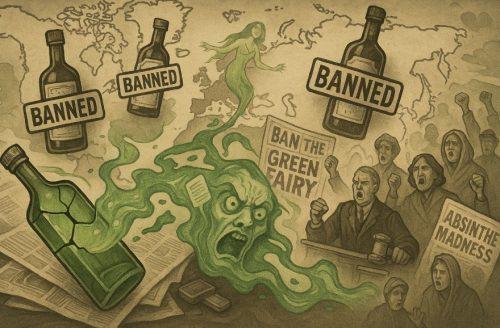
The ban on absinthe in many countries stemmed from social fears, exaggerated science, and sensational media. During the early 1900s, growing concerns about its alleged effects, such as psychosis, aggression, and hallucinations, led to bans in Switzerland, France, the United States, and others.
The key reasons were:
- Moral panic: Absinthe became a scapegoat during temperance movements.
- Thujone fear: This compound from wormwood was incorrectly blamed for madness.
- Cultural concerns: It was associated with anti-establishment behaviour and artistic rebellion.
Here’s how some key countries reacted:
| Country | Ban Year | Reason for Ban |
| Switzerland | 1908 | Murder case blamed on “absinthe madness” |
| France | 1915 | Pressure from wine industry and public health concerns |
| United States | 1912 | Belief that absinthe caused hallucinations |
| Belgium | 1906 | Fears of thujone toxicity and addiction |
Many of these bans were not based on solid science but rather on social unrest and speculation. Most of these countries later reversed or relaxed their bans.
Is It Legal to Buy or Import Absinthe in the UK Today?
Yes, absinthe is entirely legal to buy and import in the UK under current regulations. You can purchase absinthe from both physical shops and online retailers without violating any laws.
When buying absinthe in the UK, consider the following points:
- Ensure the bottle complies with EU and UK regulations regarding thujone content (must not exceed 35mg/kg).
- It must be labelled accurately as a spirit drink and list ingredients clearly.
- There are no special licences required for personal possession.
Many reputable vendors offer legal absinthe from France, Czech Republic, and Switzerland. You can even order it online and have it delivered to your door. As with any alcohol, buyers must be at least 18 years old.
Though not mainstream, absinthe is gaining popularity among collectors, mixologists, and those curious about its infamous past.
What Are the Rules Around Selling and Distributing Absinthe in the UK?
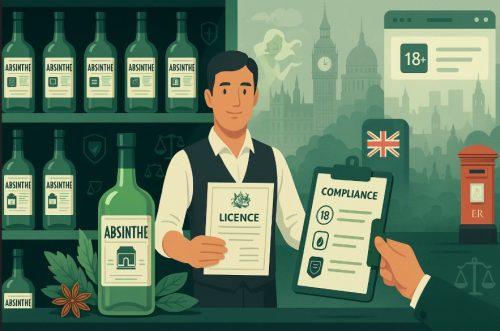
Selling absinthe in the UK is also legal, provided vendors comply with alcohol regulations that apply to all spirits.
Retailers and distributors must:
- Obtain the appropriate alcohol licensing under the Licensing Act 2003.
- Ensure the product contains safe levels of thujone as regulated by food safety laws.
- Accurately label absinthe with alcohol content, ingredients, and manufacturer details.
- Ensure the product does not make health or hallucinogenic claims, as these are misleading and illegal.
Online sales must also confirm that the buyer is over 18, and many websites use age verification pop-ups. Bars serving absinthe must adhere to standard service laws, but there are no unique restrictions on absinthe compared to other high-proof spirits.
In summary, absinthe is treated like any strong spirit in the UK. If it’s within legal composition and responsibly marketed, there are no legal barriers to its sale or distribution.
Does Absinthe Really Cause Hallucinations or Madness?
No, absinthe does not cause hallucinations or madness. The myth that it leads to wild visions or mental breakdowns has been thoroughly debunked by modern science.
Thujone, the compound once believed to have psychoactive effects, exists only in trace amounts in legal absinthe. Studies have shown that it would take an unrealistic amount of absinthe to ingest enough thujone to cause such effects.
Most of the drink’s reputation comes from its high alcohol content. At 55 to 75 percent ABV, overconsumption can certainly lead to intoxication, but not hallucinations.
The “madness” once linked to absinthe was likely caused by alcohol poisoning or contamination in poorly made products before proper regulations were in place.
Modern absinthe, when consumed responsibly, is no more dangerous than other strong spirits. The hallucinogenic myths are a part of its colourful history, not its scientific reality.
How Strong Is Absinthe Compared to Other Alcohol?
Absinthe is one of the strongest alcoholic drinks available, with an average ABV of 55 to 75 percent. This makes it significantly stronger than common spirits like vodka or rum.
Here is a table comparing absinthe to other popular liquors:
| Drink | Typical ABV (%) | Strength Compared to Absinthe |
| Absinthe | 55–75 | Very High |
| Vodka | 40 | Lower |
| Gin | 37.5–47 | Lower |
| Whiskey | 40–50 | Lower |
| Rum | 40–50 | Lower |
| Tequila | 35–55 | Lower |
Due to its potency, absinthe should never be consumed like a standard spirit. It is traditionally diluted with water before drinking, which lowers the ABV and brings out its unique flavour.
Understanding its strength is key to enjoying absinthe safely. Always consume it mindfully and avoid taking multiple shots undiluted.
How Do You Properly Drink Absinthe?
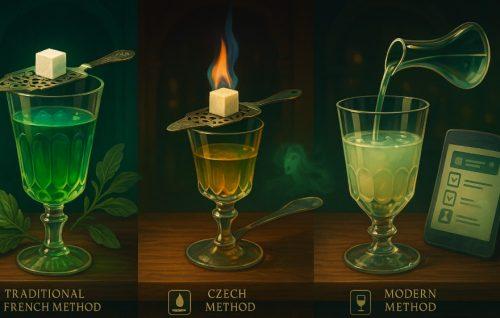
Absinthe is not meant to be consumed like other liquors. It has unique rituals that enhance both the taste and experience. Here are three popular methods:
Traditional Modern Method
- Mix 1 oz of absinthe with 5 oz of cold water
- Add a sugar cube if desired
- Stir and sip slowly
Traditional French Method
- Pour absinthe into a glass
- Place an absinthe spoon across the rim
- Rest a sugar cube on the spoon
- Slowly drip ice water over the sugar until it dissolves and the liquid turns cloudy
- Stir and enjoy
Traditional Czech Method
- Soak a sugar cube in absinthe
- Place it on an absinthe spoon and ignite it
- Let the sugar caramelise, then mix it with absinthe and cold water
- Stir well and drink
These preparation styles enhance the herbal flavours and make the high alcohol content more palatable.
Is Absinthe Safe to Drink in Moderation?
Yes, absinthe is safe to consume when drunk in moderation. Modern absinthe adheres to strict manufacturing and safety guidelines, ensuring that harmful levels of thujone are not present.
While it’s strong in alcohol content, it does not contain psychoactive properties. Any intoxicating effects are due to ethanol, the same component in all alcoholic beverages.
The key is responsible consumption. Just like with whiskey or vodka, overindulgence can lead to unpleasant side effects. Diluting absinthe with water is also crucial to enjoying it safely.
Today’s regulated absinthe is nothing like the unmonitored, poorly made versions that caused concern in the past.
Where Can You Try Absinthe in the UK?
Although absinthe remains a niche spirit, you can find it at select locations in the UK. London has a few dedicated bars and restaurants offering curated absinthe menus.
Popular places include:
- Bar Nightjar (Shoreditch, London): Known for classic cocktails, including absinthe-based ones
- Cahoots (Soho, London): Offers theatrical servings and green fairy experiences
- Online retailers: Beers of Europe, Master of Malt, and Absinthe Online
Additionally, you can buy bottles from online shops specialising in European imports. Many offer starter kits with absinthe spoons and instructions to recreate the full experience at home.
Always ensure the vendor complies with UK alcohol laws and offers products from reputable distillers.
What Should You Look for When Buying Absinthe in the UK?
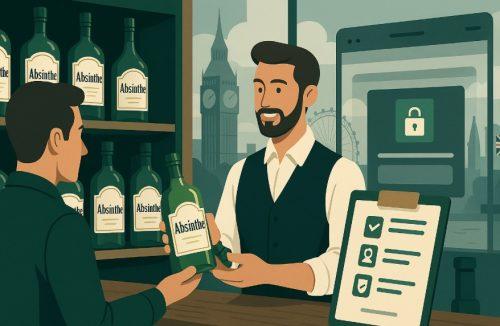
When buying absinthe, especially for the first time, it’s essential to choose high-quality products. Look for brands that are well-reviewed and follow traditional distillation methods. Real absinthe should list wormwood as an ingredient and avoid artificial colouring.
Avoid any product that claims to induce hallucinations or mimic illegal substances. These are often poorly made or designed for shock value rather than quality.
Check that the bottle provides detailed information about ingredients and alcohol content. Some premium absinthe brands to consider include Jade, Pernod, and La Clandestine.
Start with a smaller bottle to explore your taste preferences and follow the recommended drinking rituals for the best experience.
Conclusion
Absinthe is legal in the UK, and its return to the shelves has reignited public curiosity. Far from the dangerous drink it was once claimed to be, absinthe today is a regulated, culturally rich spirit enjoyed by those who appreciate its unique flavour and history. The myths of madness and hallucinations have been replaced by an understanding of responsible consumption and traditional enjoyment.
Whether you’re tasting it for the first time or exploring its legacy, absinthe invites a sense of mystery and ritual unlike any other drink. Just remember to respect its strength, learn the proper methods of preparation, and most importantly, drink responsibly.
FAQs
Can you legally drink absinthe at home in the UK?
Yes, absinthe is legal for home consumption in the UK. There are no restrictions on owning or drinking it.
Does UK absinthe contain thujone?
Yes, but in small regulated amounts that are well within safe consumption levels.
What brands of absinthe are legal in the UK?
Brands like La Fée, Pernod, and La Clandestine are legal and widely available in the UK.
Is absinthe stronger than vodka or whiskey?
Yes, absinthe typically has a higher alcohol content, often reaching 70 percent ABV.
Can absinthe be sold in UK bars and pubs?
Absolutely. As long as licensing laws are followed, absinthe can be sold in any licensed venue.
Why do people say absinthe causes hallucinations?
Old myths linked thujone to hallucinations, but science has since disproven these claims.
How do you know if your absinthe is real or fake?
Real absinthe will list wormwood as an ingredient and follow traditional preparation standards.