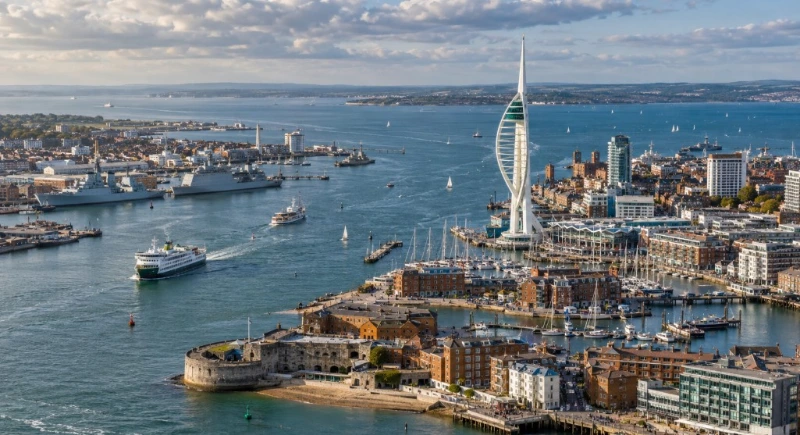
Portsmouth is in Hampshire, England. More precisely, it is a city and unitary authority within the ceremonial and historic county of Hampshire, in the South East England region.
The point that often causes confusion is local government. Although Portsmouth is geographically and ceremonially part of Hampshire, Portsmouth City Council operates independently from Hampshire County Council.
The city has been a unitary authority since 1997, meaning its own council provides the main local government services within Portsmouth.
So, for a straightforward answer to what county is Portsmouth in, the answer is Hampshire. For local government purposes, however, Portsmouth has its own separate unitary council.
Most of the city lies on Portsea Island, between Portsmouth Harbour and Langstone Harbour, with the Solent and the Isle of Wight immediately to the south. This coastal position has shaped Portsmouth’s naval, economic and cultural importance for centuries.
Where Exactly Is Portsmouth Located in the UK?
Most of the city occupies Portsea Island, which lies between Portsmouth Harbour to the west and Langstone Harbour to the east. Northern parts of the local authority area extend onto the mainland around Cosham, Drayton, Farlington and Paulsgrove.
Portsmouth’s wider geographic position can be summarised as:
| Geographic Level | Portsmouth’s Location |
| Sovereign State | United Kingdom |
| Country | England |
| Region | South East England |
| Ceremonial County | Hampshire |
| Historic County | Hampshire |
| Local Authority | Portsmouth City Council |
| Main Geographic Area | Portsea Island |
| Coast | Solent and English Channel area |
Portsmouth lies approximately 22 miles south-east of Southampton, around 50 miles west of Brighton and Hove and roughly 74 miles south-west of London.
Its coastal position has always been one of the city’s defining characteristics. Access to a naturally protected harbour helped Portsmouth develop into one of Britain’s most important naval centres.
What County Is Portsmouth In and Why Is It Significant?
Portsmouth is in Hampshire.
Hampshire is the ceremonial and historic county associated with Portsmouth, even though Hampshire County Council does not administer the city.
This distinction is important because English counties can refer to different things. A ceremonial county describes a wider geographical area used for purposes such as the lieutenancy, while council boundaries determine which local authority actually provides services.
In Portsmouth’s case:
- Hampshire is the ceremonial county
- Portsmouth City Council is the local authority
- Portsmouth is a unitary authority
- Hampshire County Council does not provide Portsmouth’s main council services
- South East England is the wider region
That means an address or geographic description such as Portsmouth, Hampshire, England remains entirely appropriate.
Why Hampshire Matters to Portsmouth?
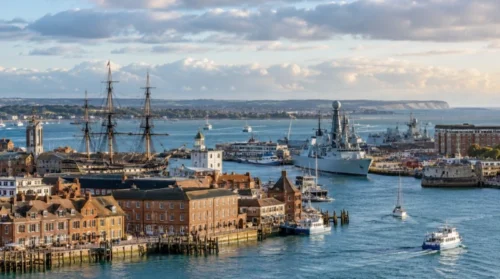
Portsmouth has deep historic, geographic and cultural links with Hampshire.
The city shares Hampshire’s southern coastline and forms part of the heavily populated South Hampshire area alongside places such as Southampton, Gosport, Fareham, Havant and Eastleigh.
Its economy, transport network, policing, emergency services and wider regional planning also connect Portsmouth closely with the surrounding county.
Hampshire therefore remains central to understanding where Portsmouth belongs even though the city has considerable administrative independence.
Is Portsmouth in Hampshire or South East England?
Portsmouth is in both Hampshire and South East England because the terms describe different geographic levels.
Hampshire is the county.
South East England is the wider region containing Hampshire.
England is the country.
The United Kingdom is the sovereign state.
So there is no contradiction between saying:
- Portsmouth is in Hampshire
- Portsmouth is in South East England
- Portsmouth is in England
- Portsmouth is in the United Kingdom
All four statements are correct.
What Type of County Is Hampshire for Portsmouth?
For Portsmouth, Hampshire is primarily relevant as a ceremonial and historic county.
Portsmouth is not governed by Hampshire County Council. Instead, Portsmouth City Council is a unitary authority with responsibility for the major local government functions within the city.
This makes Portsmouth similar to several other English cities that remain geographically associated with a traditional county while operating their own unitary councils.
The distinction can be summarised simply:
| Question | Answer |
| Is Portsmouth in Hampshire? | Yes |
| Is Hampshire its ceremonial county? | Yes |
| Is Portsmouth historically associated with Hampshire? | Yes |
| Does Hampshire County Council govern Portsmouth? | No |
| Does Portsmouth have its own council? | Yes |
| Is Portsmouth a unitary authority? | Yes |
Are There Other Places Called Portsmouth?
Yes. The name Portsmouth appears in several other countries, particularly places influenced by British settlement and maritime history. Portsmouth in Hampshire, however, is the original English city and the place normally meant when the name is used in a UK context.
There are also places named Portsmouth in the United States, including Portsmouth in New Hampshire, Virginia and Rhode Island. Adding Hampshire, England therefore makes the location completely clear when an international distinction is necessary.
Is Portsmouth a City, a County, or Both?
Portsmouth is a city and unitary authority, but it is not a separate ceremonial county. It received official city status on 21 April 1926.
Today, Portsmouth City Council operates as a unitary authority. That means the city does not have the two separate layers of county and district councils found in some parts of England.
In areas governed under a two-tier system, one council may handle services such as education and social care while another deals with waste collection, planning and local housing.
Portsmouth combines these principal local-government responsibilities within a single council.
That administrative independence can sometimes make Portsmouth appear to be a county in its own right. Geographically and ceremonially, however, it remains part of Hampshire.
Portsmouth’s Geographical and Administrative Identity
Portsmouth’s identity becomes much easier to understand when geography and local government are separated.
Geographically, Portsmouth belongs to Hampshire and South East England.
Administratively, it has its own council.
Physically, most of Portsmouth occupies Portsea Island.
Historically, it has developed around Portsmouth Harbour and the Royal Navy.
Together, those characteristics give the city an unusually distinctive position among English coastal cities.
Portsmouth: Geographical and Administrative Profile 2026
| Category | Portsmouth |
| Country | England |
| UK Region | South East England |
| Ceremonial County | Hampshire |
| Historic County | Hampshire |
| Settlement Type | City |
| Local Government Type | Unitary authority |
| Local Authority | Portsmouth City Council |
| City Status | Since 1926 |
| Main Island | Portsea Island |
| Area | About 40 sq km |
| 2021 Census Population | Around 208,100 |
| Electoral Wards | 14 |
| Parliamentary Constituencies | Portsmouth North and Portsmouth South |
| Postal Area | PO |
| Telephone Code | 023 |
| Main Harbour | Portsmouth Harbour |
| Nearby Waterway | The Solent |
The table demonstrates why different descriptions of Portsmouth sometimes appear in official records. Its county, council area, city and geographic setting are related but not identical concepts.
A Brief History of Portsmouth’s County and Governance
Portsmouth’s relationship with Hampshire stretches back many centuries.
The settlement developed on Portsea Island and received a royal charter from Richard I in 1194, establishing important market and trading rights.
Its strategic position led successive monarchs to strengthen Portsmouth as a naval base. Henry VII ordered construction of a dry dock in the late 15th century, while later rulers expanded the dockyard and surrounding defences.
By the height of British naval power, Portsmouth had become one of the country’s most important military ports.
Local-government arrangements evolved alongside the city’s growth.
Portsmouth expanded across Portsea Island during the 19th and early 20th centuries, incorporating surrounding communities as its population and dockyard workforce increased.
The city received formal city status in 1926.
A major administrative change came on 1 April 1997, when Portsmouth became a unitary authority and ceased to be administered by Hampshire County Council.
That did not remove Portsmouth from Hampshire geographically or ceremonially. It simply changed which council delivered local services.
What Makes Portsmouth Important to Hampshire?
Portsmouth is one of Hampshire’s most nationally recognisable urban centres.
Its importance comes largely from its combination of naval defence, maritime trade, tourism, higher education, retail and transport.
The city has been associated with the Royal Navy for centuries. Portsmouth Naval Base remains a significant defence site and home port for major Royal Navy vessels.
Portsmouth International Port also connects southern England with continental Europe and the Channel Islands.
Tourism adds another dimension to the local economy. Historic ships, museums, waterfront developments and Southsea seafront attract visitors throughout the year.
Landmarks including the Mary Rose, HMS Victory and Spinnaker Tower feature prominently among the best things to do in Portsmouth and reflect how strongly the city’s identity remains connected with the sea.
How Is Portsmouth Governed Today?
Portsmouth is governed by Portsmouth City Council, a unitary authority.
The council is divided into 14 electoral wards, with three councillors representing each ward, giving 42 councillors in total.
Its wards include areas such as:
- Baffins
- Central Southsea
- Charles Dickens
- Copnor
- Cosham
- Drayton and Farlington
- Eastney and Craneswater
- Fratton
- Hilsea
- Milton
- Nelson
- Paulsgrove
- St Jude
- St Thomas
For parliamentary representation, Portsmouth is divided between Portsmouth North and Portsmouth South. The key difference from surrounding Hampshire districts is that Portsmouth does not depend on Hampshire County Council for a second tier of major council services.
Portsmouth City Council directly manages responsibilities across areas such as planning, housing, highways, education, adult social care and waste services.
Will Portsmouth’s Local Government Structure Change?
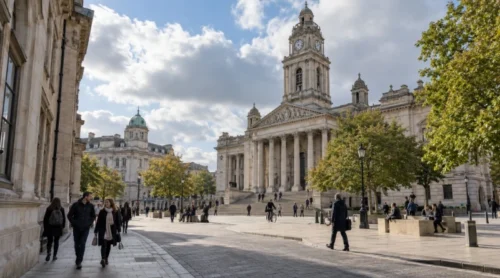
Local government reform became an important issue for Portsmouth during 2025 and 2026.
In March 2026, the government announced plans that would have reorganised councils across Hampshire, Portsmouth, Southampton and the Isle of Wight. Under the selected model, Portsmouth was expected to become part of a larger South East Hampshire unitary authority alongside neighbouring areas.
However, the situation changed in September 2026.
The government withdrew its earlier decision for Hampshire, Portsmouth, Southampton and the Isle of Wight and began reviewing the reorganisation programme.
As a result, the previous plan should not be treated as a confirmed future arrangement.
For readers checking Portsmouth’s status in October 2026, the practical position remains:
- Portsmouth City Council continues to operate
- Portsmouth remains a unitary authority
- Portsmouth remains in ceremonial Hampshire
- The previous reorganisation decision has been withdrawn
- Future structural changes remain subject to further government decisions
Most importantly, even a future change to council boundaries would not automatically mean Portsmouth had stopped being geographically or historically associated with Hampshire.
Portsmouth’s Wider Civic and Naval Role
Portsmouth has significance beyond ordinary local-government boundaries.
The city is closely connected with the wider Solent area through transport, defence, employment, education and maritime activity.
The Royal Navy remains central to Portsmouth’s national profile, while ferry and commercial-port operations give the city an international role.
Its relationship with Hampshire should therefore be viewed as more than a line on a county map. Portsmouth is one of the urban centres that helps define the identity and economy of the wider south Hampshire coast.
Top Things Portsmouth Is Known For
Portsmouth is best known for its naval heritage, waterfront attractions, island geography and major historic landmarks.
1. Portsmouth Historic Dockyard
Portsmouth Historic Dockyard is one of the city’s best-known attractions and reflects several centuries of British naval history.
The site brings together historic ships, museums and naval exhibits within an active maritime setting.
It is one of the strongest physical reminders of why Portsmouth became nationally important.
2. HMS Victory and the Mary Rose
Two vessels are particularly associated with Portsmouth’s maritime heritage.
HMS Victory, Admiral Lord Nelson’s flagship at the Battle of Trafalgar, is preserved at Portsmouth Historic Dockyard.
The Mary Rose, a Tudor warship from the reign of Henry VIII, is another major attraction. The vessel sank in the Solent in 1545 before being raised centuries later and conserved.
Together, they connect Portsmouth with several defining periods of British naval history.
3. Spinnaker Tower
The Spinnaker Tower has become one of modern Portsmouth’s most recognisable landmarks.
Rising above the Gunwharf waterfront, it provides extensive views across Portsmouth Harbour, the Solent, Portsea Island and the Isle of Wight.
Its sail-inspired form deliberately reflects Portsmouth’s maritime identity.
4. Southsea
Southsea occupies Portsmouth’s southern seafront and is one of the city’s best-known residential and visitor areas. It includes Southsea Common, the beach, Clarence Pier, South Parade Pier and Southsea Castle. Its open waterfront gives Portsmouth a different character from many heavily developed British port cities.
5. Gunwharf Quays
Gunwharf Quays is a major waterfront retail, leisure and dining area beside Portsmouth Harbour.
The development occupies land formerly associated with the HMS Vernon naval establishment and illustrates how former defence sites have been adapted for modern commercial use.
It also sits close to Portsmouth Harbour railway station, the Historic Dockyard and Spinnaker Tower.
6. Portsmouth Naval Base
HMNB Portsmouth is one of the city’s most important institutions. The naval base has operated in various forms for centuries and remains strongly connected with Britain’s surface fleet.
Portsmouth’s relationship with the Royal Navy influences employment, architecture, tourism, civic identity and even the city’s popular nickname, Pompey.
7. Fratton Park and Portsmouth FC
Football is another important part of Portsmouth’s identity. Portsmouth Football Club plays at Fratton Park and has a long-established supporter culture extending well beyond the city.
The club shares the nickname Pompey with Portsmouth itself, reinforcing the close connection between local sporting and civic identity.
Portsmouth Population in 2026: Latest Census Context
The 2021 Census recorded approximately 208,100 residents in Portsmouth. This represented an increase from the city’s 2011 census population of around 205,000.
Portsmouth is unusual because a large population is concentrated within a relatively small area. Most residents live on Portsea Island, making the city one of the most densely populated urban local-authority areas outside London.
When discussing Portsmouth’s population in 2026, it is important to distinguish between census counts and later estimates. The 2021 figure remains the latest full census measurement, while population estimates are published between censuses.
Portsmouth Population and Demographic Insights
| Year | Population |
| 1801 | 32,160 |
| 1851 | 72,096 |
| 1901 | 188,133 |
| 1951 | 233,545 |
| 1981 | 175,382 |
| 1991 | 177,142 |
| 2001 | 186,700 |
| 2011 | About 205,100 |
| 2021 | About 208,100 |
The figures show how dramatically Portsmouth expanded during the 19th and early 20th centuries as its naval and industrial economy grew.
Population subsequently declined during the post-war period as dockyard employment and traditional industries contracted.
Since the late 20th century, the overall trend has been towards renewed population growth.
Portsmouth’s universities and colleges also contribute to a relatively large younger adult population, while its naval heritage has historically attracted people from many parts of Britain and overseas.
Why Is Portsmouth Important in Hampshire’s Identity?
Portsmouth contributes to Hampshire’s identity in ways that extend beyond population size.
1. Economic Strength
Portsmouth has a diverse economy built around several major sectors. Defence remains particularly important because of Portsmouth Naval Base and associated industries.
Other significant activities include:
- Maritime services
- Ferry and port operations
- Engineering
- Higher education
- Retail
- Tourism
- Hospitality
- Professional services
Portsmouth International Port strengthens the city’s role as a gateway between Hampshire, the rest of Britain and continental Europe.
2. Naval, Cultural and Educational Influence
Few cities are as closely identified with British naval history as Portsmouth. The Historic Dockyard, HMS Victory, the Mary Rose and the city’s active naval base make Portsmouth nationally important for both defence and heritage tourism.
The University of Portsmouth adds another dimension by bringing students, research activity and skilled employment into the city.
Cultural venues, museums, theatres, festivals and sporting institutions further strengthen Portsmouth’s influence across the wider Hampshire area.
3. Urban Growth and Development
Modern Portsmouth combines historic neighbourhoods with major redevelopment. Gunwharf Quays is perhaps the most visible example, transforming former naval land into a waterfront commercial district.
Other parts of the city continue to evolve as Portsmouth balances housing needs, transport improvements, economic development and the constraints of a densely populated island setting.
The city’s limited land area makes urban planning especially important.
What Are the Nearest Towns and Villages to Portsmouth?
Portsmouth forms part of a closely connected urban area along the Hampshire coast, meaning several neighbouring settlements can be reached quickly.
1. Gosport
Gosport lies immediately across Portsmouth Harbour from the city.
Although the two places appear extremely close geographically, the harbour separates them. Ferry services provide a direct connection between central Portsmouth and Gosport.
Gosport is also in Hampshire and has strong historical links with naval and maritime activity.
2. Portchester
Portchester lies north-west of Portsmouth at the upper end of Portsmouth Harbour. It is particularly known for Portchester Castle, whose history stretches back to the Roman period. Its position between Portsmouth and Fareham makes it part of the wider urban network surrounding the harbour.
3. Havant
Havant lies north-east of Portsmouth. It is an important nearby town with road and rail connections into the city and provides access towards Hayling Island, Chichester and West Sussex.
4. Fareham
Fareham lies to the north-west of Portsmouth, between Portsmouth and Southampton. It is closely linked to Portsmouth through employment, transport and the wider South Hampshire urban economy.
5. Waterlooville
Waterlooville lies north of Portsmouth near Portsdown Hill.
The town has grown significantly as part of the wider south-east Hampshire commuter area, with road connections towards both Portsmouth and surrounding communities.
What Cities Are Close to Portsmouth?
Portsmouth’s location on the central south coast places it within reach of several important English cities.
1. Chichester
Chichester lies roughly 18 to 20 miles east of Portsmouth in West Sussex.
The cathedral city provides a useful geographic reference point because travelling east from Portsmouth eventually takes visitors out of Hampshire and into West Sussex.
2. Southampton
Southampton is approximately 22 miles north-west of Portsmouth. Both cities are in ceremonial Hampshire and South East England, and both have major maritime economies.
Their coastal roles are different, however. Southampton is strongly associated with cruise shipping and commercial trade, while Portsmouth has particularly deep connections with the Royal Navy and cross-Channel ferries.
3. Winchester
Winchester lies approximately 30 miles north-west of Portsmouth.
It is Hampshire’s traditional county town and one of England’s most historically important cathedral cities.
The presence of Winchester as Hampshire’s county town does not reduce Portsmouth’s importance. Instead, the two cities perform very different roles within the wider county.
4. Brighton and Hove
Brighton and Hove is around 50 miles east of Portsmouth.
It belongs to East Sussex rather than Hampshire, but both cities form part of South East England and occupy prominent positions along England’s southern coastline.
5. London
Central London is approximately 74 miles north-east of Portsmouth, depending on the route used.
Direct rail and major road connections make the capital accessible for business, education and leisure journeys.
This connection has also helped strengthen Portsmouth’s role as an important south-coast gateway.
How Well Connected Is Portsmouth?
Despite occupying an island setting, Portsmouth has strong transport connections by road, rail and sea.
1. Road Network
The M275 provides the principal motorway entrance into central Portsmouth. It connects with the M27, which runs east-west across southern Hampshire and links Portsmouth with Southampton and other parts of the region.
Connections towards London are available through the wider motorway and A-road network, while eastbound routes provide access towards Havant, Chichester and Sussex.
Portsea Island itself is connected to the mainland by several road crossings over Portsbridge Creek.
2. Rail Connections
Portsmouth has several railway stations, including:
- Portsmouth Harbour
- Portsmouth & Southsea
- Fratton
- Hilsea
- Cosham
Direct and connecting rail services link Portsmouth with destinations including:
Portsmouth Harbour station is particularly convenient for the Historic Dockyard, Gunwharf Quays and Isle of Wight passenger services.
3. Buses and Coaches
Local buses connect neighbourhoods across Portsea Island with mainland districts and neighbouring Hampshire communities.
The Hard Interchange near Portsmouth Harbour acts as an important connection point between rail, bus, coach and ferry services.
National coach services also connect Portsmouth with destinations elsewhere in Britain.
4. Ferries and Hovercraft
Maritime transport remains one of Portsmouth’s most distinctive strengths. Portsmouth International Port provides ferry connections with destinations including France, Spain and the Channel Islands.
Local passenger services connect Portsmouth with Gosport and the Isle of Wight. Southsea is also home to the scheduled hovercraft connection with Ryde on the Isle of Wight.
These links make the sea an everyday part of Portsmouth’s transport network rather than simply a geographic boundary.
5. Cycling and Walking
Portsmouth’s compact and relatively flat geography makes walking and cycling practical for many shorter journeys. Routes around Southsea, the seafront, Old Portsmouth and the harbour provide connections between residential districts, attractions and commercial areas.
The city’s density also means that many destinations are situated relatively close together compared with more dispersed urban areas.
6. Airports Near Portsmouth
Portsmouth does not currently have its own commercial airport. Its former airport closed in 1973. Southampton Airport is the nearest major commercial airport and can be reached from Portsmouth by road and rail.
Larger international airports such as Gatwick and Heathrow are farther away but remain accessible through southern England’s road and rail networks.
Conclusion
So, what county is Portsmouth in? Portsmouth is in Hampshire, England. More specifically, it belongs to the ceremonial and historic county of Hampshire and the South East England region.
The reason the answer sometimes appears complicated is that Portsmouth has been a unitary authority since 1997. Portsmouth City Council provides the city’s main local government services independently, so Portsmouth is not administered by Hampshire County Council.
That administrative independence does not change its county location. Portsmouth can therefore accurately be described as Portsmouth, Hampshire, while also being recognised as its own city and unitary authority.
Its unusual geography on Portsea Island, centuries-old connection with the Royal Navy, major harbour, historic dockyard and position within the wider South Hampshire urban area have given Portsmouth an identity that is distinctly its own while remaining firmly connected to Hampshire.
FAQs About What County Portsmouth Is In
What County Is Portsmouth In?
Portsmouth is in the ceremonial and historic county of Hampshire, England. It is also part of the South East England region.
Is Portsmouth in Hampshire or Its Own County?
Portsmouth is not its own ceremonial county and remains part of Hampshire. However, it is governed independently by Portsmouth City Council as a unitary authority.
Is Portsmouth in South East England?
Yes, Portsmouth is officially located in the South East England region. Hampshire is one of the counties included within this wider region.
Does Hampshire County Council Govern Portsmouth?
No, Hampshire County Council does not provide the main local government services in Portsmouth. Portsmouth City Council has operated as a separate unitary authority since 1997.
Is Portsmouth a City or a County?
Portsmouth is a city and unitary authority, not a county in its own right. It received official city status in 1926.
Is Southsea Part of Portsmouth?
Yes, Southsea is a district and seaside area within the city of Portsmouth. It is located on the southern part of Portsea Island along the Solent.
What Is Portsmouth Best Known For?
Portsmouth is best known for its Royal Navy heritage, Historic Dockyard and major naval landmarks such as HMS Victory and the Mary Rose. The city is also known for Spinnaker Tower, Southsea and Gunwharf Quays.
Is Portsmouth Near Southampton?
Yes, Portsmouth is around 22 miles south-east of Southampton. Both cities are in ceremonial Hampshire and form part of the wider South Hampshire urban area.
Is Portsmouth on an Island?
Most of Portsmouth is located on Portsea Island off England’s south coast. Some northern districts of the city extend onto the mainland.
What Region Is Portsmouth in?
Portsmouth is in the South East England region. It should not be confused with the separate South West England region.