
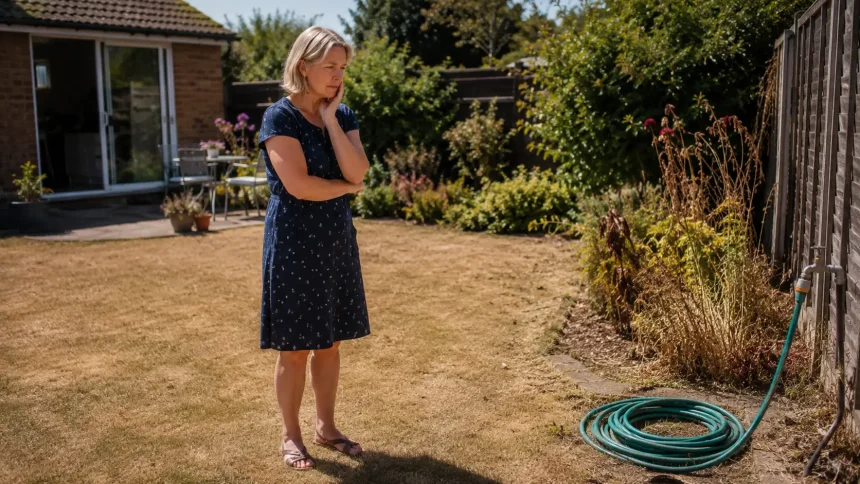
As of now, Severn Trent has not imposed a hosepipe ban. Customers can still use hosepipes, sprinklers and outdoor taps because no formal Temporary Use Ban has been announced for the company’s supply area.
The position nevertheless requires careful explanation. North Staffordshire remains at drought level 1, storage at Tittesworth Reservoir has declined, and exceptionally high demand has prompted repeated requests for customers to avoid unnecessary water use.
These conditions are serious, but they do not amount to an enforceable household ban.
Key Points:
- No Severn Trent hosepipe ban is currently in force.
- North Staffordshire remains at drought level 1.
- Tittesworth Reservoir storage has fallen.
- Customers are being asked to conserve water voluntarily.
- Hosepipe use remains legal unless a formal restriction is announced.
- Any future ban would specify its area, start date, rules and exemptions.
The distinction between a warning and a legal restriction is essential when assessing current reports.
Why Are People Asking About a Severn Trent Hosepipe Ban?
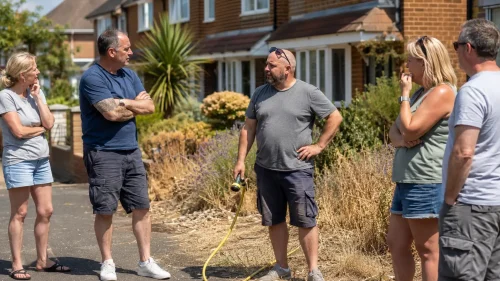
Public concern has increased because unusually dry conditions have coincided with exceptionally high water use across England.
The main reasons include:
- Hot weather has increased demand for garden watering, paddling pools and outdoor cleaning.
- Demand across the network recently approached 2,400 million litres, approximately 400 million litres more than usual each day.
- Much of the region received about 70% of its normal annual rainfall during 2025.
- North Staffordshire has moved into an operational drought stage.
- Other English water companies have introduced formal restrictions.
- News reports have warned that further measures could follow if conditions deteriorate.
Nationally, rainfall received by 21 July was only 3% of the long-term average for the month. Reservoir storage across England fell to 75.3%, around 7.4% below the seasonal average, while almost 40% of England’s population faced some form of water-use restriction.
Those national figures explain the concern, but they do not establish that Severn Trent customers are under a ban.
What Has Severn Trent Officially Said About Water Restrictions?
The official position separates normal household use from the voluntary steps customers are being encouraged to take.
No Temporary Use Ban Has Been Announced
The company’s current summer water guidance states: “Right now, there is no hosepipe ban in place for Severn Trent customers.”
It also says the region has not experienced a hosepipe ban since 1995. This is an important historical record, although it is not a guarantee that restrictions could never be required in future.
Why Is Severn Trent Asking Customers to Save Water?
Supplying drinking water involves more than drawing it from a reservoir, river or borehole. A drop can take approximately 12 hours to be treated, tested and delivered from its original source to a customer’s tap.
When demand rises rapidly, treatment facilities and distribution systems must process and move much more water within the same period. Voluntary reductions can therefore help restore treated-water storage and maintain stable pressure for all customers.
Possible Restrictions Remain Under Review
Severn Trent says it is investing almost £15 billion by 2030, equivalent to approximately £8 million per day, across its water and wastewater infrastructure.
Key Infrastructure and Demand Figures
| Measure | Reported Figure |
| Planned investment by 2030 | Almost £15 billion |
| Average daily investment | About £8 million |
| Water mains network | Around 40,000 kilometres |
| Additional Witches Oak capacity | 90 million litres per day |
| Additional Draycote capacity | 1.4 billion litres |
| Leakage reduction since the 1990s | About 40% |
| Average leak repair interval | One every 15 minutes |
| Average repair time | 3.9 days |
| Previous average repair time | 7.7 days |
The Witches Oak treatment development in Derbyshire added approximately 90 million litres per day without requiring a new reservoir. Work at Draycote Water is intended to create capacity for another 1.4 billion litres.
Does Drought Level 1 Mean Hosepipes Are Banned?
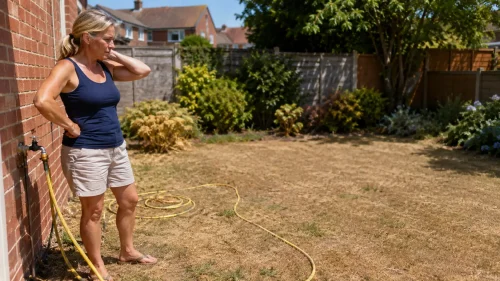
No. Drought level 1 is an operational water-resource status, not an automatic household hosepipe ban.
Water companies use operational stages, generally progressing from level 1 to level 4, to guide monitoring and drought-plan actions. These stages may lead to additional leak repairs, customer communications, movement of water between supply zones or closer management of reservoirs and abstraction sources.
How the Main Water Statuses Differ
| Status | What It Means | Is Hosepipe Use Banned? |
| Business as usual | Normal operational management | No |
| Conservation appeal | Voluntary request to reduce demand | No |
| Drought level 1 | Early drought-plan actions and closer monitoring | Not automatically |
| Temporary Use Ban | Formal restrictions on specified activities | Yes |
| Severe drought measures | Wider operational or legal interventions | Depends on the order |
The latest national report also distinguishes company drought levels from Environment Agency area classifications. An operational drought level may therefore apply to a supply zone even when the wider environmental area has a different status.
Customers should look for the words “Temporary Use Ban”, a confirmed start date and a defined geographical area before treating a warning as a legal restriction.
Which Severn Trent Areas Are Most Relevant to the Current Warning?
The current drought-level concern relates specifically to the North Staffordshire water resource zone, rather than every Severn Trent customer across the Midlands.
Severn Trent supplies parts of Staffordshire, Nottinghamshire, Derbyshire, Leicestershire, Warwickshire, Worcestershire, Shropshire and neighbouring areas.
Conditions can vary because different communities receive water from different combinations of reservoirs, rivers, groundwater sources and treatment works.
Supplier boundaries also do not follow county or local-authority lines exactly. Two neighbouring households could have different clean-water suppliers and therefore be subject to different restrictions.
Residents can confirm their supplier by checking their bill, online water account or an authoritative postcode checker. This is especially important before following advice shared through social media or local news reports.
What Is Happening at Tittesworth Reservoir?
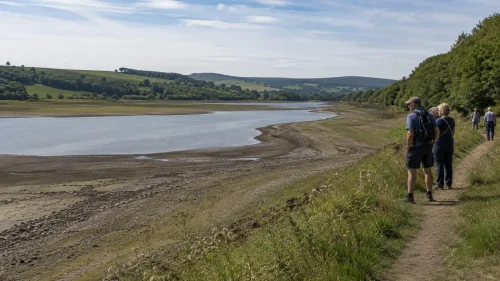
Tittesworth Reservoir is central to the current discussion because it supports water supplies in North Staffordshire.
Current Reservoir and Drought Position
The latest national drought report confirms that Severn Trent remains at drought level 1 in its North Staffordshire water resource zone. It also states that storage at Tittesworth Reservoir declined during the reporting week.
A declining reservoir level is a warning indicator rather than proof that restrictions are inevitable. Decisions also depend on rainfall, forecasts, river flows, customer demand, groundwater availability and the company’s ability to transfer water through its network.
Why Does Tittesworth Matter to North Staffordshire?
Tittesworth is an important local resource, so sustained reductions can place greater pressure on alternative sources and treatment capacity.
Severn Trent does not rely solely on reservoirs. Its supply system combines river water, groundwater and reservoir storage, allowing water to be moved between areas where infrastructure permits.
Long-term pressure is also increasing. The regional population has grown by approximately 1.2 million people since 2000, and planning assumptions anticipate a further 1.1 million people over the next 25 years. That growth increases the importance of new sources, treatment capacity, leakage control and customer efficiency.
Can Severn Trent Customers Still Use a Hosepipe?
Yes. Customers can use a hosepipe while no Temporary Use Ban is in force, although they are being encouraged to avoid unnecessary consumption.
Activities currently permitted include:
- Watering gardens and plants.
- Washing private vehicles.
- Cleaning patios and outdoor surfaces.
- Filling paddling pools.
- Using garden sprinklers.
- Cleaning windows and exterior walls.
- Topping up ponds where appropriate.
A voluntary request depends on customer cooperation and does not create the same legal obligations as a formal ban.
Nevertheless, unrestricted use should not be confused with unlimited supply capacity. Almost one-third of water attributed to leakage is reported to come from customer-owned pipes, taps, showers, toilets and fittings. A leaking toilet alone can waste approximately 300 litres per day.
Leakage across the wider network is now reported to be about 40% lower than during the 1990s, with hundreds of millions more litres retained in the system than in 2020. The company says its average repair time has fallen from 7.7 days to 3.9 days over three years.
Could Severn Trent Introduce a Hosepipe Ban Later?
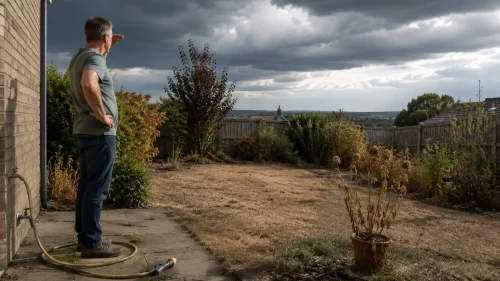
A future restriction remains possible if supply conditions worsen, but no confirmed introduction date has been announced.
What Conditions Could Trigger Restrictions?
Factors considered under drought planning may include sustained low rainfall, falling reservoir storage, reduced river flows, groundwater levels, treatment capacity, exceptional customer demand and operational failures.
The decision would be based on the combined resource position rather than a single hot day or one reservoir reading.
How a Temporary Use Ban Would Be Announced?
A formal announcement would normally explain:
- The geographical area covered.
- The date and time restrictions begin.
- The household activities being restricted.
- General and discretionary exemptions.
- The process for requesting additional support.
- Potential enforcement consequences.
The official hosepipe ban guidance explains that a Temporary Use Ban can restrict activities including watering gardens, cleaning vehicles and filling pools. Customers who breach published rules could face a fine of up to £1,000.
Possible Exemptions and Enforcement
Exemptions depend on the exact terms of each notice. They may cover health and safety, disability-related needs, animal welfare, essential commercial activity or particular methods of using non-mains water.
Customers should not assume that a Blue Badge, business purpose or medical condition automatically provides an exemption. The published notice would determine who qualifies and whether registration or evidence is required.
What Should Households Do While No Ban Is in Place?
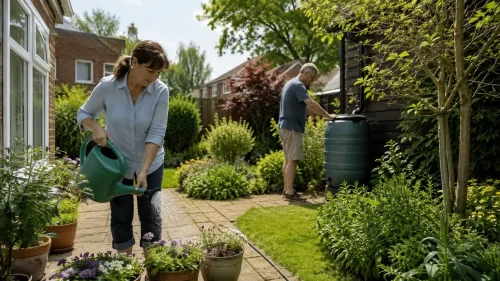
Small changes can reduce peak demand without preventing households from using the water they need.
Practical measures include:
- Use a watering can instead of a sprinkler.
- Water plants early in the morning or during the evening.
- Prioritise vegetables, containers and newly planted areas.
- Avoid watering established lawns, which usually recover after rain.
- Wash vehicles with a bucket rather than a continuously running hose.
- Cover paddling pools to reduce evaporation.
- Keep drinking water in the fridge instead of running the tap until it cools.
- Run washing machines and dishwashers with full loads.
- Repair dripping taps and leaking toilets.
- Report visible street leaks promptly.
These actions are voluntary while no ban exists, but widespread participation can reduce pressure during periods when demand is highest.
Conclusion
Has Severn Trent imposed a hosepipe ban? As of 28 July 2026, the answer is no.
Customers may continue using hosepipes, although the company is asking households to conserve water because of exceptional demand and prolonged dry weather. North Staffordshire remains at drought level 1, while storage at Tittesworth Reservoir has declined.
A drought stage, conservation appeal or warning about possible restrictions is not the same as a Temporary Use Ban. Customers should rely on a formal announcement before concluding that their household use has been legally restricted.
Frequently Asked Questions
When Did Severn Trent Last Introduce a Hosepipe Ban?
The company says its last regional hosepipe ban was in 1995. That history does not prevent a future restriction if water-resource conditions become sufficiently serious.
Do Hosepipe Restrictions Follow County Boundaries?
No, restrictions normally follow water-company supply zones rather than county or council boundaries. Different suppliers may serve neighbouring properties within the same wider area.
How Can Residents Confirm Their Water Supplier?
Residents can check the company named on their water bill or online account. They can also use an authoritative postcode-based supplier checker.
Would Businesses Follow the Same Rules as Households?
Business restrictions depend on the activities listed in the formal notice. Commercial, health and safety or essential uses may be treated differently from ordinary domestic use.
Can a Watering Can Be Used During a Hosepipe Ban?
Watering cans filled directly from a tap are generally permitted under typical restrictions. Customers must still read the specific notice because rules and exemptions can vary.
Are Vulnerable or Disabled Customers Automatically Exempt?
Not every vulnerable or disabled customer is automatically exempt from every restriction. Eligibility depends on the published rules and any additional concessions offered for that ban.
Where Should Customers Check for New Announcements?
Customers should check official restriction pages, account messages and formal public notices. Dated news reports should be compared with the latest confirmed company position.
Note: Water-resource conditions and restrictions can change quickly. The article should only describe a hosepipe ban as active after a formal Temporary Use Ban notice confirms the affected area, commencement date and rules.