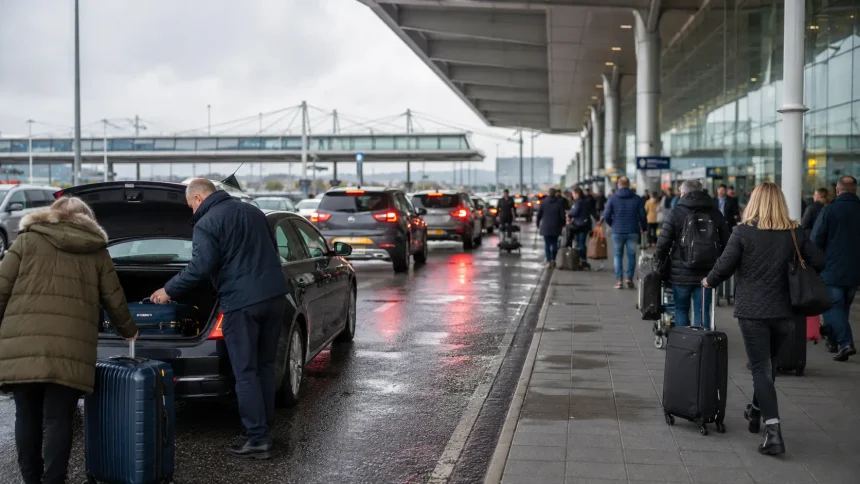
UK airport drop-off charges have risen by an average of one-third in a year, taking the typical nearest-terminal fee to £7.
Research covering the 20 busiest UK airports found that 16 increased or introduced higher charges between July 2025 and July 2026, with Gatwick and Stansted now demanding £10 for short terminal access.
The headline price does not tell the whole story. London City costs £8 for only five minutes, while Bournemouth allows 30 minutes for the same amount. South West passengers face £8.50 at Bristol, although free or cheaper zones remain available farther from many terminals.
Key Takeaways
- The average increase is £1.70.
- All 20 airports now charge near terminals.
- London City costs £1.60 per minute.
- Five major airports use pay-later systems.
- Missed payment may trigger a £100 notice.
- Free alternatives usually require walking or shuttles.
Drivers should compare the fee, time limit, payment deadline and accessible options before travelling.
How Much Have UK Airport Drop-Off Charges Increased?
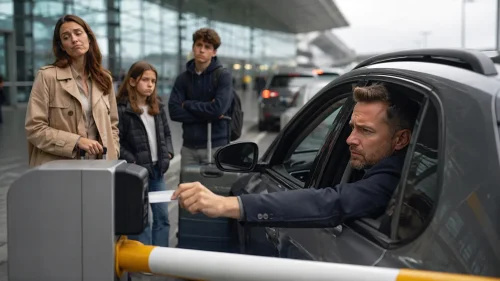
The average minimum charge for setting down a passenger at the nearest point to a terminal increased by £1.70 to £7 between July 2025 and July 2026. That represents a rise of roughly one-third in a single year.
Sixteen of the 20 busiest airports raised or introduced charges. The four that kept their initial tariffs unchanged were Liverpool John Lennon at £6, East Midlands at £5, Belfast City at £4 and Southampton at £7.
London City introduced a fee for the first time, meaning every airport in the study now charges for convenient terminal drop-offs. Before the pandemic, six airports in the group, including Heathrow and Gatwick, still provided free forecourt access.
The comparison concerns the nearest designated drop-off point, not general airport parking or free zones located farther away.
Which UK Airports Now Have The Highest Drop-Off Fees?
Gatwick and Stansted have the highest initial charge at £10, although Stansted provides five additional minutes. London City is the costliest per minute because its £8 tariff covers only five minutes.
UK Airport Drop-Off Charge Comparison
| Airport | July 2025 | July 2026 | Time Allowed | Cost Per Minute | Increase |
| Gatwick | £7 | £10 | 10 mins | £1.00 | £3 |
| Stansted | £7 | £10 | 15 mins | £0.67 | £3 |
| Edinburgh | £6 | £8.50 | 10 mins | £0.85 | £2.50 |
| Bristol | £7 | £8.50 | 10 mins | £0.85 | £1.50 |
| Leeds Bradford | £7 | £8 | 10 mins | £0.80 | £1 |
| London City | Free | £8 | 5 mins | £1.60 | £8 |
| Bournemouth | £5 | £8 | 30 mins | £0.27 | £3 |
| Heathrow | £6 | £7 | No waiting | Not applicable | £1 |
| Luton | £5 | £7 | 10 mins | £0.70 | £2 |
| Birmingham | £6 | £7 | 15 mins | £0.47 | £1 |
| Glasgow | £6 | £7 | 15 mins | £0.47 | £1 |
| Aberdeen | £5.50 | £7 | 15 mins | £0.47 | £1.50 |
| Southampton | £7 | £7 | 20 mins | £0.35 | No change |
| Newcastle | £5 | £6 | 10 mins | £0.60 | £1 |
| Liverpool John Lennon | £6 | £6 | 10 mins | £0.60 | No change |
| Manchester | £5 | £5.50 | 5 mins | £1.10 | £0.50 |
| Belfast International | £3 | £5 | 10 mins | £0.50 | £2 |
| East Midlands | £5 | £5 | 15 mins | £0.33 | No change |
| Cardiff | £3 | £4.50 | 10 mins | £0.45 | £1.50 |
| Belfast City | £4 | £4 | 10 mins | £0.40 | No change |
These figures show why drivers should compare time as well as price. Bournemouth’s £8 charge offers 30 minutes, whereas London City charges the same amount for five minutes; Stansted can also charge £28 for visits extending to 30 minutes.
The study also calculated that Gatwick’s £1-per-minute tariff was marginally higher than the 95p-per-minute cost of one sampled return flight for two people to Zakynthos. That comparison illustrates the rate rather than the typical total cost of flying.
Why Are UK Airports Increasing Their Drop-Off Charges?
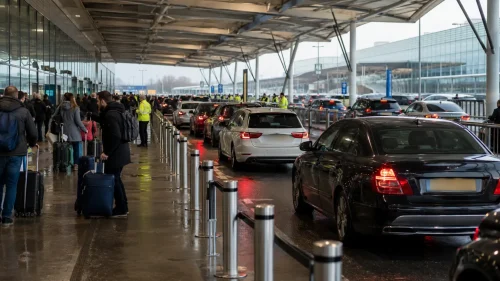
Airports give several reasons for charging vehicles that use terminal forecourts. Motoring, environmental and business groups dispute whether the increases are proportionate.
Airport Congestion And Terminal Access
The industry says fees help control traffic in areas with limited kerbside space while supporting airport operations and flight connectivity.
Reasons Given For The Charges
- The fees discourage repeated “kiss-and-fly” car journeys.
- The charges help manage congestion outside terminals.
- Airports say they respond to local air-quality concerns.
- Revenue forms part of privately operated airport business models.
- Higher prices may encourage buses, trains and shared transport.
An industry spokesperson said the fees were “necessary to manage congestion” and address traffic, pollution and climate objectives.
Are Environmental Arguments Convincing Passengers?
The effect depends heavily on whether a practical alternative exists. Gatwick has direct services to more than 120 railway stations, while current official information says seven local bus routes operate around the clock—not eight, as reported in some coverage.
Its northern runway consent also includes a requirement linked to achieving a 54% public-transport mode share.
Regional airports may serve passengers living far from frequent rail or bus services. Business and taxi representatives therefore argue that higher charges can add costs without making public transport workable.
The RAC’s Criticism Of Rising Fees
The motoring organisation’s Rod Dennis said:
“Having a captive audience should be no excuse for these ‘farewell fees’.”
He argued that free, convenient areas operate at many major international airports despite similar space pressures.
Bristol attributed its January increase partly to higher business rates and published transport investment plans alongside the published 2026 tariff change. These included a £60 million transport interchange, 21 electric buses and a larger free waiting area.
What Do The Latest Charges Mean For South West Travellers?
Bristol is now one of the country’s four most expensive airports for an initial terminal drop-off. Its £8.50 charge covers ten minutes and is £1.50 higher than in July 2025.
The airport’s free Waiting Zone provides up to one hour without charge, with passengers transferring from the neighbouring car-rental area. Bristol says shuttle buses run every 15 minutes, while Blue Badge passengers can receive up to 40 minutes in the main drop-off car park for £8.50.
Bournemouth charges £8 for 30 minutes. Although that is a high initial fee, its estimated 27p-per-minute rate is among the lowest in the comparison.
Cornwall Airport Newquay was not among the 20-airport study but provides a useful regional contrast by advertising ten minutes of free parking in its West Car Park.
Travellers from Devon, Cornwall, Dorset, Somerset and surrounding counties should therefore consider total road distance, stopping time and onward transfer—not merely the first displayed price.
How Do UK Airport Drop-Off Charges Compare With Europe?
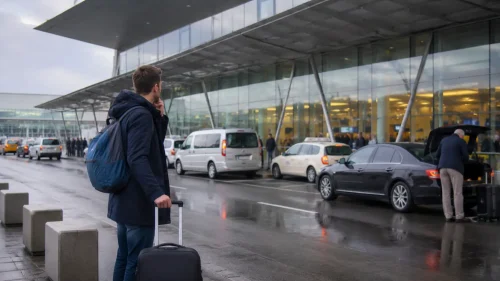
The research found that none of the ten busiest airports in the European Union charged drivers for terminal drop-offs. It also identified free access at major global hubs including Atlanta, Dubai, Shanghai and Istanbul.
Several continental airports provide defined free periods rather than unrestricted waiting. Venice Marco Polo allows up to 20 minutes, Milan Malpensa provides a free waiting area for up to 60 minutes, and Ljubljana, Paris Charles de Gaulle and Paris Orly offer ten-minute free periods.
The comparison requires context. UK airports are generally privately owned, while ownership, public funding, taxation, road layouts and public-transport networks vary internationally.
Nevertheless, the overseas figures show that charging every driver for brief terminal access is not an unavoidable feature of a major airport.
How Do Barrierless Airport Drop-Off Payments Work?
Barrierless zones use automatic number plate recognition to record entry and exit. Drivers leave without paying at a machine and must complete payment later.
Airports Using Pay-Later Systems
Heathrow, Gatwick, Manchester, Stansted and Luton are the five busiest airports identified as requiring online or telephone payment after a visit. Their systems reduce queues at exit barriers but place responsibility on the registered keeper to notice signs and remember the deadline.
When Must The Charge Be Paid?
At these airports, payment is generally required by midnight on the day after the visit. Gatwick’s current drop-off payment rules confirm a £10 minimum, payment by the following midnight and free Long Stay parking for up to two hours.
Heathrow charges £7 on every entry and accepts card payment online, by automated telephone or through an autopay account. Cash and payment machines in the drop-off zone are not available.
What Happens If Payment Is Missed?
A forgotten payment can lead to a parking charge notice of as much as £100, although the precise notice, discount and appeal terms depend on the airport.
Steps That Reduce Payment Risk
- Read the signs before entering the forecourt.
- Record the vehicle registration accurately.
- Use the airport’s genuine payment page.
- Save the receipt or confirmation email.
- Set a phone reminder before driving away.
- Check whether a hire-car company adds administration fees.
These precautions are particularly important when a different person owns or hires the vehicle.
Can Travellers Avoid UK Airport Drop-Off Charges Legally?
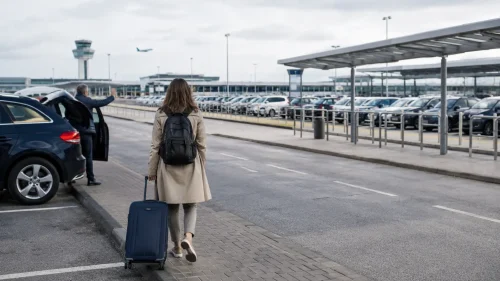
Many airports provide designated free areas in mid-stay, long-stay or waiting-zone car parks. The trade-off is normally a walk or shuttle journey.
Free Or Lower-Cost Alternatives
| Airport | Designated Alternative |
| Heathrow | 30 minutes free in Park & Ride car parks |
| Gatwick | Two hours free in Long Stay with shuttle |
| Manchester | Free JetParks 1 area with shuttle |
| Stansted | Free Mid Stay area with shuttle |
| Luton | Two hours free in Long Stay with shuttle |
| Edinburgh | 30 minutes free in Long Stay; walk required |
| Birmingham | Ten-minute free zone, 5–10 minutes’ walk |
| Bristol | One hour free in the Waiting Zone |
| Glasgow | One hour free in Long Stay with shuttle |
| Belfast International | 15 minutes free in Long Stay |
| Newcastle | Up to 90 minutes at the Airport Waiting Zone |
| Liverpool John Lennon | 20 minutes free at Drop Off 2 |
| Leeds Bradford | One hour free in Mid Stay |
| East Midlands | Up to one hour free in Long Stay |
| London City | No general free alternative stated |
| Aberdeen | One hour free in Long Stay |
| Belfast City | Ten minutes free in Long Stay |
| Bournemouth | No general free alternative stated |
| Cardiff | 20 minutes free in Car Park 2 |
| Southampton | No general free zone while Long Stay is closed |
Airport arrangements change, and shuttle frequency, walking distance and accessibility must be considered. Current official information confirms Luton’s two-hour free Long Stay period, Manchester’s free shuttle-served zone and Southampton’s temporary absence of a general free option.
Drivers should not stop on red routes, verges, roundabouts, bus stops or airport approach roads. A lawful free zone is safer than attempting an informal roadside drop-off.
Could The Government Regulate UK Airport Drop-Off Charges?
Airport forecourt fees are attracting political attention, but no national price cap or mandatory free period has taken effect.
The Parliamentary Petition
An open airport charge review petition calls for possible Civil Aviation Authority auditing powers, fee caps, restrictions on forecourt profits and a ten-minute free period.
On 24 July 2026, the petition displayed 6,925 signatures. It closes on 17 September 2026; 10,000 signatures would require a government response, while 100,000 would make it eligible for consideration for a parliamentary debate.
Could The Civil Aviation Bill Force A Review?
Lord Moylan proposed an amendment to the Civil Aviation (Consumer Protection and Regulatory Reform) Bill requiring the Secretary of State to review the effect of airport drop-off charges and report to Parliament. The parliamentary record listed the amendment without a decision at the stage reviewed.
No National Cap Is Currently In Force
A petition, proposed amendment and enacted law are different. Neither development automatically limits current airport tariffs, creates a free grace period or transfers pricing responsibility to the aviation regulator.
Any future change would require formal government or parliamentary action.
What Should Drivers Check Before Entering An Airport Drop-Off Zone?
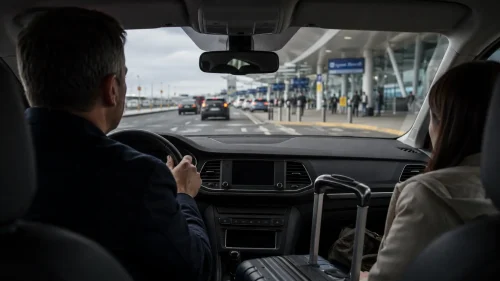
A few minutes of preparation can prevent an unexpectedly high charge.
Driver Checklist
- Check the current initial fee.
- Confirm the included stopping time.
- Review the overstay tariff.
- Identify whether payment is immediate or deferred.
- Record the final payment deadline.
- Find the designated free alternative.
- Allow time for walking or a shuttle.
- Check Blue Badge registration rules.
- Keep evidence of every payment.
- Review separate passenger pick-up rules.
Drivers should use current airport instructions rather than relying on an earlier journey, an old search result or roadside assumptions.
Conclusion
UK airport drop-off charges have risen sharply, with the average nearest-terminal price reaching £7 and the highest initial fees reaching £10. The cost varies substantially when stopping time is considered: London City charges £1.60 per minute, while Bournemouth’s longer allowance works out at about 27p.
For South West travellers, Bristol is among the most expensive airports, although its one-hour Waiting Zone provides a free alternative. Bournemouth offers more time for its £8 fee, while other regional airports retain different arrangements.
With UK airport drop-off charges continuing to change, drivers should confirm the latest tariff, payment deadline, free zones and accessibility rules before every journey.
Frequently Asked Questions
Are Airport Pick-Up Charges The Same As Drop-Off Charges?
No, passenger collections are often directed to short-stay car parks with separate prices and waiting limits. Drivers should check the airport’s pick-up instructions before entering its roads.
Do Taxis And Private-Hire Vehicles Pay Drop-Off Fees?
Many airports charge taxis and private-hire vehicles for terminal access. The operator may add that amount to the passenger’s fare.
Are Blue Badge Holders Automatically Exempt?
No, exemptions, refunds and registration procedures differ between airports. Some require the vehicle to be registered before or shortly after the visit.
Can A Parking Charge Notice Be Appealed?
Yes, the notice should explain the operator’s appeal procedure and deadline. Relevant evidence may include receipts, registration records, photographs or proof of an exemption.
Is The Drop-Off Fee Included In A Flight Ticket?
No, it is normally a separate charge paid by the driver or transport operator. It is not part of the airline’s ticket price.
Can Drivers Pay Airport Drop-Off Charges With Cash?
Some barrier-controlled areas accept cards or cash, but many pay-later zones are cashless. Drivers should confirm the accepted method before travelling.
Can A Short-Stay Car Park Be Used Instead?
Usually, but it may cost more than the express drop-off zone. It can be more suitable when the driver needs to accompany a passenger into the terminal.
Note
All charges, time limits, exemptions and parking arrangements can change. Travellers should verify the current rules directly before departure, particularly where a barrierless payment system or temporary car-park closure applies.