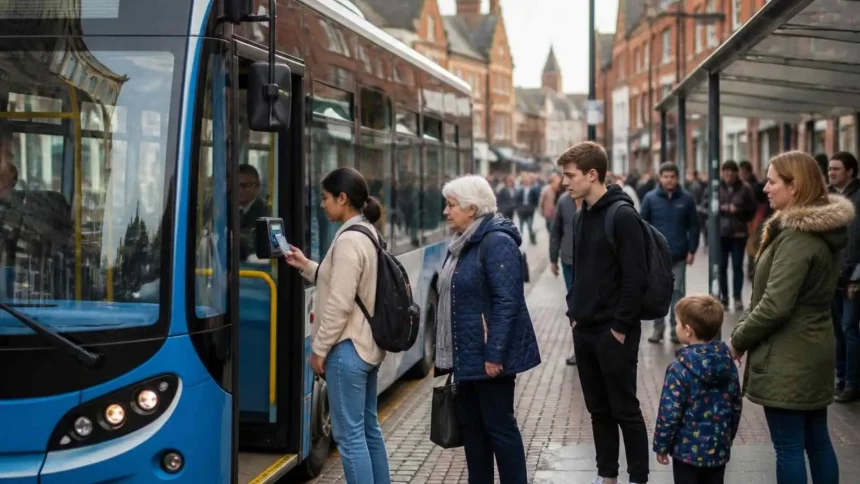
The £2 bus fare cap could return under Andy Burnham, but it is currently a proposal rather than confirmed national policy.
Reports indicate that Burnham’s allies are exploring a return to the lower limit as part of the government’s cost-of-living agenda. Any change would require Treasury funding, an agreement with bus operators and confirmation from the Department for Transport.
Until an official announcement is made, passengers outside areas with their own local fare schemes should expect the current £3 national cap to continue on participating services.
£2 Bus Fare Cap: Key Facts
| Key point | Current position |
| Current national fare cap | £3 for eligible single journeys |
| Area covered | Participating local bus services in England |
| Current national scheme end date | March 2027 |
| Previous national cap | £2 until 31 December 2024 |
| Proposed new limit | £2 per eligible single journey |
| Confirmed nationally? | No, it remains under consideration |
| Greater Manchester fare | Adult Bee Network single journeys remain capped at £2 |
| Scotland, Wales and Northern Ireland | Separate transport policies apply |
| Likely funding source | Central government support would be required |
| Possible beneficiaries | Regular passengers, commuters, jobseekers and rural travellers |
Is Andy Burnham Bringing Back the £2 Bus Fare Cap?
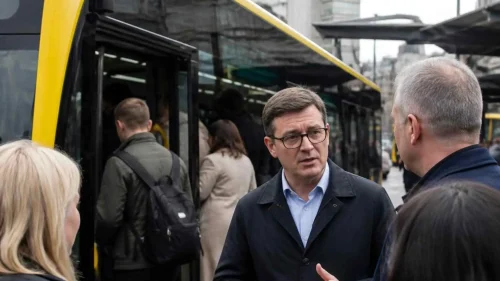
Andy Burnham has not yet formally announced a nationwide return of the £2 cap.
Other reports have also indicated that lower bus fares form part of a wider range of cost-of-living policies being explored by the government. These ideas are understood to include changes affecting household energy costs, rents and public services.
The distinction is important: a policy being considered by ministers or political advisers is not the same as a funded government commitment.
Before the cap could change, the government would normally need to confirm:
- How much public funding would be available;
- Which operators and routes would participate;
- How long the lower cap would remain in place;
- Whether any journeys would be excluded;
- When the change would take effect.
Passengers should therefore continue checking local operator fares until the Department for Transport publishes formal guidance.
What is the Current Bus Fare Cap in England?
The current national cap is £3 for a qualifying single journey on participating services in England.
The £3 scheme applies to participating bus operators and routes rather than every bus journey automatically. Certain specialist, school, tourist and replacement services may be excluded.
The government has extended the existing £3 limit until March 2027.
The £3 cap replaced the previous £2 national limit on 1 January 2025. The earlier £2 scheme had operated from January 2023 until the end of December 2024.
Does the Fare Cap Apply Across the Whole UK?
No. The national scheme described here applies to participating services in England.
Transport policy is devolved, meaning Scotland, Wales and Northern Ireland operate different fare arrangements. London also has a separate fares system controlled through Transport for London.
Local and combined authorities can introduce their own subsidised fares. For example:
- Greater Manchester has retained a £2 adult single fare.
- The North East has operated a locally supported £2.50 adult fare cap.
- London uses a separate flat bus fare and daily capping system.
Passengers should check their regional transport authority or bus operator before travelling.
Why Could the Cap Return to £2?
Restoring the £2 fare cap would fit with Andy Burnham’s established approach to public transport.
As Mayor of Greater Manchester, Burnham oversaw the development of the Bee Network and the introduction of a £2 cap on adult single bus journeys in September 2022. Greater Manchester later retained the lower price when the national limit rose to £3.
His administration has argued that simple and affordable fares can make buses easier to use while supporting access to employment, education and essential services.
A national £2 cap could be presented as a way to:
- Reduce travel costs for passengers without cars;
- Support people travelling to work or job interviews;
- Make fare prices easier to understand;
- Encourage greater public transport use;
- Provide additional help during continuing cost-of-living pressures.
However, affordable fares must be balanced against the cost of running services. A lower passenger fare does not remove the underlying operating cost; the difference generally has to be covered through government subsidy, local funding or changes elsewhere in transport budgets.
How Much Could Passengers Save?
The amount saved would depend on how often someone travels and what the uncapped fare would otherwise be.
Example: Five-day Commuter
A passenger making two capped journeys each working day would take approximately 10 single trips per week.
| Fare level | Weekly cost | Approximate four-week cost |
| £3 cap | £30 | £120 |
| £2 cap | £20 | £80 |
| Potential saving | £10 | £40 |
Over 48 working weeks, the difference could reach approximately £480.
This is only an illustrative comparison. Actual savings would depend on the passenger’s route, working pattern and whether a weekly, monthly or multi-operator ticket offered better value.
Example: Occasional Passenger
Someone making four qualifying single journeys each week could save:
- £4 per week;
- Approximately £16 over four weeks;
- Around £208 over a full year.
Passengers whose normal fare is already £2 or less would not necessarily save anything from a national cap reduction.
Who Would Qualify for the £2 Fare?
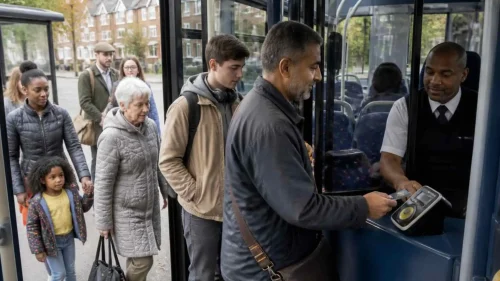
No final eligibility rules have been announced for a restored national scheme.
If the government followed the structure of previous fare-cap programmes, the limit would probably apply to ordinary single journeys operated by participating bus companies in England.
It would not necessarily apply to:
- Every bus company;
- Every route run by a participating operator;
- Coach journeys;
- Sightseeing or tourist buses;
- Private school services;
- Rail replacement services;
- Journeys wholly within London’s separate fare system.
The cap would also set a maximum, not a compulsory minimum. An operator could continue charging less than £2 where a lower fare already applied.
Would People Need to Apply for the Fare Cap?
Under the existing national arrangement, passengers do not generally need to complete a separate application.
The capped price is normally offered when buying an eligible single ticket from a participating operator. Payment methods vary and may include:
- Contactless bank cards;
- Cash;
- Operator applications;
- Smartcards;
- Mobile tickets.
A future £2 scheme could use a similar approach, although this cannot be confirmed until the government publishes its terms.
Concessionary travel schemes for older and disabled passengers would remain separate. Eligible pass holders may continue to receive free or discounted travel according to national and local rules.
Could the £2 Cap Help Passengers in South West England?
A restored cap could be particularly relevant across the South West, where residents often depend on buses to reach employment centres, hospitals, colleges and railway stations.
Longer distances between towns and villages can make transport costs significant, particularly for people who do not have access to a car.
However, a fare cap alone would not resolve every public transport problem. Passengers may still face:
- Infrequent rural services;
- Limited evening and Sunday timetables;
- Poor connections between operators;
- Cancellations or reliability problems;
- Long journey times.
For the policy to deliver its full benefit, lower fares would need to be supported by reliable routes, adequate service frequency and long-term investment.
What Would the £2 Bus Fare Cap Cost the Government?
No official cost estimate has been published for the proposal reported in July 2026.
The cost would depend on several factors, including:
- The number of journeys covered;
- The difference between commercial fares and the £2 limit;
- Operator participation;
- Changes in passenger numbers;
- The length of the scheme;
- Administrative and reimbursement arrangements.
Government funding is used to compensate participating operators where the capped fare is lower than the amount they would otherwise charge.
A final funding figure should not be assumed until it appears in a Treasury statement, Budget document, Department for Transport publication or formal spending announcement.
Did the Previous £2 Fare Cap Work?
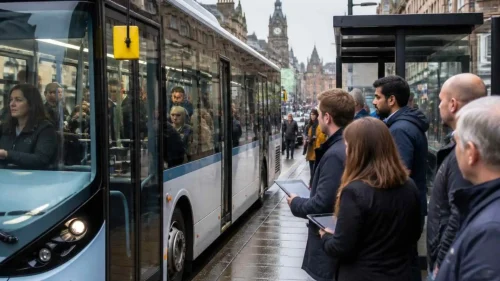
The previous scheme was intended to save passengers money and encourage more people to travel by bus.
The Department for Transport commissioned an official evaluation of the £2 bus fare cap to examine passenger savings, awareness and changes in bus use.
Lower fares can make journeys more attractive, but pricing is only one factor influencing passenger behaviour. Service frequency, reliability, journey time, safety and route availability can be equally important.
The experience of Greater Manchester demonstrates that a £2 fare can form part of a broader public transport strategy rather than operating as an isolated discount.
Final Takeaway
A national £2 bus fare cap could return under Andy Burnham, but the measure has not yet been formally approved or introduced.
The current national limit remains £3 for eligible single journeys on participating English bus services until March 2027. Greater Manchester already offers a £2 adult single fare through the Bee Network, giving Burnham an established regional model on which a wider policy could be based.
For passengers, a return to £2 could produce meaningful savings, particularly for frequent commuters and people who depend on buses for work, education or essential appointments. Nevertheless, the final impact will depend on government funding, route coverage, operator participation and whether lower fares are accompanied by reliable services.
Passengers should wait for confirmation from the Department for Transport or HM Treasury before treating the reported proposal as a guaranteed fare change.
Note: This article has been reviewed against Department for Transport and Greater Manchester Combined Authority guidance.
Frequently Asked Questions
When Could the £2 Bus Fare Cap Return?
No implementation date has been confirmed. Any start date would need to be announced by the government following decisions on funding and operator participation.
Is the Current Bus Fare Cap £2 or £3?
The national fare cap is currently £3 on participating bus services in England. Some areas, including Greater Manchester, maintain lower local fares.
Is Andy Burnham’s £2 Bus Fare Cap Confirmed?
No. As of 21 July 2026, it is being reported as a proposal under consideration rather than an enacted government policy.
Would the £2 Cap Cover Long-distance Bus Journeys?
It could cover longer eligible local bus journeys where the operator and route participate. It would not normally cover intercity coaches or excluded specialist services.
Would Children Pay £2?
Children often have lower fares or separate local concessions. The £2 figure refers mainly to the proposed maximum adult single fare. Final rules have not been published.
Would Bus Passes Still Be Valid?
Existing concessionary passes should remain separate from the fare-cap scheme. Passengers should continue following the conditions issued by their local authority.
Would Passengers Save £1 on Every Journey?
Only passengers currently paying £3 for an eligible single journey would save the full £1. Those paying less than £3 would save a smaller amount or nothing.
How Can Passengers Check Whether a Route is Included?
Passengers can check the Department for Transport participation list and their bus operator’s website. Local transport authorities may also publish regional fare information.