The Thames Water hosepipe ban begins at 00:01 BST on Thursday, 23 July 2026, across the company’s entire drinking-water supply area.
It affects about 10.1 million water customers, including people whose supply is billed by another company, but not households that receive only wastewater services from Thames Water.
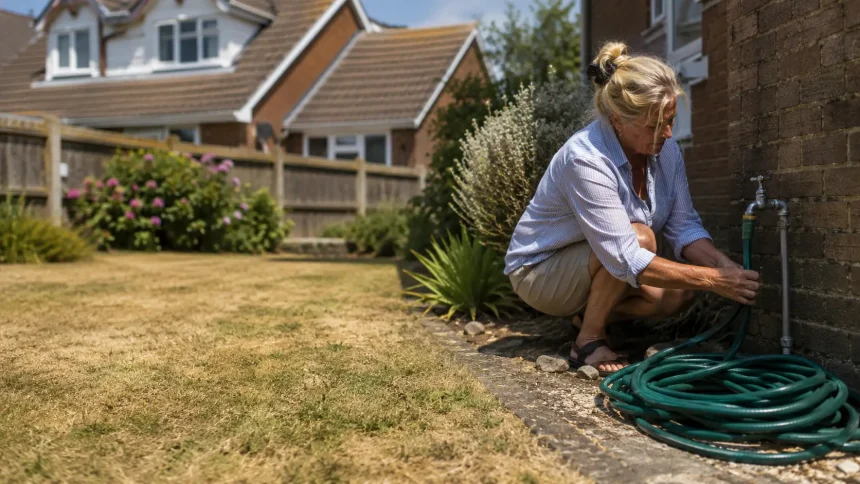
The Temporary Use Ban restricts hosepipes, sprinklers and pressure washers for non-essential activities such as watering gardens, cleaning private vehicles and filling pools or hot tubs.
Buckets, watering cans and water from non-mains sources remain permitted in many situations, while specific exemptions protect health, disability, animal welfare, food crops and certain businesses.
Key Takeaways:
- The ban starts just after midnight on 23 July.
- It remains in force until further notice.
- Essential drinking, cooking, washing and hygiene use continues.
- Breaches can lead to a fine of up to £1,000.
Customers should check the precise rules before relying on an exemption or specialist exception.
When Does the Thames Water Hosepipe Ban Start and End?
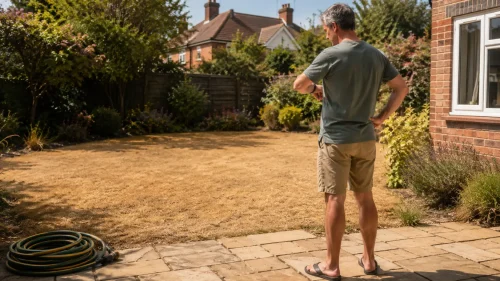
The restriction takes effect at 00:01 BST on Thursday, 23 July 2026. Thames Water asked customers to reduce non-essential consumption before the formal start because demand had already placed pressure on parts of its treatment and distribution network.
There is no fixed end date. The legal notice says the ban will continue until further notice, while customer guidance says prolonged and significant rainfall may be needed before it can be lifted. The company will monitor rainfall, river flows, reservoirs, groundwater and demand.
The original deadline for formal representations was 23:59 BST on Wednesday, 22 July, although the company said it would continue considering representations while the restriction remained active.
Who Is Affected by the Thames Water Hosepipe Ban?
The ban covers everyone supplied with drinking water by Thames Water, including customers whose supply is billed by another company. It applies across the whole water-supply area, including London, the Thames Valley, the Home Counties and areas further west.
Customer Coverage
| Customer Type | Does the Ban Apply? |
| Drinking-water customers | Yes |
| Supply billed by another company | Yes, when Thames Water provides the water |
| Wastewater-only customers | No |
| Customers supplied by another water company | Not under this particular ban |
| Eligible exempt customers | Restrictions may be modified for specified uses |
The company serves around 16 million people through its combined water and wastewater operations, but the restriction affects the approximately 10.1 million customers receiving its drinking water. Customers who are unsure should check the supplier named on their bill rather than relying only on their postcode.
What Activities Are Banned Under the Thames Water Hosepipe Ban?
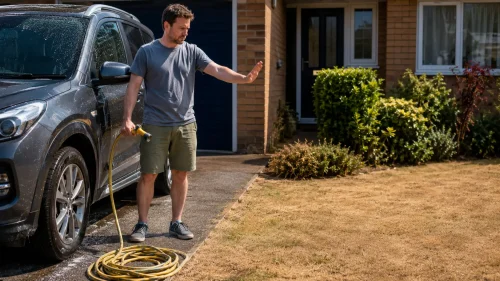
The restrictions cover hosepipes and equipment serving the same function, including sprinklers, pressure washers, dripper hoses and some automatic irrigation systems. Attaching a nozzle or another device does not make a prohibited use permissible.
Garden, Vehicle and Outdoor Cleaning Restrictions
Restricted Uses Include
- Watering gardens, lawns, grass verges and most allotment areas.
- Watering domestic or other non-commercial plants.
- Cleaning private cars, trailers and most private leisure boats.
- Washing patios, paths, driveways, walls, windows and artificial outdoor surfaces.
- Operating sprinklers, jet washers or recreational water equipment.
The full temporary ban legal notice explains that mains water drawn through a hose into a container can still count as hosepipe use when it is applied to a prohibited purpose.
Are Swimming Pools, Hot Tubs, Ponds and Fountains Covered?
Customers cannot normally fill or maintain domestic swimming pools, paddling pools, hot tubs, swim spas, domestic ponds or ornamental fountains. Water slides and similar domestic recreational equipment are also restricted.
Pool and ornamental-fountain rules are particularly broad because they can cover filling through fixed or permanent plumbing, not only a removable hose. Exceptions include certain medical or veterinary pools, construction-related filling, fish welfare and fountains needed for religious purposes or pond oxygenation.
What Can Customers Still Do During the Hosepipe Ban?
Essential indoor water use remains available. Customers can continue using water for drinking, cooking, washing, sanitation and personal hygiene.
Permitted Alternatives Include
- Watering plants with a bucket or watering can.
- Washing a private car using a bucket.
- Using rainwater collected in a water butt.
- Reusing suitable water left from rinsing fruit or vegetables.
- Using grey water or water from a private borehole.
- Using a hose section of no more than 30cm to fill a watering can.
- Operating an approved timed drip-or-trickle irrigation system.
A qualifying irrigation system must have a pressure-reducing valve and timer, deliver water directly onto or beneath the soil and avoid mist, jets or surface run-off. Water from a genuine non-mains source can generally pass through a hose, provided it has not come from the public mains supply.
Why Has Thames Water Introduced the Hosepipe Ban?
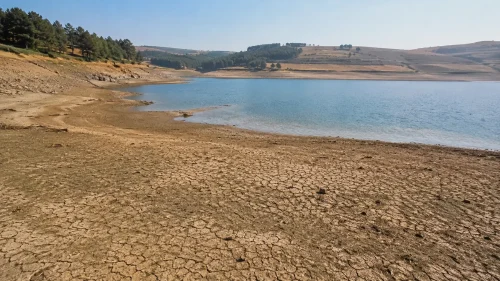
The company attributed the decision to a combination of prolonged dry weather, three official heatwaves, low rainfall and unusually high consumption. Its region received only 40% of average spring rainfall, while no rain had been recorded in the Thames catchment during July by the 21 July announcement.
Demand was reported to be 10% above normal in the Thames Valley and Home Counties and 7% above normal in London.
That represented around 100 million additional litres per day, including 475 million extra litres each week in London and 186 million extra litres weekly in the Thames Valley. Some homes with outdoor space were reportedly using 50% more water than normal.
The UK had also recorded nine days reaching at least 34°C, exceeding the comparable totals in the previous record years of 1976 and 2020. Between 3 and 10 July, the company said it produced more than 20 billion litres of drinking water.
Nevil Muncaster, Director of Strategic Water Resources, said: “While there is enough water for essential use, we need to reduce non-essential outdoor demand to keep taps flowing.”
Who Qualifies for an Exemption From the Hosepipe Ban?
Exemptions apply to defined customers and activities rather than providing unrestricted permission. The circumstances and conditions should be checked before a hosepipe is used.
Health, Disability and Priority Services Exemptions
Hosepipes may be used when reasonably necessary to remove risks to human or animal health, control disease or meet specific health-and-safety requirements. People with severe mobility difficulties may qualify whether or not they hold a Blue Badge.
Eligible Priority Services customers can also receive exemptions connected with serious illness, dialysis, oxygen equipment, ventilators, physical impairments, dementia, blindness and restricted hand movement. The official exemption rules and conditions provide the complete eligibility wording.
Which Gardens, Plants and Food Crops May Be Exempt?
Food crops at domestic premises or private allotments may be watered with a hose when a watering can is not reasonably practical. New turf, lawns, trees, shrubs and plants installed commercially can be watered for 28 days after planting.
Certain standard trees, whips, saplings and hedges planted within the previous three years may also qualify when hand-watering or non-potable water is not practical. Ordinary ornamental plants do not receive an automatic exemption.
Business and Public-Service Exceptions
Exemption Snapshot
| Activity | Main Condition |
| Commercial cleaning | Must be provided as a service to customers |
| Plant nurseries | Plants must be grown or kept for sale |
| Sports grounds | Only active playing areas for safety reasons |
| Boats | Limited commercial, residential or safety-related uses |
| Motorhomes and caravans | Water must be for washing, cooking or sanitation |
| Animal pools and ponds | Use must protect health, treatment or welfare |
Businesses remain covered where water use is domestic, non-commercial or unnecessary for safety. A commercial operator cannot automatically water an ordinary domestic garden merely because the operator is being paid.
What Is Thames Water Doing to Protect Water Supplies and Reduce Leaks?
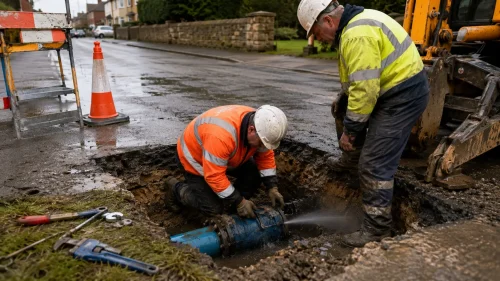
Thames Water says hot, dry ground increases the likelihood of pipe movement, bursts and leakage. The figures below are company-reported measures and should not be read as evidence that the network’s wider leakage problems have been resolved.
Reported Network Measures
- More than 750 leaks are being repaired each week.
- A recent week reportedly included 945 completed leak repairs.
- More than 50,000 working hours a month are spent locating hidden leaks.
- More than 1.3 million smart meters have been installed.
- Almost 75,000 acoustic sensors are operating, with 100,000 planned by mid-2027.
- Satellite data and artificial intelligence have reportedly located more than 2,500 leaks.
- More than 100km of water mains has been replaced since April 2025.
- A £20 billion five-year network investment programme is under way.
The company also says it is moving water between network areas, maximising treatment capacity and monitoring operations around the clock. These actions form part of what it describes as its largest network upgrade in 150 years.
How Will the Thames Water Hosepipe Ban Be Enforced?
The company says it expects voluntary compliance and may contact customers who repeatedly disregard the restrictions. Seeing someone use a hosepipe does not by itself establish a breach because the water could come from a borehole or water butt, or the person may qualify for an exemption.
Thames Water’s Enforcement Approach
Customers are not being asked to report neighbours simply for visible hosepipe use. The company has also specifically told people not to call 999 about suspected breaches, as emergency services should not be used for water-restriction reports.
Can Customers Receive a £1,000 Fine?
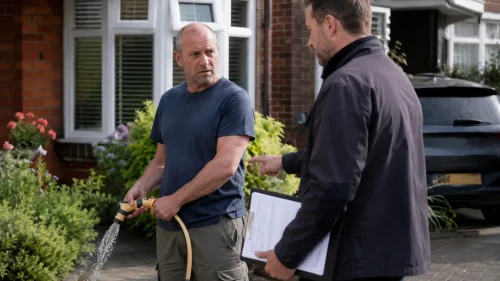
A person who contravenes a statutory prohibition may commit an offence and, following summary conviction, can receive a fine of up to £1,000. This does not mean every suspected incident will automatically produce the maximum penalty.
The restriction relies on statutory water restriction powers contained in the Water Industry Act 1991 and associated temporary-ban rules. Care should therefore be taken not to describe informal customer contact as an immediate fine or criminal conviction.
What Happens Next With the Thames Water Hosepipe Ban?
The restriction remains active until conditions allow it to be withdrawn. The company will continue assessing rainfall, customer demand, reservoirs, groundwater, rivers and the ability to treat and distribute water.
A brief shower or isolated period of rainfall may not be enough; customer guidance says prolonged and significant rain is required. Any alteration to the prohibitions or exemptions would need to be communicated through updated customer guidance or a revised legal notice.
The Thames Water restriction is part of a wider water-supply picture affecting about 23 million people across England and Wales by the weekend of 25–26 July. Eight English regions were classed as experiencing prolonged dry weather, the stage before formal drought status.
Conclusion
The Thames Water hosepipe ban starts at 00:01 BST on 23 July 2026 and covers approximately 10.1 million drinking-water customers. It prohibits hosepipes and similar equipment for many non-essential activities, while allowing essential household use, buckets, watering cans and qualifying non-mains water.
Exemptions exist for specific health, disability, animal-welfare, food-growing, commercial and safety needs, but each carries conditions. Customers should check the current legal wording before assuming an activity is permitted, particularly where pools, irrigation equipment, new planting or business services are involved.
Frequently Asked Questions
Can a Short Hose Be Used to Fill a Watering Can?
A hose section measuring no more than 30cm can be used to fill a watering can. The watering can must then be used to apply the water rather than the hose itself.
Can Rainwater Be Used Through a Hosepipe?
Rainwater collected in a water butt can generally be used through a hosepipe. Grey water and private-borehole water are also permitted when genuinely separate from the mains supply.
Can a Gardener Use a Hosepipe at a Customer’s Home?
A gardener cannot normally use a hosepipe to water an established domestic garden. Qualifying new planting completed commercially may be watered for the first 28 days.
Can Allotment Holders Water Food Crops With a Hosepipe?
Food crops on a private allotment may be watered by hose when using a watering can is not reasonably practical. The exception applies to food production rather than general ornamental planting.
Can Professional Car Washes and Window Cleaners Continue?
Qualifying cleaning businesses may continue using hoses when cleaning is performed as a commercial service. Customers cannot use that exception to wash their own private cars or windows.
Will Customer Bills Be Reduced During the Ban?
The company says bills will not be reduced because of the Temporary Use Ban. It states that compensation applies to an Emergency Drought Order, which is not the measure currently in force.
Should Customers Report Neighbours Using Hosepipes?
Customers are not required to report neighbours and should not contact 999. Visible hosepipe use may be lawful because of an exemption or a permitted non-mains water source.
Note:
The restrictions and exemptions may be varied while the Temporary Use Ban remains in force. Readers should check the latest official notice before undertaking an activity that could fall within the ban.