The latest public opinion hosepipe ban findings show a divided but not defiant public. A survey of more than 4,200 adults found that 49% supported restrictions in their local area and 35% opposed them.
Among households already affected, 11% said they would not comply fully and another 5% were undecided. However, those figures still indicate that most affected households expect to follow the rules.
The disagreement reflects wider concerns about leakage, water bills, company performance, food crops, wildlife and whether restrictions apply fairly. It comes during exceptionally dry conditions that have placed much of England under drought measures.
What Does The Latest Public Opinion Hosepipe Ban Poll Show?
The poll presents a more nuanced picture than headlines suggesting that millions will simply refuse to obey. Eleven per cent of affected households said they would not follow the ban fully, while 5% had not decided.
The survey did not establish how frequently those respondents might break the rules or which prohibited activities they intended to continue.
Support stood at 49%, compared with opposition of 35%. The remaining respondents were neutral or unsure, meaning the country was divided but not evenly split between supporters and opponents.
Poll Findings At A Glance
| Poll Question | Reported Result | What It Means |
| Support a local ban | 49% | Support exceeds opposition but remains below half |
| Oppose a local ban | 35% | Resistance is substantial |
| Will not comply fully | 11% | A minority expects to break some rules |
| Undecided about compliance | 5% | Behaviour may depend on circumstances |
| Would report a neighbour | 10% | Formal community enforcement is unpopular |
| Would not report a neighbour | 71% | Most would avoid reporting suspected breaches |
The poll measures stated intentions rather than verified behaviour throughout a restriction.
Why Are UK Households Divided Over Hosepipe Bans?
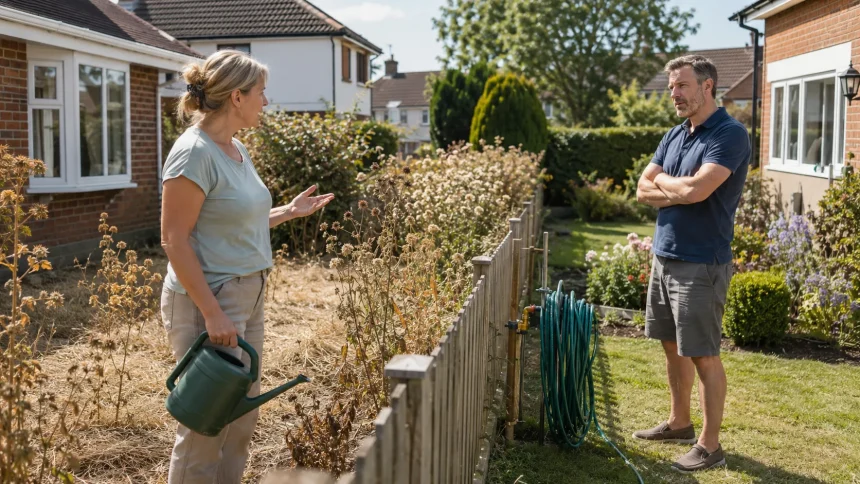
Households supporting restrictions tend to view them as a temporary response to drought, high demand and pressure on rivers, reservoirs and treatment systems.
Opponents are more likely to focus on leakage, infrastructure, bills and apparent differences between household and business restrictions.
Reasons Behind The Division
- Supporters want drinking-water supplies and river environments protected.
- Metered customers may believe payment should determine how much water they can use.
- Gardeners worry about vegetables, fruit plants and wildlife during prolonged heat.
- Critics question executive rewards, leakage levels and delayed reservoir construction.
- Some households believe commercial users should face comparable restrictions.
Official research offers additional context. The official hosepipe ban research found 66% support for bans when water levels fall, including 61% in places affected during 2025.
The newer poll’s 49% local-support figure is not directly comparable because the questions, samples, timing and circumstances differ.
The comparison nevertheless suggests that general support in principle can weaken when people are asked about an active restriction in their own area.
How Does Trust In Water Companies Affect Support For Restrictions?
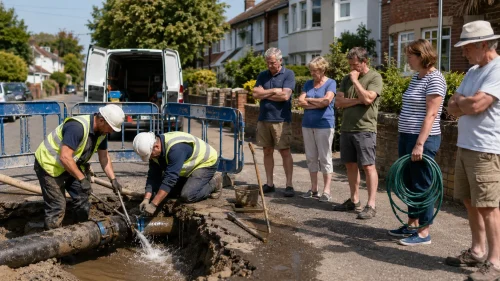
Trust is central to the public opinion hosepipe ban debate because customers are being asked to change their behaviour while judging whether suppliers have met their own responsibilities.
Government research found that 47% considered it unfair to request household cutbacks before companies had taken visible action themselves. The figure rose to 58% among respondents who had experienced a ban in 2025.
Water Leakage And Infrastructure Confidence
Critics frequently argue that leaking pipes and limited storage capacity should be addressed before household use is restricted. The Government has instructed companies to prioritise repairs, while ministers have also referred to long-term investment that includes nine proposed reservoirs.
However, leakage and immediate drought demand are connected rather than competing explanations. Repairing the network improves long-term resilience, while reducing discretionary use can relieve current pressure on supplies and treatment works.
Do Rising Bills Affect Willingness To Comply?
Consumer research recorded an average water-company trust score of 6.07 out of 10, down from 6.28 and the lowest recorded by that study. Only 44% considered their charges fair, while 63% believed water and sewerage charges were affordable.
Those figures do not prove that bill dissatisfaction causes rule-breaking. They do show that restrictions are being introduced when confidence in the industry is already weak.
Metered customers remain covered by a Temporary Use Ban unless a particular exemption applies. A meter calculates consumption for billing; it does not override a legally imposed restriction.
Are People Likely To Ignore The Hosepipe Ban Or Merely Resent It?
Opposition should not be treated as evidence of non-compliance. Someone may disagree with a restriction, criticise a supplier and still follow the law. Equally, a person who supports bans generally might breach a particular rule because it is misunderstood or considered impractical.
Earlier official research found that 60% said they would comply during a local drought. Lack of trust was identified as the leading barrier by 25% overall and by 46% of respondents who opposed bans.
Other barriers included the time required to water by hand, unclear rules and seeing other people continue using hoses.
The newer poll found that only 10% would report a neighbour, compared with 71% who would not. That reluctance does not necessarily mean people approve of breaches. It may reflect discomfort about monitoring neighbours or uncertainty about whether an exemption applies.
Dissatisfaction with a supplier does not create a legal exemption.
Where Are Hosepipe Bans In Force And Who Is Affected?
A drought declaration and a household hosepipe ban are not the same measure. The Environment Agency assigns drought status to geographical areas, while individual suppliers introduce Temporary Use Bans within specified supply zones.
Areas Of England Experiencing Drought Conditions
Seven areas were moved into drought on 29 July 2026: East Anglia; Hertfordshire and London; Thames; Hampshire and the Isle of Wight; Devon and Cornwall; the West Midlands; and Wessex, which includes Dorset, Somerset, Wiltshire and south Gloucestershire.
The latest drought status report recorded national reservoir storage at 72%, around 9.5 percentage points below the long-term average. England received only 6.5mm of rain during July, while southern England received 1.9mm—3% of its monthly average.
Which Water Companies Have Introduced Restrictions?
The 23-million-customer figure reported with the poll described seven English suppliers operating bans, covering approximately 40% of England’s population. They were Affinity Water, Anglian Water, Cambridge Water, Southern Water, South East Water, Thames Water and South West Water.
That figure represents the position reported on 29 July. The national list subsequently expanded when restrictions for Essex and Suffolk customers began on 3 August, while restrictions were also operating in parts of west Wales.
South West Water’s Local Restriction Area
In the South West, the ban began at noon on 14 July and covers Mid Devon and parts of East Devon and Dorset, including communities around Tiverton, Cullompton, Bampton, Honiton, South Molton, Dunkeswell, Axminster and Lyme Regis. It is not a blanket ban covering every household across Devon, Cornwall or Dorset.
Residents should use the supplier’s postcode checker because nearby properties can belong to different water-resource zones.
What Can And Cannot Be Done During A Hosepipe Ban?
A Temporary Use Ban normally restricts mains water used through a hosepipe or similar equipment for specified non-essential activities. It does not prohibit ordinary drinking, cooking, washing or sanitation.
Common Household Rules
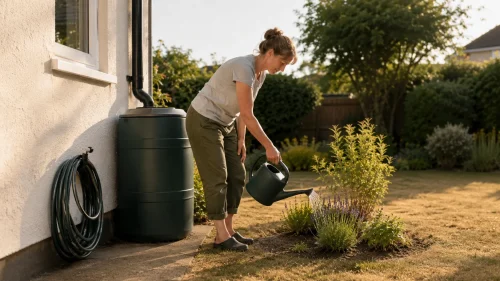
- Water gardens with a bucket or watering can instead of a hose.
- Wash cars using a bucket rather than a connected hosepipe.
- Do not use a hose to fill paddling pools, swimming pools or hot tubs.
- Avoid hosepipe cleaning of patios, paths, decking and exterior surfaces.
- Use stored rainwater where the relevant supplier’s terms allow it.
- Check exemptions before watering food crops, ponds or newly planted areas.
Typical Restrictions And Alternatives
| Activity | Usually Restricted | Common Alternative |
| Watering a garden | Hosepipe or sprinkler | Watering can, bucket or stored rainwater |
| Washing a private car | Mains-connected hosepipe | Bucket and sponge |
| Filling a paddling pool | Hosepipe filling | Usually postponed during the ban |
| Cleaning a patio | Hosepipe or pressure washer | Sweeping or limited bucket use |
| Watering vegetables | Depends on exemptions | Watering can where practical |
| Drip irrigation | Allowed only under some notices | Approved timed low-pressure system |
Some legal notices allow a hosepipe for domestic food crops where using a watering can is not reasonably practical. Approved drip systems may also be permitted when fitted with a timer and pressure-reducing valve and when they deliver water directly to the soil without spray or run-off.
These exemptions must be confirmed locally rather than assumed nationally.
How Are Exemptions, Enforcement And Fines Applied?
Exemptions can cover health and safety, disability, medical needs, animal welfare, commercial food production and certain efficient irrigation systems.
Blue Badge holders are not necessarily exempt under every supplier’s notice, although many companies provide disability-related or Priority Services arrangements.
Customers should read the temporary use ban guidance and then check their supplier’s legal notice. A breach can result in a fine of up to £1,000.
Suppliers may initially use education, written contact or warnings, particularly where a customer has misunderstood the rules. Repeated or deliberate use can be treated more seriously.
A neighbour’s report is not proof of an offence. The reported activity may involve rainwater, grey water, commercial work or a valid health, welfare or food-growing exemption.
Do Hosepipe Bans Reduce Water Demand Enough To Work?
Restrictions can reduce demand when they are clearly explained and widely followed. Yorkshire Water reported savings of up to 10% during its previous ban, while Anglian Water reported a 9% reduction after its 2026 restrictions began.
These are company-reported results and should not be assumed to apply uniformly across every region.
Evidence From Previous Restrictions
Even a single-digit reduction can be significant across millions of households during peak demand. Industry representatives reported that demand had increased by more than a third in some places during the hot weather, placing pressure on treatment works as well as raw water supplies.
A hosepipe can use about 1,000 litres an hour—more than a typical family of four uses in a day. That is why restrictions focus on high-volume discretionary uses rather than essential household consumption.
Can Public Cooperation Be Maintained?
Clear communication, visible leak repairs and fair exemptions can help maintain cooperation. Research found that 80% of people affected by a 2025 ban experienced no disruption or only minor disruption, while 56% rated the explanation received from their supplier as good or excellent.
Helen Wakeham, Director of Water at the Environment Agency, said: “The hot and dry weather means we are currently using water faster than nature can replenish it.”
That statement captures the immediate case for conservation, but long-term public support will also depend on infrastructure performance and accountability.
What Happens Next For Households Under Hosepipe Restrictions?
There is no single national date for bans to end. Suppliers assess rainfall, river flows, groundwater, reservoir storage, treatment capacity and demand before changing restrictions.
Steps For Affected Households
- Confirm which company supplies the property.
- Enter the postcode on the supplier’s official checker.
- Read the legal notice rather than relying on social media.
- Check whether a health, disability or food-growing exemption applies.
- Continue monitoring updates after periods of rainfall.
- Report serious leaks through the relevant supplier’s official service.
One wet weekend may not replenish groundwater or reservoirs after months of dry weather. Restrictions can therefore remain in place even when temperatures fall or rain briefly returns.
Conclusion
The latest public opinion hosepipe ban poll shows conditional support rather than widespread rejection. Most affected households appear likely to comply, but opposition remains significant because restrictions are being judged alongside leakage, infrastructure, bills, exemptions and trust.
Water companies can reasonably be expected to repair leaks, improve storage and explain their actions. At the same time, genuine drought conditions can require households to reduce high-volume, non-essential water use.
Because restrictions differ between suppliers and supply zones, residents should confirm the rules for their own postcode before using a hosepipe.
Frequently Asked Questions
Does A Water Meter Exempt A Household From A Ban?
No. Metered customers remain covered unless the supplier grants a specific exemption.
Can Rainwater Be Used Through A Hosepipe?
Stored rainwater can generally be used because it is not mains water. The system must not be refilled from the mains to bypass restrictions.
Can Newly Planted Trees Still Be Watered?
Some notices exempt recently planted trees or commercially planted areas. The permitted period and conditions vary between suppliers.
Are Blue Badge Holders Automatically Exempt?
Not under every legal notice. Customers should check disability and Priority Services provisions with their supplier.
Can A Pressure Washer Be Used?
A mains-connected pressure washer is generally restricted for prohibited cleaning. Health, safety and commercial exceptions may apply.
What Happens After A Neighbour Reports A Breach?
The supplier may investigate or contact the household. A report alone does not establish that an offence occurred.
Will Heavy Rain End A Ban Immediately?
Usually not. Water levels may require sustained rainfall over weeks or months before restrictions are lifted.
Note
Poll findings, company coverage, drought status, exemption terms and restriction dates can change. The article distinguishes reported survey results, official rules, company statements and editorial analysis, and follows the supplied verification and information-gain requirements.