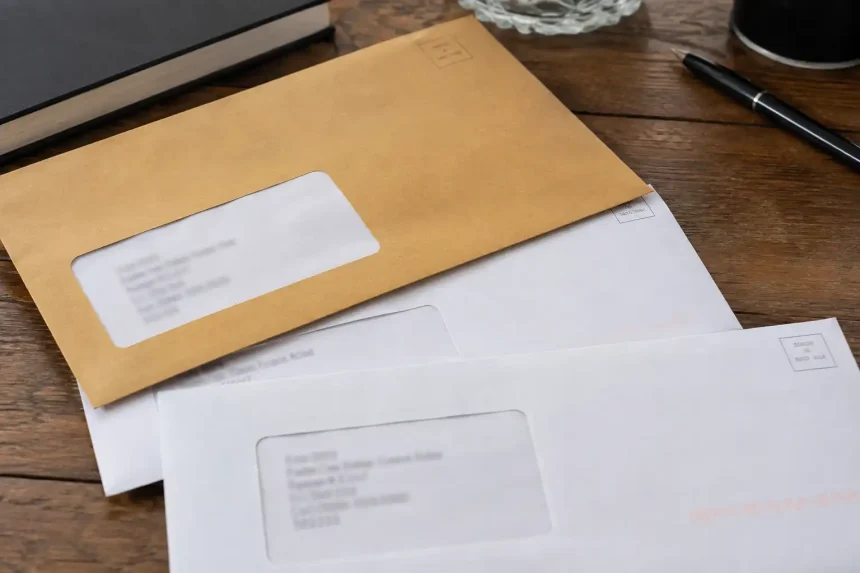
Receiving an unexpected letter showing PO Box 6887 Coventry CV3 9SD can be confusing, particularly when the organisation named inside the letter seems to have no connection with Coventry.
The important point is that PO Box 6887 does not appear to represent one individual company sending every letter. It is associated with a centralised mail-processing operation used by multiple unrelated organisations, including healthcare providers, private parking operators, councils, utilities, financial businesses and debt recovery companies.
The mail-handling operation historically associated with the address was known as iMail Comms. That business has since changed substantially: Companies House now records company number 13535125 as MICOM TECHNOLOGIES LTD, formerly IMAIL COMMS LIMITED, while the customer-facing brand became Micom in July 2025.
Therefore, seeing PO Box 6887 on an envelope does not automatically mean the letter is a scam, but neither does the PO Box prove that an individual letter is genuine. The organisation named inside the correspondence still needs to be checked independently.
What Is PO Box 6887 Coventry CV3 9SD?
PO Box 6887 Coventry CV3 9SD is principally encountered as a return and mail-handling address on high-volume business correspondence.
Instead of every NHS organisation, parking company, council or utility printing, preparing and handling thousands of letters independently, an organisation can outsource some of that work to a specialist communications provider.
The provider can receive data electronically, create or print correspondence, prepare envelopes and route letters into the postal network.
This explains something that frequently confuses recipients: the Coventry address may have very little to do with the organisation that actually wrote the letter.
A similar distinction between an organisation and the address processing its post can be seen with PO Box 1933 Midsomer Norton, another address associated with outsourced bulk-mail handling.
PO Box 6887 should therefore be thought of primarily as part of the postal infrastructure behind a letter rather than as proof of the identity of its sender.
Who Runs PO Box 6887 Coventry?
Public information associates PO Box 6887 with the mail operation historically known as iMail Comms.
There is an important update that many existing articles about the address have missed.
The company behind iMail Comms, company number 13535125, is now registered at Companies House as:
MICOM TECHNOLOGIES LTD
Its registered office is:
Unit 3 Manor Park Industrial Estate
Quinn Close
Coventry
CV3 4LH
Companies House records show that the business previously traded legally as IMAIL COMMS LIMITED and changed its registered company name on 27 June 2025.
The company subsequently announced that iMail Comms officially became Micom on 1 July 2025, with Micom standing for Multi-channel Intelligent Communications.
That means articles continuing to describe the company simply as “IMAIL COMMS LIMITED” without mentioning the name change are now outdated.
Is CV3 4LH the Same Place as PO Box 6887 CV3 9SD?
No.
This is another important distinction.
CV3 4LH is the company’s registered business address, while PO Box 6887 CV3 9SD is a postal handling or return address.
Businesses do not have to use their registered office as the return address printed on every letter. Organisations processing very large volumes of mail frequently use separate PO Boxes, fulfilment centres or mail-processing systems.
The presence of two different Coventry postcodes is therefore not evidence that something is wrong.
Anyone trying to understand the broader difference between a PO Box and an organisation’s physical location may also find the explanation of PO Box 24123 Edinburgh useful.
Why Do the NHS, Parking Companies and Councils All Use the Same PO Box?
This is the main reason PO Box 6887 causes so much confusion.
The organisations using the mailing infrastructure are not necessarily connected with one another. Instead, they can be customers of the same communications or fulfilment provider.
Micom describes its services as combining print, email, SMS and automated communications. Its background is specifically in hybrid mail and high-volume document distribution.
In a typical hybrid-mail arrangement, an organisation creates correspondence digitally and transfers it securely to its communication provider. The provider then handles activities such as printing, inserting documents into envelopes, postal preparation and distribution.
Consequently, an NHS appointment letter, parking notice and council communication can all display the same return address even though the organisations themselves have no corporate relationship.
Why Are NHS Letters Particularly Common?
There is also a stronger explanation for the volume of healthcare correspondence.
As of August 2026, public procurement information connected with the company lists approximately £251.4 million in awarded public-sector value across four buyers, with NHS Shared Business Services accounting for about 99% of the listed value.
The largest entry is a £250 million Patient/Citizen Communication, Engagement & Hybrid Mail Solutions arrangement involving NHS Shared Business Services. The procurement profile currently marks that particular entry as pending while also showing other healthcare-related arrangements.
This does not mean every NHS trust automatically uses PO Box 6887.
It does, however, demonstrate why a communications company of this type can legitimately appear behind NHS correspondence on a very large scale.
Which Organisations Have Been Linked With PO Box 6887 Coventry?
One weakness in many existing articles is that they simply state that “many companies” use the address without explaining which ones.
Recipient reports collected over several years provide a much clearer picture.
It is important to distinguish reader-reported use from a permanently verified ownership relationship. A company appearing in the following table means recipients have publicly reported receiving its correspondence bearing PO Box 6887. It does not prove that the organisation still uses the address for every mailing campaign in 2026.
| Category | Organisations Reported in Connection With PO Box 6887 | Types of Correspondence Reported |
| Private parking | ParkingEye, Euro Car Parks, UK Parking Control (UKPC), Premier Park Ltd, Regent Parking, Car Parking Management Ltd, UK Car Park Management Ltd | Parking Charge Notices, reminders and parking-related correspondence |
| Debt recovery | ACI Debt Recovery, Trace Debt Recovery, The Tracing Group | Debt notices, tracing letters and payment-related correspondence |
| NHS and healthcare | NHS hospital services, CHEC Healthcare, Clover Group GP practices | Appointments, cancellations, annual checks and healthcare administration |
| Telecoms and utilities | Virgin Media/Virgin Mobile, Severn Trent Water, Vaillant Group | Account correspondence, complaints, smart-meter communications and servicing reminders |
| Property, insurance and finance | Haart estate agents, Westfield Health, Lloyds-related correspondence | Marketing, insurance correspondence and financial communications |
| Local authorities | Stroud District Council, Broadland District Council/South Norfolk District Council | Council Tax, electoral registration and other council administration |
| Automotive and other services | Crown Honda and other service businesses | MOT reminders and general customer communications |
Some reported associations are considerably stronger than others.
For example, NHS appointment letters, CHEC correspondence and private parking notices appear repeatedly in recipient discussions. By comparison, individual reports concerning organisations such as The Tracing Group should not be treated as confirmation of an ongoing commercial relationship.
Why Did I Receive a Letter From Coventry When the Company Is Somewhere Else?
Because Coventry may be where the postal processing takes place rather than where the sender operates.
Suppose someone living in Gloucestershire receives a council letter showing:
PO Box 6887
Coventry
CV3 9SD
It would be reasonable to wonder why a Gloucestershire council was apparently writing from Coventry.
The answer may simply be that the council created the correspondence but outsourced its printing and mailing.
The process can broadly look like this:
Council or business → digital document → mail-processing company → printed letter → postal network → recipient
Coventry is therefore part of the fulfilment process.
It does not mean the council has moved to Coventry, that the recipient owes money to a Coventry company, or that Micom necessarily has any involvement in the underlying matter described in the letter.
The same principle applies to large national organisations using dedicated postal addresses, although the underlying sender may differ. For example, PO Box 75773 London demonstrates how an unfamiliar postal address can appear on important administrative correspondence without representing a customer-facing office.
Why Does My Envelope Say “Do Not Use the Return Address for Correspondence”?
This wording is particularly important.
Some envelopes associated with PO Box 6887 have been reported as stating:
“Do not use the return address for correspondence.”
That makes sense if PO Box 6887 primarily functions as part of a bulk-mail and returned-mail process.
The address printed on the back of an envelope is not necessarily the correct department for appeals, complaints, payments, medical questions or customer-service enquiries.
If a parking company sent the letter, an appeal should normally follow the parking company’s stated process.
If an NHS organisation sent it, healthcare enquiries should go to the hospital, clinic or healthcare provider.
If it concerns a council account, the council should be contacted through its normal channels.
The PO Box should not automatically be treated as the sender’s customer-service address.
Is PO Box 6887 Coventry a Scam?
PO Box 6887 Coventry should not be described as a scam address simply because many unrelated companies use it.
There is substantial evidence that genuine organisations have issued legitimate correspondence carrying the address.
However, the reverse is equally important: a real return address cannot prove that every letter displaying it is authentic.
Fraudsters can copy company names, logos, telephone numbers and postal addresses.
The safest approach is therefore to verify the organisation and the subject of the letter rather than trying to determine legitimacy from the PO Box alone.
| Signs More Consistent With Genuine Correspondence | Potential Warning Signs |
| The organisation is clearly identified | The actual sender is difficult to identify |
| The letter relates to an account, appointment or event the recipient recognises | The recipient has no connection with the organisation or subject |
| A meaningful account, patient or case reference is included | References are vague or meaningless |
| Details can be independently confirmed with the organisation | The recipient is told to use only a particular unknown phone number or website |
| The letter clearly explains why contact has been made | It makes a vague demand for money without adequate explanation |
| Payment or appeal procedures match those independently confirmed with the organisation | Bank details or payment instructions cannot be independently confirmed |
| There is reasonable time to investigate or respond | Extreme pressure is used to force immediate payment or disclosure |
| No password, PIN or security code is requested | The recipient is asked for passwords, PINs, one-time codes or full banking credentials |
A similar verification principle applies when checking unfamiliar financial correspondence such as LBG PO Box 204 Huddersfield: a legitimate-looking postal address is useful context, but it should never replace independent verification.
What If the Letter Is Addressed to Someone Who Has Never Lived Here?
This is one of the most frequently reported problems associated with PO Box 6887.
Some recipients say letters have arrived for someone they do not know, despite having lived at their address for many years.
That does not necessarily mean the unknown person is deliberately using the recipient’s address.
Possible explanations include an outdated customer database, a typing error, incorrect tracing information, inaccurate records, a previous occupier unknown to the current resident or information supplied incorrectly to the original organisation.
The key point is that Micom or the PO Box itself may only have processed the address supplied by the actual sender.
If the recipient does not recognise the person named on the envelope, they should avoid opening correspondence that is not addressed to them. Mail can normally be marked “Not known at this address” and placed back into the postal system.
If repeated letters continue from an identifiable organisation, contacting that organisation through independently verified details may help get the address corrected.
Why Have People Reported Duplicate or Photocopied-Looking Letters?
Another concern appearing in recipient reports is that some letters look photocopied, duplicated or otherwise different from correspondence produced directly by a local office.
That is not necessarily suspicious.
High-volume document fulfilment commonly involves automated printing systems. A letter can be generated digitally by a council, NHS organisation or business, transferred to a mailing provider and printed centrally.
The result may therefore look slightly different from a letter printed inside the sender’s own office.
What matters is whether the information can be independently verified.
If, for example, a Council Tax letter shows the correct account details but appears to have been produced in Coventry, the recipient should contact the council directly and ask whether the communication is genuine.
What Should You Do After Receiving a Letter From PO Box 6887 Coventry?
The safest response is to treat the named organisation as the sender and PO Box 6887 as the mailing infrastructure behind it.
- Read the letter carefully. Identify the company, NHS organisation, council, parking operator or other body actually named inside.
- Check whether the subject makes sense. Consider recent appointments, parking activity, utility accounts, debts, complaints, insurance policies or other dealings that could explain the correspondence.
- Verify the organisation independently. Do not rely solely on a telephone number, QR code, website or bank details printed on an unexpected letter.
- Check the reference information. Genuine correspondence will commonly provide a case, customer, patient, account or parking notice reference that the original organisation can verify.
- Do not send correspondence automatically to PO Box 6887. If the envelope states that the return address should not be used for correspondence, follow the actual organisation’s verified contact or appeal procedure.
- Investigate mistakes rather than ignoring them. A parking charge, medical appointment, Council Tax issue or financial notice sent incorrectly can still require clarification.
- Keep evidence where necessary. Retain the original envelope and letter if there is a dispute over when something was sent, where it originated or what information was provided.
These checks are also useful for other unfamiliar addresses such as PO Box 453 Mitcheldean, where identifying the organisation behind the correspondence is more important than judging the envelope from its PO Box alone.
What If the Letter Is a Parking Charge Notice?
Parking companies are among the organisations most frequently reported in connection with PO Box 6887.
A recipient should not assume that a parking charge is valid simply because it looks official, but nor should it be discarded merely because it came through a shared mailing address.
Check which parking operator issued the notice, the vehicle registration, date, location, entry and exit details, alleged breach and appeal deadline.
If photographs or Automatic Number Plate Recognition data are mentioned, compare them carefully with where the vehicle actually was.
Any appeal should normally be made through the parking operator’s verified appeal procedure, not simply by writing to the return PO Box unless the operator specifically instructs the recipient to do so.
Is PO Box 6887 Used Only for Parking and Debt Letters?
No.
This is one of the biggest misconceptions surrounding the address.
Parking and debt recovery generate many online searches because people are more likely to investigate an unexpected demand for money. However, recipient reports also associate PO Box 6887 with routine NHS appointments, GP communications, water-company notices, Virgin Media correspondence, MOT reminders, insurance communication, electoral registration and council administration.
Receiving a letter from PO Box 6887 therefore does not mean somebody necessarily owes money.
The contents of the letter determine its purpose.
Is the Correct Postcode CV3 9SD or CV3 9LY?
The version most repeatedly documented on actual recipient envelopes is:
PO Box 6887
Coventry
CV3 9SD
A number of online articles also publish CV3 9LY.
However, those articles generally do not provide primary evidence showing that CV3 9LY is the current return postcode for the PO Box.
Because of that discrepancy, CV3 9SD is the safer version to use when discussing the specific return address repeatedly reported by recipients.
The two postcodes should not simply be treated as interchangeable without confirmation from the organisation concerned.
Can You Visit PO Box 6887 Coventry?
A PO Box should not be treated as a customer-facing office.
Someone receiving a letter from the address should not travel to Coventry expecting to find the NHS department, parking company, debt agency, bank or council that sent it.
The actual sender may operate hundreds of miles away.
For enquiries, complaints, appeals or payments, use the verified contact method belonging to the organisation named inside the letter.
Can You Opt Out of Letters From PO Box 6887?
There is no single universal opt-out because PO Box 6887 can be used to process communications for multiple organisations.
Whether a letter can be stopped depends on why it was sent.
Marketing communications may offer preference or opt-out options. Routine account correspondence may continue while someone remains a customer. Statutory notices, medical letters, debt communications, parking notices and council correspondence may need to be delivered regardless of ordinary marketing preferences.
The request should therefore be made to the organisation responsible for the correspondence, not to PO Box 6887 itself.
What Is the Most Important Thing to Remember About PO Box 6887 Coventry?
The most important fact is that PO Box 6887 Coventry CV3 9SD is better understood as shared mail-processing infrastructure than as the identity of a single sender.
It has been publicly associated with the operation formerly known as iMail Comms, whose company is now registered as MICOM TECHNOLOGIES LTD and operates under the Micom brand.
That explains how apparently unrelated organisations from NHS healthcare services to private parking companies, councils and utilities — can generate correspondence displaying the same Coventry return address.
A letter should therefore be judged on who is named inside it, why they are contacting the recipient and whether those details can be independently verified.
Do not assume it is a scam simply because PO Box 6887 appears on the envelope. Equally, do not make a payment or provide sensitive information merely because the PO Box itself appears legitimate.
FAQs About PO Box 6887 Coventry
Who Owns PO Box 6887 Coventry CV3 9SD?
Public information and historic mail examples associate the address with the mail-handling operation formerly known as iMail Comms. The company behind that operation, company number 13535125, is now registered as MICOM TECHNOLOGIES LTD and operates using the Micom brand.
Is PO Box 6887 Coventry a Scam?
The address itself should not be described as a scam address. Genuine NHS organisations, parking companies, councils, utilities and other businesses have been reported using mail carrying this return address. Individual letters should nevertheless be verified independently.
Why Did I Receive an NHS Letter From Coventry?
An NHS organisation can outsource printing and postal fulfilment to a specialist communications provider. This means the healthcare organisation may create the communication while a Coventry-based mail-processing operation prints and distributes it.
Is PO Box 6887 Connected to Euro Car Parks?
Euro Car Parks correspondence has repeatedly been reported carrying PO Box 6887 as a return address. However, the PO Box is not exclusive to Euro Car Parks and is associated with correspondence from many unrelated organisations.
Is PO Box 6887 Connected to Parkingeye?
ParkingEye is another parking company repeatedly mentioned in recipient reports concerning the address. A ParkingEye letter should still be checked directly against the company’s verified records and notice information.
Why is CV3 9LY Sometimes Shown Instead of CV3 9SD?
Some online articles publish CV3 9LY, while recipient envelope reports repeatedly show CV3 9SD. Because primary evidence supporting CV3 9LY as the current address is limited, CV3 9SD is the more reliably documented version for this particular PO Box.
Is Po Box 6887 a Royal Mail Office?
The address functions as a postal PO Box/return address rather than a customer-facing office for the organisations sending the letters. The presence of Royal Mail in the delivery process does not mean Royal Mail created or authorised the contents of the correspondence.
What Should I Do if a PO Box 6887 Letter is for a Stranger?
Do not assume that the person is deliberately using your address. The issue could result from outdated or incorrect records. Mail for an unknown person can generally be marked “Not known at this address” and returned through the postal system. If letters continue, contact the named sender through independently verified details.
Should I Reply Directly to PO Box 6887 Coventry?
Not unless the organisation specifically tells you to. Some envelopes explicitly state that the return address should not be used for correspondence. Contact the organisation named inside the letter and follow its verified payment, appeal, complaint or customer-service process instead.