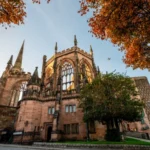
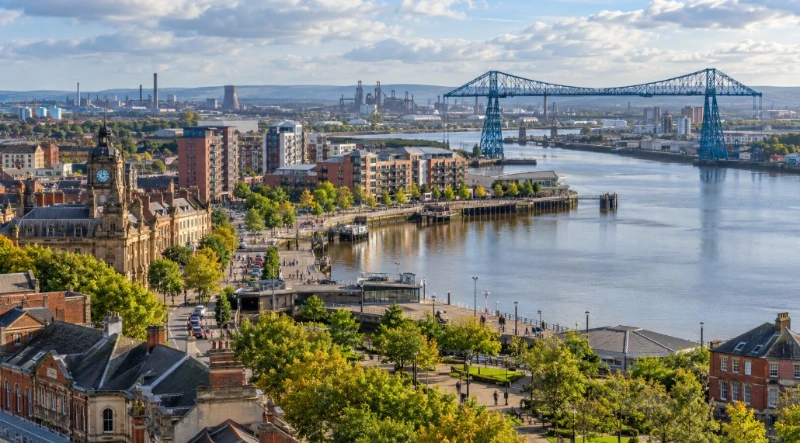
Middlesbrough is in the ceremonial county of North Yorkshire, England. It is also historically part of Yorkshire, specifically the former North Riding of Yorkshire.
However, Middlesbrough is governed independently by Middlesbrough Council, which operates as a unitary authority rather than being administered by North Yorkshire Council.
This distinction is the main reason the question “what county is Middlesbrough in?” can produce several different answers.
Middlesbrough was historically in Yorkshire, became part of the county of Cleveland in 1974, and then became a unitary authority when Cleveland was abolished in 1996.
Today, it is ceremonially part of North Yorkshire while also belonging to the wider Teesside built-up area and Tees Valley in North East England.
Where Exactly Is Middlesbrough Located in the UK?
The town sits at approximately 54.57° north and 1.23° west.
Geographically, Middlesbrough occupies an interesting position. It lies on the northern edge of traditional Yorkshire territory, with the River Tees historically forming much of the boundary between Yorkshire and County Durham.
The centre of Middlesbrough is roughly:
- 4 miles southeast of Stockton-on-Tees
- 8 miles west of Redcar
- 12 miles south of Hartlepool
- 27 miles southeast of Durham
- 40 miles south of Newcastle upon Tyne
- 46 miles north of York
Its location close to the River Tees was fundamental to Middlesbrough’s development. The town grew rapidly after the arrival of the Stockton and Darlington Railway and the development of port facilities during the nineteenth century.
Middlesbrough now forms part of a continuous urban and economic area around the lower Tees rather than functioning as an isolated North Yorkshire market town.
What County Is Middlesbrough In and Why Is It Significant?
Middlesbrough is in the ceremonial county of North Yorkshire. However, this should not be confused with the area administered by North Yorkshire Council.
Middlesbrough Council is a separate unitary authority with responsibility for most local government services within the Borough of Middlesbrough.
The modern position can therefore be summarised as:
| Geographic or Administrative Term | Middlesbrough’s Position |
| Ceremonial County | North Yorkshire |
| Historic County | Yorkshire, traditionally North Riding |
| Local Authority | Middlesbrough Council |
| Council Type | Unitary authority |
| Former Administrative County | Cleveland |
| English Region | North East England |
| Wider Regional Area | Tees Valley |
| Urban Area | Teesside |
This distinction is important because England has several overlapping forms of county and administrative geography.
The difference between historic, ceremonial and administrative areas is explored more broadly in this explanation of British counties, boundaries and modern county systems.
Why Middlesbrough’s County Matters?
Knowing Middlesbrough’s county is useful for more than geography quizzes.
County and council distinctions can affect how people interpret:
- Official records
- Historic documents
- Genealogy
- Property information
- Local government services
- Ceremonial geography
- Addresses
- Regional statistics
- Business locations
- Planning responsibilities
For example, a historic document may identify Middlesbrough as being in the North Riding of Yorkshire, while a document produced between 1974 and 1996 may give the county as Cleveland.
A modern geographic source may instead state North Yorkshire, while council services are delivered by Middlesbrough Council. Each description can make sense when the period and purpose are understood.
Is Middlesbrough in Yorkshire or Teesside?
Middlesbrough can correctly be described as being in both Yorkshire and Teesside, depending on what type of geography is being discussed.
Historically, Middlesbrough developed within the North Riding of Yorkshire.
For ceremonial purposes today, it is part of North Yorkshire.
At the same time, Middlesbrough is one of the principal urban centres of Teesside, the heavily urbanised area surrounding the lower River Tees.
It is also one of the five council areas forming the Tees Valley Combined Authority.
The terms do not compete with each other because they describe different geographic layers.
| Term | Does It Apply to Middlesbrough? | Meaning |
| Yorkshire | Yes | Historic geographic identity |
| North Riding of Yorkshire | Yes | Traditional historic division |
| North Yorkshire | Yes | Current ceremonial county |
| Teesside | Yes | Urban and cultural area around the Tees |
| Tees Valley | Yes | Wider economic and combined-authority area |
| Cleveland | Historically | Administrative county from 1974 to 1996 |
This same mixture of historic counties, Cleveland and Tees Valley can also be seen in nearby towns. For example, Hartlepool’s county position differs from Middlesbrough’s even though both were part of Cleveland and now belong to Tees Valley.
What Type of County Is North Yorkshire for Middlesbrough?
For Middlesbrough, North Yorkshire is the ceremonial county. Ceremonial counties are geographical areas used primarily for purposes such as lieutenancy and traditional county representation.
They should not automatically be treated as council areas. North Yorkshire Council is a separate unitary local authority covering a large surrounding area, but it does not administer Middlesbrough.
That means these two statements are both correct:
- Middlesbrough is in the ceremonial county of North Yorkshire.
- Middlesbrough is not governed by North Yorkshire Council.
Middlesbrough Council provides local authority services within the borough.
Why Do Some People Still Associate Middlesbrough With Cleveland?
The answer lies in local government history.
Cleveland was created as a new county on 1 April 1974.
It covered four districts centred on:
- Middlesbrough
- Stockton-on-Tees
- Hartlepool
- Langbaurgh, later renamed Redcar and Cleveland
The county reflected the strong economic and industrial connections surrounding the River Tees. For more than two decades, residents legitimately used Cleveland as their county in administrative and everyday contexts. Cleveland County Council was abolished in 1996, and its districts became unitary authorities.
The name nevertheless remains familiar. It survives in organisations and place names including Cleveland Police, Cleveland Fire Brigade and the Borough of Redcar and Cleveland.
Older addresses, business records and personal documents may therefore describe Middlesbrough as being in Cleveland. That does not mean those records were wrong. They reflect the administrative geography of their time.
Is Middlesbrough a Town, a County, or Both?
Middlesbrough is officially a town, not a county. It is also the principal settlement within the Borough of Middlesbrough, which is a unitary authority area.
The use of “borough” and “unitary authority” can sometimes make Middlesbrough sound like a county-level entity, but it is not a ceremonial county in its own right.
Its current position is:
- Middlesbrough: The town
- Borough of Middlesbrough: The local government area
- Middlesbrough Council: The unitary local authority
- North Yorkshire: The ceremonial county
- North East England: The official English region
Middlesbrough is also not officially a city. Despite its population, university, regional importance and substantial urban area, it retains town status.
Middlesbrough’s Geographical and Administrative Identity
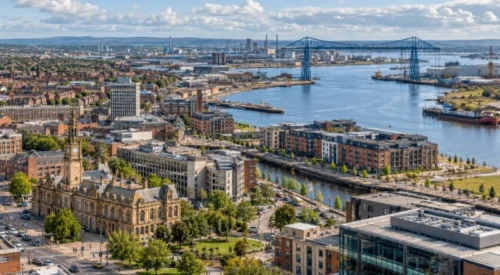
Middlesbrough’s identity makes more sense when its different geographic layers are separated rather than trying to fit everything under one county label.
Middlesbrough: Geographical and Administrative Profile 2026
| Detail | Middlesbrough Information |
| Settlement Type | Town |
| Ceremonial County | North Yorkshire |
| Historic County | Yorkshire |
| Historic Riding | North Riding of Yorkshire |
| Local Authority | Middlesbrough Council |
| Authority Type | Unitary authority |
| Unitary Authority Since | 1996 |
| Region | North East England |
| Wider Regional Area | Tees Valley |
| Main Urban Area | Teesside |
| Former County | Cleveland |
| 2025 Population Estimate | 152,795 |
| Borough Area | Around 54 km² or 21 square miles |
| Main River | River Tees |
| Post Town | MIDDLESBROUGH |
| Main Postcode Districts | TS1 to TS9 across the wider area |
| Telephone Dialling Code | 01642 |
| Police | Cleveland Police |
| Fire and Rescue | Cleveland Fire Brigade |
| Ambulance | North East Ambulance Service |
| Main Railway Station | Middlesbrough |
| Main Roads | A19 and A66 |
The profile shows why simply saying “Middlesbrough is in North Yorkshire” is correct but incomplete. Its ceremonial county, historic county, council area, economic region and urban identity are all slightly different concepts.
A Brief History of Middlesbrough’s County and Governance
Middlesbrough’s modern urban history is surprisingly short compared with many major English towns.
There had been religious settlement in the area for centuries, including a Benedictine monastic presence, but Middlesbrough remained extremely small into the early nineteenth century.
Its transformation began when Joseph Pease and other investors developed land beside the River Tees for the coal trade.
The Stockton and Darlington Railway reached the area in 1830, helping Middlesbrough develop as a port.
The discovery and exploitation of ironstone in the nearby Cleveland Hills accelerated growth dramatically.
Middlesbrough became one of Britain’s most important iron and steel centres and earned the nickname Ironopolis.
Its local government status changed repeatedly as the town expanded.
| Period | Middlesbrough’s Position |
| Historically | Part of Yorkshire and the North Riding |
| 1853 | Became a municipal borough |
| 1889 | Became a county borough, independent of the North Riding County Council for administration |
| 1968 | Became part of the County Borough of Teesside |
| 1974 | Became part of the new county of Cleveland |
| 1996 | Cleveland abolished and Middlesbrough became a unitary authority |
| Today | Unitary authority in ceremonial North Yorkshire |
This history is why Middlesbrough may appear under several different county names when researching family history, addresses, businesses or historic records.
What Makes Middlesbrough Important Within North Yorkshire?
Middlesbrough is not the county town of North Yorkshire and is not administered by North Yorkshire Council. Its importance comes instead from being one of the largest and most heavily urbanised settlements within the wider ceremonial county.
Middlesbrough differs substantially from the rural landscapes often associated with North Yorkshire.
Its identity was built around:
- Port activity
- Iron production
- Steelmaking
- Heavy engineering
- Chemical industries
- Railway development
- Manufacturing
- Education
- Digital industries
- Healthcare
- Regional services
This industrial character gives Middlesbrough a distinctive place within Yorkshire’s wider history.
While much of North Yorkshire is associated with countryside, national parks, market towns and tourism, Middlesbrough represents the county area’s industrial and urban north-eastern edge.
Its close connections with Stockton, Redcar, Hartlepool and Darlington also mean Middlesbrough often functions economically as part of Tees Valley rather than in isolation.
How Is Middlesbrough Governed Today?
Middlesbrough is governed by Middlesbrough Council, a unitary authority. A unitary authority combines responsibilities that are divided between county councils and district councils in some other parts of England.
This means North Yorkshire Council does not provide Middlesbrough’s main local government services.
Middlesbrough Council is responsible for areas including:
- Social care
- Children’s services
- Waste and recycling
- Housing responsibilities
- Local planning
- Roads and highways
- Public health
- Libraries
- Local environmental services
- Council tax administration
Middlesbrough also uses a directly elected mayor system.
As of 2026, Chris Cooke is the elected Mayor of Middlesbrough and works with the council’s executive structure.
The borough is divided into 20 electoral wards.
At a wider level, Middlesbrough Council is one of five local authorities participating in the Tees Valley Combined Authority alongside Darlington, Hartlepool, Redcar and Cleveland, and Stockton-on-Tees.
That combined authority deals with strategic areas such as economic development, transport, investment and regeneration across the wider region.
Will Middlesbrough’s Local Government Structure Change?
As of October 2026, Middlesbrough continues to operate as a unitary authority and remains within the ceremonial county of North Yorkshire.
There has been no confirmed change transferring Middlesbrough into North Yorkshire Council or recreating Cleveland as a county council area.
England’s wider devolution and local government structures continue to evolve, and strategic authorities are taking on increasingly important regional responsibilities.
However, devolution should not automatically be interpreted as a change in Middlesbrough’s county.
A transfer of additional regional powers to Tees Valley does not by itself mean Middlesbrough stops being:
- A unitary authority
- Part of ceremonial North Yorkshire
- Historically part of Yorkshire
- Part of Teesside and Tees Valley
Any major future change to local government boundaries would require a formal process.
Middlesbrough’s Wider Civic and Regional Role
Middlesbrough plays a significant role beyond its own council boundary.
The town is an important centre for:
- Higher education
- Healthcare
- Retail
- Professional services
- Engineering
- Digital businesses
- Arts and culture
- Regional employment
- Transport
- Regeneration
Teesside University attracts students from across Britain and overseas, while James Cook University Hospital provides major healthcare services for a much wider population.
Middlesbrough is therefore both a distinct local authority and an important centre within the broader Tees Valley economy.
Top Things Middlesbrough Is Known For
Middlesbrough’s identity has been shaped by industry, engineering, football, culture and its position on the River Tees.
1. Middlesbrough’s Iron and Steel Heritage
Few aspects of Middlesbrough’s history are more important than iron and steel. The discovery of ironstone in the Cleveland Hills during the nineteenth century transformed the area.
Ironworks expanded rapidly, and by the Victorian period Middlesbrough had become one of Britain’s leading centres of iron production.
Its industrial strength earned it the nickname Ironopolis. Middlesbrough and the wider Teesside area later became major centres for steel, engineering, shipbuilding and chemical production.
Steel associated with Middlesbrough firms was used in internationally important engineering projects, including the Sydney Harbour Bridge.
2. Tees Transporter Bridge
The Tees Transporter Bridge is one of Middlesbrough’s most recognisable landmarks. Opened in 1911, it crosses the River Tees between Middlesbrough and Port Clarence.
Its towering steel structure became an enduring symbol of the area’s engineering and industrial heritage. Even for people who have never visited Middlesbrough, images of the Transporter Bridge are frequently associated with Teesside.
3. Middlesbrough FC and Riverside Stadium
Middlesbrough Football Club is a major part of local identity. Known widely as Boro, the club plays at the Riverside Stadium beside the River Tees.
The stadium opened in 1995, replacing Ayresome Park, which had served as the club’s home for more than 90 years.
Football remains one of the strongest cultural connections between Middlesbrough residents and the wider Teesside community.
4. Teesside University
Teesside University is based in central Middlesbrough and has become an important part of the town’s modern economy and identity. Its presence brings students, research, employment and investment into the centre of Middlesbrough.
The university has particular links with areas including:
- Digital technology
- Animation
- Computer games
- Engineering
- Healthcare
- Business
- Creative industries
These sectors reflect Middlesbrough’s gradual shift from an economy dominated by heavy industry towards a more diverse urban economy.
5. Middlesbrough Institute of Modern Art
The Middlesbrough Institute of Modern Art, commonly known as MIMA, is one of the town’s main cultural institutions. Located around Centre Square, it hosts modern and contemporary art while contributing to Middlesbrough’s wider creative sector.
Its location close to the town centre, university and civic buildings makes it part of a broader cultural district.
6. Stewart Park and Captain Cook Heritage
Stewart Park occupies a large green area in Marton, in southern Middlesbrough. The park is closely connected with the history of explorer Captain James Cook, who was born in Marton in 1728.
The Captain Cook Birthplace Museum is located within the park and explores Cook’s life, voyages and historical significance. The attraction also demonstrates how Middlesbrough’s identity extends beyond industrial history.
7. Albert Park and the Dorman Museum
Albert Park is another important Middlesbrough green space. Opened in the nineteenth century, it provides landscaped parkland close to the town centre.
The nearby Dorman Museum contains collections covering natural history, local history, archaeology and decorative arts.
Together, Albert Park and the museum form one of Middlesbrough’s established cultural and recreational areas.
Middlesbrough Population in 2026: Growth and Demographics
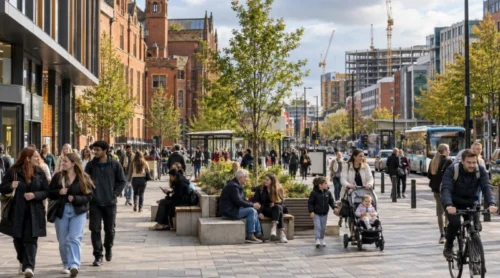
Middlesbrough’s population depends on the geographic area and statistical measure being used.
The 2021 Census recorded approximately 143,900 people within the Middlesbrough local authority area.
More recent population estimates have been higher.
The latest published mid-2025 estimate places the population of the Middlesbrough local authority at 152,795.
Middlesbrough Council’s 2026 to 2027 planning material uses a 2026 population projection of approximately 155,476.
That number should be treated as a projection rather than a completed census count or final mid-year estimate.
Middlesbrough Population Insights 2026
| Year | Population | Type |
| 2011 | 138,368 | Census-era figure |
| 2021 | 143,943 | Census-based local authority figure |
| 2022 | 149,095 | Population estimate |
| 2023 | 153,186 | Population estimate |
| 2024 | 154,700 | Revised population estimate |
| 2025 | 152,795 | Latest mid-year estimate |
| 2026 | Around 155,476 | Projection used in council planning |
Population figures should therefore always be accompanied by a year and geographic definition.
A figure for the continuous Middlesbrough built-up area can differ from one covering only the Borough of Middlesbrough because urban development extends beyond local authority boundaries.
Changes in the methodology used to estimate population can also lead to revisions of earlier numbers.
The most reliable wording for current use is therefore:
Middlesbrough had an estimated local authority population of 152,795 in mid-2025, while planning projections put the 2026 population at around 155,000.
Why Is Middlesbrough Important in North Yorkshire’s Identity?
Middlesbrough has a somewhat different identity from many other places within ceremonial North Yorkshire.
Rather than developing primarily as a medieval city, market town or rural centre, modern Middlesbrough expanded dramatically through nineteenth-century industry.
That makes the town an important part of the wider story of Yorkshire’s industrial development.
1. Economic and Industrial Strength
Middlesbrough’s historic economic importance came from iron, steel, engineering, port activity and chemicals.
Heavy industry no longer dominates employment in the way it once did, but engineering and advanced manufacturing remain important to the wider area.
Modern growth sectors also include:
- Digital technology
- Video games
- Creative industries
- Healthcare
- Education
- Business services
- Advanced manufacturing
Nearby Teesport and major industrial sites along the Tees continue to connect the area with international trade and manufacturing.
2. Cultural and Educational Influence
Middlesbrough has developed into a significant educational and cultural centre for Tees Valley.
Teesside University brings a substantial student population into the town and supports research and specialist skills.
Cultural organisations, museums, theatres, galleries and events contribute to a distinctive identity that is increasingly separate from the town’s historic dependence on heavy industry.
Middlesbrough’s heritage nevertheless remains visible through its architecture, industrial landmarks and local institutions.
3. Urban Growth and Regeneration
The town has undergone repeated periods of redevelopment since the decline of traditional heavy industries. Middlehaven, the area around the former docks, is one major example.
It contains modern development including Middlesbrough College, Riverside Stadium and new commercial and residential projects. Digital and creative businesses have also been encouraged through areas such as the Boho Zone.
Town-centre regeneration continues to focus on increasing residential development, improving public spaces and creating new uses for buildings and land.
What Are the Nearest Towns and Villages to Middlesbrough?
Middlesbrough sits at the centre of a closely connected group of towns and communities around the River Tees. Distances below are approximate and can vary depending on the starting point and route used.
1. Thornaby-on-Tees – Around 3 Miles West
Thornaby-on-Tees lies immediately west of Middlesbrough and forms part of the wider Teesside urban area.
Development between the two towns means the transition can feel almost continuous in some places.
Thornaby is administered by Stockton-on-Tees Borough Council.
2. Stockton-on-Tees – Around 4 Miles Northwest
Stockton-on-Tees lies west and northwest of Middlesbrough on the River Tees.
The two towns have exceptionally close historical connections.
The Stockton and Darlington Railway, which later extended to Middlesbrough, played a major role in the industrial development of the entire area.
Stockton and Middlesbrough remain closely linked by roads, rail services, buses, employment and shopping.
3. Redcar – Around 8 Miles East
Redcar lies east of Middlesbrough close to the North Sea coast.
It forms part of the Borough of Redcar and Cleveland and has strong industrial connections with the wider Teesside area.
Redcar also provides access to coastal communities further east, including Marske-by-the-Sea and Saltburn-by-the-Sea.
4. Stokesley – Around 9 Miles South
Stokesley is a market town south of Middlesbrough. Its character is considerably more rural than central Middlesbrough and the industrial Teesside corridor.
The town sits close to the North York Moors and Cleveland Hills, making it a gateway between urban Teesside and surrounding North Yorkshire countryside.
5. Guisborough – Around 9 Miles Southeast
Guisborough lies southeast of Middlesbrough at the northern edge of the North York Moors. The town is known for Guisborough Priory and its proximity to the Cleveland Hills. It forms part of the Borough of Redcar and Cleveland and has strong commuting and transport links with Middlesbrough.
What Are the Cities That Are Close to Middlesbrough?
Several major northern English cities can be reached reasonably easily from Middlesbrough.
Approximate distances vary by route.
1. Durham – Around 27 Miles Northwest
Durham is one of the closest cities to Middlesbrough.
The historic cathedral city lies north-west of Teesside and is closely connected to Middlesbrough through regional road and rail networks.
Durham’s position in County Durham also illustrates how the River Tees area sits close to the historic divide between Durham and Yorkshire.
2. Sunderland – Around 31 Miles North
Sunderland lies on the North Sea coast north of Middlesbrough.
The two places share elements of northern England’s industrial history, particularly shipbuilding and manufacturing.
Road connections are primarily via the A19.
3. Newcastle upon Tyne – Around 40 Miles North
Newcastle upon Tyne is the largest major city north of Middlesbrough and one of the principal economic and cultural centres of North East England.
The A19 and regional rail network provide connections between Teesside and Tyneside.
Although both Middlesbrough and Newcastle are within the North East England region, their ceremonial counties differ.
4. York – Around 46 Miles South
York lies south of Middlesbrough and provides an important rail connection between Teesside and the rest of England.
Unlike industrial Middlesbrough, York is particularly associated with Roman, Viking and medieval history.
Both nevertheless have deep Yorkshire connections.
5. Leeds – Around 65 Miles Southwest
Leeds is one of the largest cities in Yorkshire and a major centre for finance, retail, education and professional services.
It lies considerably further southwest than York but remains accessible from Middlesbrough by road and rail.
These connections help place Middlesbrough within a broader northern network rather than viewing the town solely through its immediate Teesside surroundings.
How Well Connected Is Middlesbrough?
Middlesbrough’s growth has always been closely tied to transport.
Railways and the River Tees helped create the modern town, while today’s road, rail and bus systems continue to connect Middlesbrough with surrounding communities and major British cities.
1. Road Network
Two major roads are particularly important. The A66 runs through Middlesbrough and provides an east-west route across the Tees Valley.
Westbound, it connects towards Darlington and eventually the Pennines. Eastbound, it leads towards Redcar and the Tees estuary.
The A19 passes close to the town and provides an important north-south connection.
Northbound routes lead towards Sunderland, Tyneside and other parts of the North East, while southbound journeys provide access towards North Yorkshire, York and the wider national road network.
2. Rail Connections
Middlesbrough railway station is located close to the town centre.
Rail services connect Middlesbrough with important destinations including:
- York
- Darlington
- Newcastle
- Manchester
- Leeds
- Redcar
- Saltburn
- Whitby and surrounding routes through regional connections
- London through direct and connecting East Coast services
York and Darlington provide particularly important connections with the East Coast Main Line.
This allows Middlesbrough passengers to travel onward to destinations throughout Britain.
3. Public Transport
Bus services connect central Middlesbrough with neighbouring towns, residential districts and employment areas across Teesside.
Important local destinations include:
- Stockton-on-Tees
- Thornaby
- Redcar
- Guisborough
- Hartlepool
- Coulby Newham
- Marton
- Nunthorpe
- Linthorpe
- North Ormesby
Middlesbrough bus station acts as one of the principal hubs for local and regional bus travel.
4. Cycling and Walking Infrastructure
Middlesbrough has a growing network of walking and cycling routes connecting residential areas, the town centre and the River Tees.
Routes along former industrial areas and riverside corridors provide opportunities to move between parts of central Teesside without relying entirely on major roads.
Investment across Tees Valley has also increasingly focused on active travel as part of wider transport planning.
5. Teesside International Airport
Teesside International Airport is the closest commercial airport to Middlesbrough.
It is located near Darlington, west of the town. Its proximity gives Middlesbrough access to scheduled passenger services without travelling to the larger airports further north or south.
Newcastle International Airport is another important option and offers a wider range of destinations.
Conclusion
So, what county is Middlesbrough in? Middlesbrough is in the ceremonial county of North Yorkshire, within North East England.
Historically, it belongs to Yorkshire and the North Riding of Yorkshire. Between 1974 and 1996, it formed part of the administrative county of Cleveland. Since Cleveland was abolished, Middlesbrough has operated as its own unitary authority, governed by Middlesbrough Council.
The town is also a central part of Teesside and one of the five local authority areas forming Tees Valley. These descriptions are not contradictory. They represent different layers of Middlesbrough’s geography and history.
For the clearest modern answer:
Middlesbrough is a town in the ceremonial county of North Yorkshire, governed independently by Middlesbrough Council as a unitary authority and located within the Tees Valley area of North East England.
Frequently Asked Questions
What County Is Middlesbrough In?
Middlesbrough is in the ceremonial county of North Yorkshire in North East England. It is governed separately by Middlesbrough Council as a unitary authority.
Is Middlesbrough in Yorkshire or Cleveland?
Middlesbrough is currently in ceremonial North Yorkshire and historically forms part of Yorkshire. It was part of the administrative county of Cleveland between 1974 and 1996.
Is Middlesbrough Part of North Yorkshire Council?
No, Middlesbrough is not administered by North Yorkshire Council. Local services are provided by Middlesbrough Council, which is its own unitary authority.
Is Middlesbrough in Teesside?
Yes, Middlesbrough is one of the main towns within the wider Teesside urban area. Teesside includes communities around the lower River Tees, including Middlesbrough, Stockton-on-Tees and Redcar.
Is Middlesbrough in the North East or Yorkshire?
Middlesbrough is in the North East England region while also being historically and ceremonially associated with Yorkshire. These descriptions refer to different geographical classifications and are both correct.
Is Middlesbrough a City or a Town?
Middlesbrough is officially a town, not a city. It is one of the largest urban centres in the Tees Valley area.
Was Middlesbrough Ever in Cleveland?
Yes, Middlesbrough became part of the county of Cleveland in 1974. Cleveland was abolished in 1996, after which Middlesbrough became a unitary authority within ceremonial North Yorkshire.
What Is the Historic County of Middlesbrough?
The historic county of Middlesbrough is Yorkshire, traditionally within the North Riding of Yorkshire. This historic association remains important to the town’s geographical and cultural identity.
What Region Is Middlesbrough In?
Middlesbrough is located in the official North East England region. It is also part of the wider Tees Valley economic and administrative area.
What Is Middlesbrough Famous For?
Middlesbrough is famous for its iron and steel heritage, the Tees Transporter Bridge and Middlesbrough Football Club. It is also known for Teesside University, engineering, digital industries and its important role in the wider Tees Valley economy.
Related Articles: