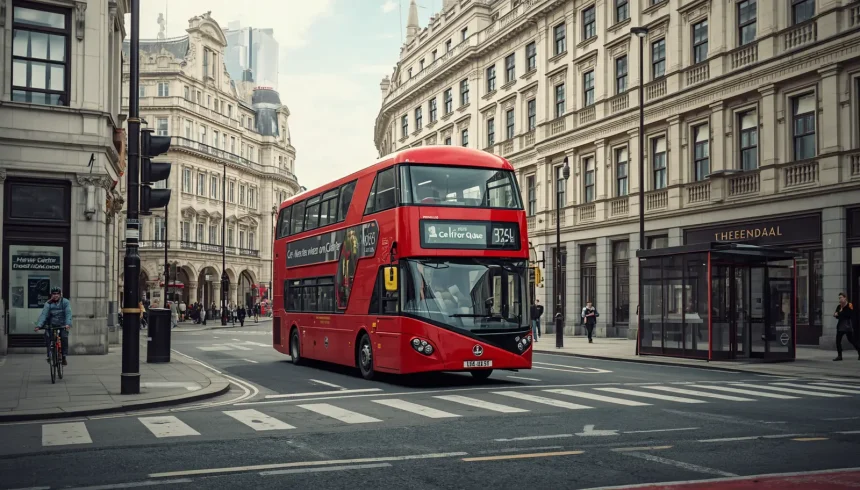
Travelling across central, east and north London is easier with the 243 bus route, which connects Waterloo Station with Wood Green Station through several busy neighbourhoods and major transport hubs. The service passes Holborn, Old Street, Shoreditch, Dalston, Stoke Newington, Seven Sisters and Tottenham, making it useful for commuters, residents and visitors.
Operating 24 hours a day, the route offers convenient links to Underground, Overground and National Rail services. This guide covers the full stop list, journey details, fares, accessibility and live arrival information for better travel planning in London.
243 Bus Route Overview
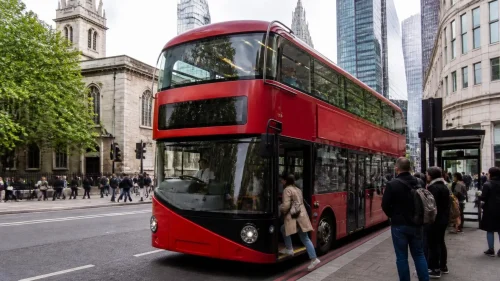
The 243 bus route is an important London bus service operating as part of Transport for London’s public transport network.
It provides a direct connection between Waterloo Station/Tenison Way and Wood Green Station, serving major central, east and north London areas such as Holborn, Old Street, Shoreditch, Hoxton, Dalston, Stoke Newington, Stamford Hill, Seven Sisters, Tottenham and Bruce Grove.
This route is useful for daily commuters, local residents, students, workers and visitors who need a direct bus connection between Waterloo, central London and Wood Green without changing services.
Key Details of the 243 Bus Route
| Detail | Information |
| Starting point | Waterloo Station/Tenison Way |
| Ending point | Wood Green Station |
| Total stops | 58 stops towards Wood Green |
| Major locations covered | Waterloo, Aldwych, Holborn, Old Street, Shoreditch, Hoxton, Dalston, Stoke Newington, Stamford Hill, Seven Sisters, Tottenham, Bruce Grove and Wood Green |
| Total distance | 9.2 miles (14.8 km) |
| Total journey time | Around 78 minutes |
| Operating days | Runs daily, including weekends |
| Operating hours | 24-hour service from Waterloo Station/Tenison Way |
| Fare | Standard London bus fare, payable by Oyster card, contactless card, mobile payment or an eligible travel pass |
The 243 bus route connects Waterloo, Holborn, Old Street, Dalston, Seven Sisters, Tottenham and Wood Green, offering a direct journey through key areas.
It links with major rail, Underground and Overground services at stations including Waterloo, Holborn, Old Street, Dalston Junction, Seven Sisters and Wood Green.
The full journey is about 9.2 miles (14.8 km) and takes around 78 minutes, though times may vary due to traffic or delays.
Operating 24 hours a day, the route supports both daytime and overnight travel, with frequency varying by time and conditions.
What Are All the 243 Bus Stops From Waterloo to Wood Green?
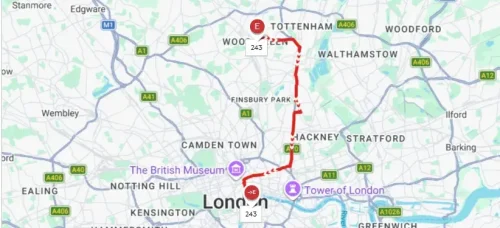
The complete stop sequence towards Wood Green is shown below. Stop letters are included where they were available in the supplied route information.
| No. | Stop Name | Stop Code |
| 1 | Waterloo Station/Tenison Way | J |
| 2 | Waterloo Bridge/South Bank | P |
| 3 | Lancaster Place | T |
| 4 | Aldwych/Drury Lane | E |
| 5 | Holborn Station | P |
| 6 | Red Lion Street | G |
| 7 | Gray’s Inn Road | CA |
| 8 | Rosebery Avenue | CU |
| 9 | Farringdon Road | E |
| 10 | St John Street | J |
| 11 | Goswell Road | BS |
| 12 | Central Street | BZ |
| 13 | St Luke’s Music Education Centre | J |
| 14 | Old Street Station | F |
| 15 | Shoreditch Fire Station | K |
| 16 | Great Eastern Street | Y |
| 17 | Shoreditch Town Hall | X |
| 18 | Waterson Street | V |
| 19 | Hoxton Station/Museum of the Home | KA |
| 20 | Pearson Street | KB |
| 21 | St Leonard’s Hospital | KC |
| 22 | Laburnum Street | KD |
| 23 | Haggerston Station | KE |
| 24 | Middleton Road | KF |
| 25 | Dalston Junction Station | C |
| 26 | Kingsland High Street/Dalston Junction | L |
| 27 | Dalston Kingsland Station | P |
| 28 | Rio Cinema | S |
| 29 | Princess May Road | N |
| 30 | Amhurst Road | P |
| 31 | Stoke Newington Police Station | R |
| 32 | Brooke Road | S |
| 33 | Stoke Newington Church Street | X |
| 34 | Stoke Newington Station | E |
| 35 | Lynmouth Road | SA |
| 36 | Stamford Hill Library | SB |
| 37 | Stamford Hill Broadway | SD |
| 38 | Egerton Road | SE |
| 39 | St Ann’s Road | TA |
| 40 | Lealand Road | TB |
| 41 | South Tottenham Station | TC |
| 42 | Seven Sisters Road | C |
| 43 | Seven Sisters Station | D |
| 44 | College of North East London | G |
| 45 | Tottenham Town Hall | U |
| 46 | Tottenham Police Station | F |
| 47 | Bruce Grove Station | J |
| 48 | Bruce Grove Station | K |
| 49 | Bruce Castle Park and Museum | LE |
| 50 | Mount Pleasant Road | LH |
| 51 | Awlfield Avenue | LJ |
| 52 | Waltheof Avenue | LK |
| 53 | The Roundway/West Arm | LL |
| 54 | Gladstone Avenue | NP |
| 55 | Morley Avenue | NR |
| 56 | Perth Road | NS |
| 57 | Wood Green Crown Court | NT |
| 58 | Wood Green Station | F |
The two Bruce Grove Station entries are separate stops with different stop letters. Passengers should check the letter shown on the bus stop flag, especially when arranging to meet someone or changing direction.
Which Important Transport Connections Does the 243 Bus Serve?
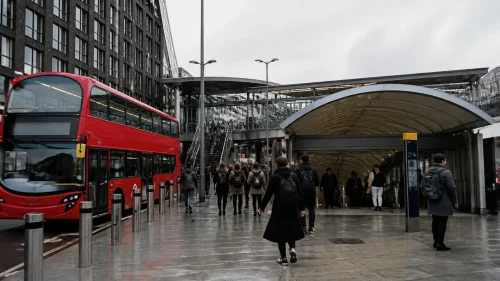
Route 243 provides connections with the London Underground, London Overground and National Rail.
Which Services Connect at Waterloo Station?
Waterloo Station/Tenison Way connects passengers with:
- Bakerloo line
- Jubilee line
- Northern line
- Waterloo & City line
- National Rail services
This makes the southern end of route 243 useful for passengers arriving from other parts of London or travelling into the capital by train.
Which Connections Are Available in Dalston?
Dalston Junction Station provides London Overground connections. The route also stops near Dalston Kingsland Station, allowing passengers to continue to other destinations across the Overground network.
Which Services Connect at Seven Sisters?
The Seven Sisters area provides connections with:
- Victoria line
- London Overground
- National Rail
Other useful interchange points include Holborn Station, Old Street Station, Hoxton Station, Haggerston Station, Stoke Newington Station, South Tottenham Station, Bruce Grove Station and Wood Green Station.
Passengers should remember that a bus stopping near a station does not necessarily mean every part of that station is step-free.
What Is the 243 Bus Timetable Towards Wood Green?
Route 243 is identified as a 24-hour service from Waterloo Station/Tenison Way. This means buses operate during the day and overnight, although the waiting time between buses may be longer during quieter periods.
A complete timetable cannot be represented accurately as one fixed list because departure times differ by:
- Boarding stop
- Day of the week
- Time of day
- Public holiday arrangements
- Temporary diversions
- Traffic conditions
- Planned or unplanned disruption
Passengers should select their boarding stop on the route page to see the applicable scheduled timetable and current arrivals.
What Did the Supplied Waterloo Live-arrival Example Show?
At 13:43:01, the supplied live-arrival display for Waterloo Station/Tenison Way showed:
| Destination | Estimated departure |
| Wood Green | 6 minutes |
| Wood Green | 14 minutes |
| Wood Green | 22 minutes |
The pattern in this example suggests an interval of approximately eight minutes between displayed services. However, this was a live snapshot rather than a guaranteed daily schedule.
What Did the Supplied Wood Green Live-arrival Example Show?
At 13:44:20, the supplied display for Wood Green Station showed services labelled towards Wood Green in:
| Displayed destination | Estimated arrival |
| Wood Green | 1 minute |
| Wood Green | 6 minutes |
| Wood Green | 16 minutes |
| Wood Green | 26 minutes |
| Wood Green | 27 minutes |
| Wood Green | 27 minutes |
These figures should be treated only as an example of what appeared on the live system at that moment. They should not be reused as scheduled departure times.
How Can Passengers Check Live 243 Bus Arrivals?
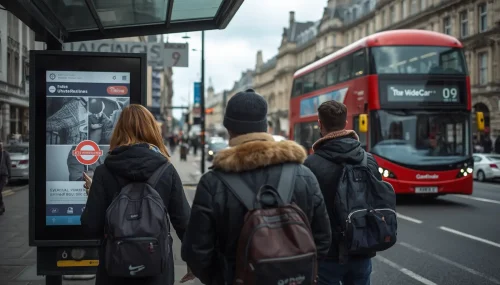
Passengers can select an individual stop on the route page to view estimated arrivals and available service-status information. A stop can also be added to favourites for easier access later.
Live arrival estimates are more useful than a static timetable when a passenger is already travelling because they may reflect the latest vehicle positions and service conditions. However, estimated times can still change.
Before leaving, passengers should:
- Confirm that they are viewing route 243.
- Check the direction displayed on the page.
- Select the correct boarding stop and stop letter.
- Review live arrivals.
- Look for disruption, diversion or stop-closure notices.
- Allow extra time during busy periods.
A timetable shows the planned service, while live arrivals show an estimate based on current operations. The two may not always match.
Does the 243 Bus Run Throughout the Night?
Yes. The information supplied for Waterloo Station/Tenison Way identifies route 243 as a 24-hour service from that stop.
Overnight operation does not mean that buses run as frequently as they do during busy daytime periods. Passengers making a late-night or early-morning journey should check the next departure before reaching the stop.
Temporary road closures, overnight works, events and diversions may also affect where the bus stops or how long the journey takes.
How Long Does the 243 Bus Journey Take?
There is no single guaranteed journey time for the entire route. The duration depends on traffic, roadworks, passenger demand, time spent at stops and conditions in busy areas such as Holborn, Old Street, Shoreditch, Dalston and Seven Sisters.
The journey is likely to take longer during weekday peaks than during quieter periods. Overnight services may encounter less traffic, but they can operate less frequently.
Passengers connecting with a train, coach or appointment should leave a reasonable time margin rather than relying on the fastest possible journey.
How Much Does It Cost to Use the 243 Bus?
As checked on 15 July 2026, the adult pay-as-you-go fare for a London bus journey is £1.75. The adult bus-and-tram daily cap is £5.25, while the Monday-to-Sunday weekly cap is £24.70.
Current prices, concessionary arrangements and season-ticket costs are listed in the London bus and tram fare guidance.
Passengers can normally pay using:
- Oyster
- Contactless bank card
- Compatible mobile payment device
- A valid Bus & Tram Pass, Travelcard or concessionary photocard
The Hopper fare allows qualifying passengers to make further bus or tram journeys within one hour without paying another full fare. The same card or payment device must be used throughout.
Passengers should touch in when boarding. They do not need to touch out when leaving a London bus.
Is the 243 Bus Accessible?
London bus routes are served by low-floor vehicles with an access ramp and a dedicated space for one wheelchair user. Buses can also be lowered to reduce the step between the pavement and the vehicle.
The available wheelchair and step-free travel guidance recommends planning accessible journeys in advance and checking for disruption before travelling.
Wheelchair users have priority in the designated wheelchair space. Passengers travelling with pushchairs may need to move or fold them when the space is required by a wheelchair user.
Accessibility can also depend on the bus stop environment. Roadworks, parked vehicles, temporary stop arrangements or pavement conditions may make boarding more difficult even when the vehicle itself is accessible.
What Should Passengers Know Before Boarding?
Passengers should check the destination display on the front of the bus rather than relying only on the route number. A 243 bus travelling in the opposite direction will not follow the Waterloo-to-Wood Green stop order shown above.
Useful checks include:
- Confirming the correct direction
- Checking the stop letter
- Reviewing live arrivals
- Looking for temporary stop notices
- Allowing extra time for central London traffic
- Using the same payment method for Hopper fare journeys
- Checking overnight departures before leaving a safe indoor location
At Waterloo, passengers travelling towards Wood Green should look for bus stop J at Waterloo Station/Tenison Way.
At the northern end, Wood Green Station is in Zone 3. The route terminates at bus stop F towards Alexandra Palace or Turnpike Lane.
What Is an Example Journey on Route 243?
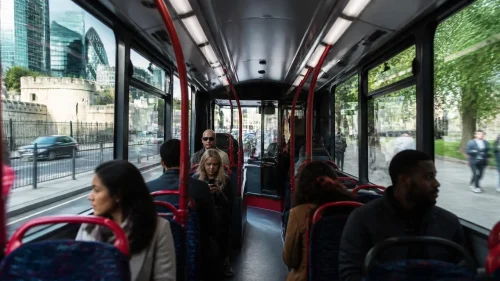
A passenger travelling from Waterloo to Dalston Junction would board at Waterloo Station/Tenison Way and remain on the bus as it travelled through the South Bank, Aldwych, Holborn, Clerkenwell, Old Street, Shoreditch, Hoxton and Haggerston.
The passenger would leave at Dalston Junction Station, bus stop C, where London Overground connections are available.
This journey avoids the need to change buses, although another transport option may sometimes be faster. The best choice depends on current traffic, accessibility requirements, cost, luggage and the passenger’s final destination.
What Common Mistakes Should Passengers Avoid?
The most common mistake is checking the correct route number but the wrong direction. Passengers should confirm both “243” and “towards Wood Green” before boarding.
Other mistakes include:
- Treating live-arrival examples as permanent timetable times
- Using an outdated screenshot
- Confusing a station name with the exact bus-stop location
- Ignoring separate stop letters
- Assuming daytime frequency continues overnight
- Failing to check diversions before a time-sensitive journey
- Using different payment cards or devices during a Hopper journey
What Are the Key Facts About the 243 Bus Route?
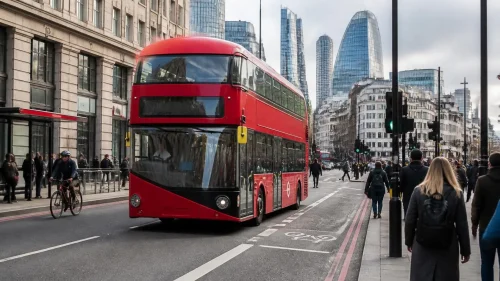
Route 243 provides a direct, 24-hour bus connection from Waterloo Station/Tenison Way to Wood Green Station.
It serves important central, east and north London destinations, including Holborn, Old Street, Shoreditch, Hoxton, Dalston, Stoke Newington, Stamford Hill, Seven Sisters, Tottenham and Bruce Grove.
The route offers access to several Tube, Overground and National Rail connections. However, journey times and waiting times can vary, so passengers should use current arrival and status information before travelling.
Conclusion
In conclusion, the 243 bus route offers a reliable and practical connection between Waterloo Station and Wood Green, serving key areas including Holborn, Old Street, Shoreditch, Dalston, Seven Sisters and Tottenham.
With 24-hour operation, major rail and Underground connections, and a journey covering around 9.2 miles, it supports commuters, residents and visitors throughout the day and night.
Passengers should check live arrivals, service updates and possible diversions before travelling, as traffic and road conditions can affect the timetable and total journey time, making advance journey planning important during peak periods.
FAQs
Does the 243 bus go from Waterloo to Wood Green?
Yes. Towards Wood Green, route 243 starts at Waterloo Station/Tenison Way and finishes at Wood Green Station.
Is the 243 bus a 24-hour service?
The supplied information for Waterloo Station/Tenison Way identifies it as a 24-hour service. Overnight frequencies may be lower than daytime frequencies.
Does the 243 bus stop at Holborn Station?
Yes. Holborn Station is one of the early stops after the bus leaves Waterloo and passes through Aldwych.
Does route 243 serve Old Street?
Yes. It stops at Old Street Station before continuing through Shoreditch and Hoxton.
Does the 243 bus go to Dalston Junction?
Yes. It serves Dalston Junction Station and provides access to London Overground services.
Can passengers use an Oyster card on the 243 bus?
Yes. Oyster and contactless payment can be used, subject to the normal London bus fare rules and any applicable concessions.
Is the 243 bus wheelchair accessible?
London bus routes use low-floor vehicles with ramps and a dedicated wheelchair space. Temporary conditions at an individual stop can still affect boarding.
Are the displayed live times the full timetable?
No. The supplied times are examples of live estimates at particular moments. They are not a permanent or complete timetable.
Why are there two Bruce Grove Station stops?
They are separate stops with different stop letters. Passengers should check the stop letter and direction when boarding or leaving the bus.
Editorial Note:
This guide is intended for general journey planning. Bus stops, fares, timetables, service frequencies and route arrangements can change. Live arrival information is time-sensitive and should not be interpreted as a guaranteed departure time.
The article includes the complete Waterloo-to-Wood Green stop list supplied for publication. It does not invent a reverse-direction stop sequence or a fixed clock-face timetable where that information was not provided.
How We Checked?
The route endpoints, stop order and major interchange information were compared with the official route listing. Fare details were checked against the current bus-and-tram fare table, while accessibility statements were checked against official low-floor vehicle, ramp and wheelchair-space guidance.
The live-arrival times were reproduced from the information supplied for this article and labelled as examples because those estimates change continuously.