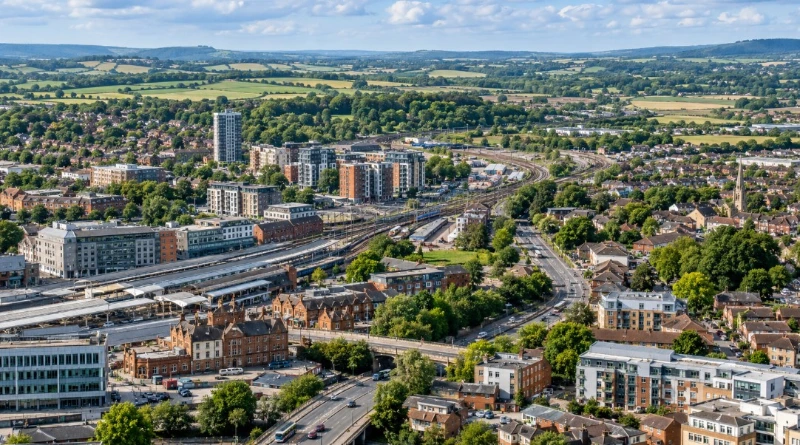
Swindon is in the ceremonial and historic county of Wiltshire, in South West England. However, the Borough of Swindon is governed independently by Swindon Borough Council rather than Wiltshire Council because it has been a unitary authority since 1997.
This distinction explains much of the confusion around what county is Swindon in. Geographically and historically, Swindon belongs to Wiltshire. For modern local government, however, Swindon has its own authority responsible for most council services.
The town occupies an important position in north-east Wiltshire, close to Oxfordshire and Gloucestershire and within reach of Berkshire. Its location on the M4 and Great Western Main Line has also helped Swindon develop into one of the area’s major population, employment and transport centres.
What Are The Main Facts About Swindon?
Swindon refers both to the large town itself and, in a wider administrative context, to the Borough of Swindon. Keeping those definitions separate is important when comparing population figures, council responsibilities and boundaries.
| Detail | Swindon Information |
| Settlement Type | Town |
| Demonym | Swindonian |
| Ceremonial County | Wiltshire |
| Historic County | Wiltshire |
| Local Authority Area | Borough of Swindon |
| Council | Swindon Borough Council |
| Authority Type | Unitary authority |
| Region | South West England |
| Country | England |
| Sovereign State | United Kingdom |
| 2021 Borough Population | Around 233,400 |
| 2021 Built-Up Area Population | 183,638 |
| Borough Area | Around 230 km² or 89 square miles |
| OS Grid Reference | SU152842 |
| Coordinates | Approximately 51.56°N, 1.78°W |
| Post Town | SWINDON |
| Main Postcode Districts | SN1 to SN6, SN25 and SN26 |
| Dialling Code | 01793 |
| Police | Wiltshire Police |
| Fire And Rescue | Dorset and Wiltshire Fire and Rescue Service |
| Ambulance | South Western Ambulance Service |
| Main Railway Station | Swindon |
| Main Motorway | M4 |
| Parliamentary Constituencies Covering The Borough | Swindon North, Swindon South and part of East Wiltshire |
The borough covers approximately 230 square kilometres and had around 233,400 residents according to 2021 figures. It represents only a relatively small proportion of Wiltshire’s land area while containing a substantial proportion of the ceremonial county’s population.
Where Exactly Is Swindon Located In The UK?
Swindon is clearly part of South West England but is considerably closer to counties normally associated with southern and south-eastern England than many other major South West settlements.
The town lies approximately:
- 26 miles south-west of Oxford
- 35 miles east-north-east of Bristol
- About 35 miles west of Reading
- 60 miles east of Cardiff
- Around 71 miles west of London geographically
Road distances can be longer. For example, London is often quoted at roughly 84 miles away when following the main road corridor rather than measuring a direct geographic distance.
Swindon also sits between important landscapes. The Cotswolds lie to the north, while the North Wessex Downs extend across countryside to the south and south-east.
The borough’s northern landscape approaches the upper Thames area, while the M4 crosses its southern part. This combination places Swindon at the meeting point of several geographic and economic areas rather than deep inside one isolated part of Wiltshire.
Is Swindon In Wiltshire Or Its Own County?
Swindon is in Wiltshire. It is not a separate county. The confusion arises because the Borough of Swindon is a unitary authority, which means its council performs most local government functions independently.
Therefore, two statements can both be true:
- Swindon is in the ceremonial county of Wiltshire
- Swindon is not governed by Wiltshire Council
Swindon Borough Council is responsible for local authority services within its own boundary. Wiltshire Council serves most of the remainder of the county.
| Geographic Or Administrative Term | Does It Apply To Swindon? |
| Historic Wiltshire | Yes |
| Ceremonial Wiltshire | Yes |
| Wiltshire Council Area | No |
| Borough Of Swindon | Yes |
| South West England | Yes |
| Separate English County | No |
This is one of the most important distinctions to understand when answering the county question.
What Do Ceremonial, Historic, Administrative And Postal County Mean For Swindon?
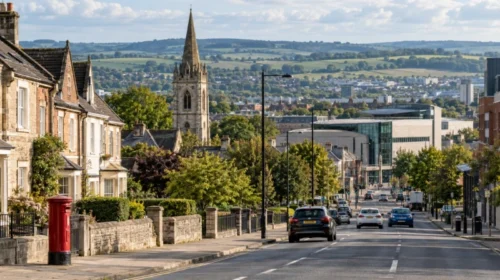
The word county can describe several different systems in England. Swindon’s position becomes much easier to understand when each one is considered separately.
What Is Swindon’s Ceremonial County?
Swindon’s ceremonial county is Wiltshire. Ceremonial counties are geographical areas used for purposes such as lieutenancy and other traditional county functions. Local council boundaries do not necessarily match ceremonial county boundaries.
That is why the Borough of Swindon can have its own local authority while remaining within ceremonial Wiltshire.
What Is Swindon’s Historic County?
Swindon is also historically part of Wiltshire. The town’s Wiltshire identity predates the present system of councils and unitary authorities by centuries. The Domesday Book recorded Swindon within Wiltshire, long before today’s local government boundaries existed.
What Is Swindon’s Administrative Area?
For local government, Swindon is within the Borough of Swindon, a unitary authority. This means Swindon Borough Council combines functions that can be divided between county and district councils elsewhere in England. The borough is therefore administratively separate from Wiltshire Council.
What Is Swindon’s Postal County?
The post town is SWINDON, and widely used postcode districts include SN1 to SN6, SN25 and SN26.
Wiltshire may still appear naturally within addresses or geographic descriptions. However, modern postal addressing does not depend on a traditional county name in the way it once did.
This creates another reason somebody can see “Wiltshire” on one description of Swindon and “Borough of Swindon” on another without either necessarily being incorrect.
Why Is Swindon Governed Separately From Wiltshire Council?
Swindon has its own unitary council because of changes to England’s local government structure during the 1990s. A unitary authority provides a broad range of local services within one council rather than splitting responsibility across different tiers.
For Swindon residents and businesses, this means most everyday local government matters are handled through Swindon Borough Council. Wiltshire Council performs comparable functions elsewhere across most of Wiltshire but does not act as Swindon’s local authority.
This should not be interpreted as Swindon having left Wiltshire geographically. The change concerned administration, not Swindon’s historic or ceremonial county identity.
How Did Swindon’s County And Local Government Status Change?
Swindon’s modern administrative structure developed through several important stages.
| Year | Development | Why It Matters |
| Before 1974 | Swindon and neighbouring areas had earlier local government arrangements | Modern borough boundaries had not yet been created |
| 1974 | Borough of Thamesdown created | Swindon was combined administratively with a wider surrounding area |
| 1997 | Borough renamed Swindon | The Thamesdown name was replaced |
| 1 April 1997 | Swindon became a unitary authority | The borough took responsibility for services previously divided across local government |
| 2009 | Wiltshire Council created for most of the remaining county | Four former districts and the previous county-level structure were reorganised |
| Today | Swindon and Wiltshire operate separate unitary authorities | Both remain associated with the wider ceremonial county of Wiltshire |
The 1997 change is particularly important. The borough became a unitary authority and was no longer administered through the former county council arrangement.
When wider local government in Wiltshire changed again in 2009, Swindon retained its separate unitary status.
Which Counties Are Closest To Swindon?
Swindon’s position close to several county boundaries helps explain why its location is sometimes misunderstood.
| Nearby County | Approximate Relationship To Swindon Town Centre | Is Swindon In It? |
| Wiltshire | Swindon’s ceremonial and historic county | Yes |
| Oxfordshire | Boundary roughly 5 miles away | No |
| Gloucestershire | Boundary roughly 8 miles away | No |
| Berkshire | Boundary roughly 8 miles away | No |
These distances refer approximately to the town centre and surrounding county boundaries rather than council offices or individual settlements.
Is Swindon In Gloucestershire?
No. Swindon is not in Gloucestershire.
Gloucestershire lies immediately to the north and north-west of the Swindon area. Places such as Cirencester and the southern Cotswolds are therefore relatively close, which can make the boundary feel less obvious when travelling through the countryside.
Is Swindon In Oxfordshire?
No. Swindon is in Wiltshire, although Oxfordshire lies only a few miles to the east and north-east.
The A420 provides an important route from Swindon towards Oxford, helping create strong connections between the two areas.
Is Swindon In Berkshire?
No. Swindon is not in Berkshire.
Berkshire lies to the east and south-east, with the Reading and West Berkshire areas forming part of Swindon’s wider economic and transport corridor.
Is Swindon In The Cotswolds?
Swindon itself is not normally considered a Cotswold town. The Cotswolds National Landscape lies close to the north of the borough. That means Swindon can serve as a practical base for reaching parts of the southern Cotswolds without geographically being part of the main Cotswold landscape.
To the south and south-east, the landscape instead transitions towards the North Wessex Downs.
Who Runs Swindon And Which Public Services Cover It?
Swindon Borough Council provides the main council services within the Borough of Swindon.
| Service | Borough Of Swindon | Most Of The Rest Of Wiltshire |
| Council Tax Administration | Swindon Borough Council | Wiltshire Council |
| Planning | Swindon Borough Council | Wiltshire Council |
| Waste And Recycling | Swindon Borough Council | Wiltshire Council |
| Adult Social Care | Swindon Borough Council | Wiltshire Council |
| Children’s Services | Swindon Borough Council | Wiltshire Council |
| Education Responsibilities | Swindon Borough Council | Wiltshire Council |
| Local Highways | Swindon Borough Council | Wiltshire Council |
Other services work across wider geographical areas.
Swindon is covered by Wiltshire Police, while fire and rescue services are provided across Dorset and Wiltshire. Ambulance provision is part of the wider South Western service area.
This explains why residents may encounter the Wiltshire name frequently even though their local council is Swindon Borough Council.
Which Parliamentary Constituencies Cover Swindon?
Parliamentary boundaries provide another example of why administrative geography can become confusing.
As of October 2026, residents of the Borough of Swindon are represented across three parliamentary constituencies. Two sit entirely inside the borough, while East Wiltshire includes part of the borough.
| Constituency | Current MP | Relationship To Swindon Borough |
| Swindon North | Will Stone | Wholly within the borough |
| Swindon South | Heidi Alexander | Wholly within the borough |
| East Wiltshire | Danny Kruger | Includes part of the borough |
East Wiltshire includes areas on the southern side of the borough, including Wroughton and Wichelstowe and Ridgeway, with part of Chiseldon and Lawn also falling within the constituency boundary.
Parliamentary constituencies should therefore not be used as a substitute for county or council boundaries. They exist for elections to the House of Commons and may cross local-authority boundaries.
Why Do Different Sources Give Different Population Figures For Swindon?
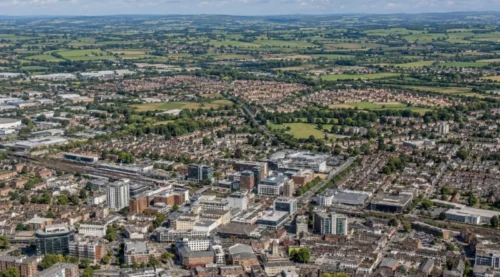
Different Swindon population numbers often refer to different geographical areas.
This is why a figure for “Swindon” can vary significantly without necessarily being wrong.
Swindon Built-Up Area
The built-up area is intended to measure the continuous urban settlement. At the 2021 Census, the Swindon built-up area had a population of 183,638. That definition did not include every part of the wider borough.
Borough Of Swindon
The Borough of Swindon is substantially larger geographically.
It includes the main urban area as well as surrounding communities, villages and rural land.
Its 2021 population was around 233,400.
| Population Measure | Approximate 2021 Population | What It Measures |
| Swindon Built-Up Area | 183,638 | Continuous urban settlement |
| Borough Of Swindon | 233,400 | Entire unitary authority |
Figures such as 224,942 sometimes appear in summaries of Swindon, but they should not simply be labelled as the 2021 built-up-area population.
For business, housing, infrastructure or demographic comparisons, it is therefore essential to check whether a statistic refers to the town, built-up area or borough.
Is Swindon A City Or A Town?
Swindon is officially a town, not a city.
Its size can make this surprising because Swindon is larger than several places in the UK that hold city status. However, population alone does not determine whether a settlement is officially a city.
City status in the United Kingdom is separately granted. There is no automatic population threshold that turns a large town into a city.
Swindon’s importance should therefore not be underestimated because of the terminology. It functions as one of the largest economic and population centres in its part of southern England while retaining town status.
Is Swindon The County Town Of Wiltshire?
No. Swindon is not the county town of Wiltshire.
Trowbridge is Wiltshire’s county town, even though Swindon has a substantially larger population.
This highlights another important feature of English geography. The largest settlement in a county does not automatically become the county town.
Trowbridge developed as Wiltshire’s administrative centre, while Swindon followed a different path based heavily on railway development, industry and later commercial growth.
Swindon can therefore be the largest major settlement associated with ceremonial Wiltshire without being its county town.
Is Swindon In South West Or South East England?
Swindon is officially part of South West England. The confusion is understandable because Swindon sits near the region’s north-eastern edge and has strong connections with areas further east.
Oxfordshire and Berkshire are close, London is directly connected by road and rail, and the M4 corridor ties Swindon economically to Reading and the Thames Valley as well as Bristol.
Its official regional position nevertheless remains clear.
Swindon is in South West England.
The town’s position near several regional influences is better understood as a strategic advantage rather than evidence that it belongs to South East England.
Why Is Swindon Important To Wiltshire?
Swindon has a distinctive role within ceremonial Wiltshire because of its population, economy and transport infrastructure.
Population And Urban Scale
With more than 230,000 people across the borough, Swindon contains a significant share of the wider county area’s residents. Its urban scale differs considerably from Wiltshire’s many smaller market towns, villages and rural communities.
Economic Importance
Swindon’s economy evolved well beyond its railway origins.
The town and borough have attracted major manufacturing, engineering, finance, technology and professional organisations. Businesses and institutions associated with Swindon have included BMW/MINI, Nationwide Building Society, Zurich, Intel and other major national and international employers.
Swindon is also home to the headquarters of the National Trust and the UK Space Agency, adding to its role as an administrative and professional employment centre.
Honda’s Swindon manufacturing plant operated from 1985 until 2021. The closure ended a major chapter of the town’s automotive history, and the former site subsequently moved towards redevelopment for logistics and other commercial activity.
Transport Importance
Swindon’s position on both the M4 and Great Western Main Line makes it one of Wiltshire’s strongest connections to London, Bristol and South Wales.
This connectivity has supported inward investment, commuting, logistics and employment growth. People exploring the wider county can also find a broad range of historic and outdoor locations among the things to do in Wiltshire.
What Is Swindon Best Known For?
Swindon is best known for its remarkable railway heritage, industrial development and strategic position between London and Bristol.
What began as a relatively small Wiltshire market town changed dramatically after the Great Western Railway established its engineering works in Swindon during the 19th century.
That railway legacy remains visible across the town today, particularly around the former railway works, Railway Village and STEAM Museum. However, modern Swindon is about more than its industrial past.
Historic estates, major shopping destinations and distinctive landmarks have also become important parts of the town’s identity.
Below are some of the places and features most strongly associated with Swindon.
1. Great Western Railway Heritage
Few developments have influenced Swindon as deeply as the arrival of the Great Western Railway.
Before the railway era, Swindon was a comparatively small market settlement centred around what is now Old Town. That changed after the Great Western Railway established major locomotive repair and engineering facilities in Swindon during the early 1840s.
The expanding works created thousands of jobs and encouraged rapid population growth. New housing, streets and community facilities were developed for railway workers and their families, gradually creating the larger industrial town recognised today.
The Railway Village became an important part of this expansion. Facilities associated with railway workers included healthcare, education and recreation, making the area more than simply a collection of employee homes.
At its height, the railway works employed more than 14,000 people and became one of Britain’s major railway engineering centres.
Although the works gradually declined and finally closed in 1986, their influence remains visible throughout central Swindon.
2. STEAM Museum And Railway Village
The STEAM Museum of the Great Western Railway is one of the clearest reminders of Swindon’s industrial past.
Located within part of the former railway works, the museum explores the relationship between the Great Western Railway, railway engineering and the thousands of people who worked in Swindon.
Its collections include historic locomotives, railway equipment, engineering displays and material explaining everyday life inside one of Britain’s most significant railway centres.
Nearby, the historic Railway Village provides another perspective on this period. The purpose-built neighbourhood was developed to accommodate railway workers and included houses alongside important community facilities.
Together, the museum, surviving industrial buildings and Railway Village help visitors understand why the railway occupies such an important place in Swindon’s identity.
Rather than existing only as museum exhibits, many surviving railway buildings have been incorporated into modern Swindon, allowing its industrial heritage to remain visible within the working town.
3. Swindon Designer Outlet
Swindon Designer Outlet is notable not only as a shopping destination but also for the buildings it occupies.
The outlet is located within part of the former Great Western Railway works, where historic industrial buildings have been converted for modern commercial use.
Opened in the late 1990s, the development brought new activity into an area that had once been dominated by railway engineering. It now contains a large collection of shops, restaurants and other facilities while retaining important elements of the former works.
This combination of retail and historic architecture gives the outlet a character that differs from a conventional modern shopping centre.
Its location next to the STEAM Museum also creates a direct connection between Swindon’s industrial past and its modern commercial economy.
For people interested in exploring more local attractions beyond the railway quarter, there are several other places to visit in Swindon across the town and surrounding countryside.
4. Lydiard Park
Lydiard Park offers a very different side of Swindon from its railway and industrial heritage.
Located on the western side of the town, the historic estate contains Lydiard House, landscaped parkland, gardens and extensive outdoor space.
The estate has strong historical associations with the St John family, whose connection with Lydiard stretches back for centuries. The house and surrounding landscape provide insight into the area’s country estate history before Swindon’s large-scale urban expansion.
Today, the park is used for walking, recreation, family visits and community activities. Its large open spaces also provide an important green setting close to the built-up area.
Lydiard Park demonstrates that Swindon’s identity is not entirely industrial. The town also contains important historic landscapes and green spaces that provide a link with the surrounding Wiltshire countryside.
5. The Magic Roundabout
The Magic Roundabout is one of Swindon’s most unusual and nationally recognised landmarks. Located close to the County Ground, the road junction consists of five smaller roundabouts arranged around a larger central traffic area.
Drivers travel around the individual mini-roundabouts while the central circulation operates differently from a conventional large roundabout. The arrangement can initially appear complicated to motorists who have never used it before.
The junction was originally officially known as County Islands before the popular nickname became established.
Its unusual design has attracted attention far beyond Swindon and has become one of the town’s most recognisable modern features.
Although fundamentally a piece of transport infrastructure rather than a tourist attraction, its distinctive layout has helped make it part of Swindon’s public identity alongside the railway works, STEAM Museum and other better-known landmarks.
What About Nearby Towns And Villages?
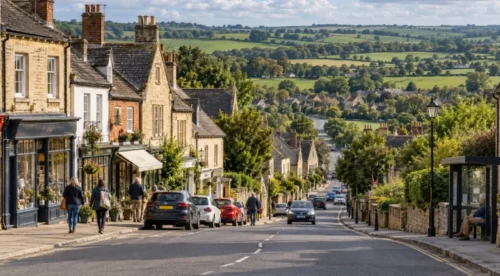
Swindon is surrounded by a mixture of Wiltshire market towns, traditional villages and growing residential communities. Some nearby settlements fall within the Borough of Swindon itself, while others are governed by Wiltshire Council.
Gloucestershire and Oxfordshire are also close, meaning the character of the surrounding area can change quickly when travelling north or east from the town.
Nearby towns and villages are particularly important for commuting and local employment. Many residents travel between these settlements and Swindon for work, education, shopping and public services.
1. Royal Wootton Bassett – Around 6 Miles West
Royal Wootton Bassett is a historic Wiltshire market town located around six miles west of central Swindon. Its position makes it one of Swindon’s closest neighbouring towns and creates strong residential, employment and transport links between the two communities.
Royal Wootton Bassett retains a traditional town centre containing independent businesses, local services and historic buildings while remaining close to the larger commercial facilities available in Swindon.
Its proximity to Junction 16 of the M4 also provides convenient access to the wider motorway network.
Although closely connected with Swindon, Royal Wootton Bassett is not part of the Borough of Swindon. It falls within the Wiltshire Council administrative area, making it a useful example of how council boundaries change just a short distance from the town.
2. Highworth – Around 6 Miles Northeast
Highworth is a historic market town situated approximately six miles north-east of central Swindon. Unlike Royal Wootton Bassett, Highworth is within the Borough of Swindon, despite being a separate settlement from Swindon town itself.
This distinction is important when understanding Swindon’s population and council boundaries. The Borough of Swindon extends well beyond the continuous Swindon urban area and contains other communities, including Highworth.
Highworth has a traditional market-town character, with historic streets, independent businesses and local community facilities. Its position also places it relatively close to the Oxfordshire boundary and the upper Thames area.
Residents have convenient access to Swindon’s larger employment, retail and transport networks while retaining the character of a smaller town.
3. Wroughton – Around 2 To 3 Miles South
Wroughton lies immediately south of Swindon and is one of the closest large villages to the main urban area. Like Highworth, Wroughton forms part of the wider Borough of Swindon rather than the Wiltshire Council administrative area.
The village has expanded considerably over time but retains its own centre and community identity. Its proximity to Swindon makes it particularly attractive for residents who want straightforward access to the town while living closer to open countryside.
Wroughton’s southern position also places it near the landscapes of the North Wessex Downs.
Road and bus connections provide access into central Swindon and neighbouring communities, while new development around southern Swindon has increasingly reduced the physical separation between some built-up areas.
Wroughton therefore provides another useful example of the difference between Swindon town and the larger Borough of Swindon.
4. Cricklade – Around 8 Miles Northwest
Cricklade is a small historic town approximately eight miles north-west of Swindon.
It occupies an important position near the River Thames and close to the Gloucestershire border. Its location helps illustrate how close Swindon is to other counties despite remaining firmly associated with Wiltshire.
Cricklade has a traditional High Street, historic buildings and a much smaller population than Swindon.
The surrounding countryside provides a clear contrast with Swindon’s urban and industrial landscape.
Road and bus links make travel between Cricklade and Swindon relatively straightforward, allowing residents to access employment, shopping and rail services in the larger town.
Cricklade also sits close to routes leading towards Cirencester and the Cotswolds, making it part of the broader transition between north Wiltshire and Gloucestershire.
5. Marlborough – Around 12 Miles Southeast
Marlborough is one of Wiltshire’s best-known historic market towns and lies around 12 miles south-east of Swindon. The town is particularly recognised for its broad High Street, historic buildings and relationship with the surrounding Marlborough Downs.
Its character differs significantly from Swindon. While Swindon’s growth was heavily influenced by railway engineering and later industry, Marlborough retains the appearance and scale of a traditional English market town.
The A346 provides an important road connection between the two locations. Marlborough also serves surrounding rural communities and has a strong education, retail and tourism presence.
Its location south-east of Swindon means residents can reach the larger town relatively easily while remaining close to the North Wessex Downs and rural Wiltshire.
Other nearby settlements include Purton, Blunsdon, Wanborough, Chiseldon, Liddington, South Marston, Lydiard Millicent and Broad Hinton. Together, these communities demonstrate how Swindon’s large urban area sits within a much wider network of Wiltshire villages and smaller towns.
What About Nearby Cities?
Swindon’s position on the M4 corridor and Great Western Main Line places several important British cities within relatively easy reach.
Unlike some towns that depend heavily on a single neighbouring city, Swindon has strong links in several directions. London and Oxford lie to the east and north-east, while Bristol and Bath lie to the west. Cardiff is accessible further along the M4 corridor in South Wales.
These connections contribute significantly to Swindon’s appeal for businesses, commuters and residents.
1. Oxford – Around 26 Miles Northeast
Oxford lies approximately 26 miles north-east of Swindon and is one of the closest major cities.
Best known internationally for the University of Oxford, the city is also an important centre for research, science, healthcare, technology and professional employment.
The A420 provides the principal road connection between Swindon and Oxford, creating regular movement between the two areas for work, education and leisure.
Oxfordshire’s proximity is also one reason people can become confused about Swindon’s county. The Oxfordshire boundary lies only a few miles from Swindon, but the town remains in ceremonial Wiltshire.
The two areas have different economic identities. Oxford is dominated heavily by higher education, research and knowledge-based industries, while Swindon’s development has historically been more closely associated with engineering, manufacturing, logistics and large corporate employers.
2. Bristol – Around 35 Miles West
Bristol is one of the most important cities within South West England and lies roughly 35 miles west of Swindon geographically.
The two places are connected by both the M4 and the Great Western Main Line, allowing relatively convenient movement for business, employment and leisure.
Bristol has a much larger urban economy covering sectors such as financial services, technology, aerospace, media, higher education and the creative industries.
Swindon’s position east of Bristol gives businesses and residents access to this wider economy without being part of the Bristol urban area.
The relationship also demonstrates why Swindon’s position on the M4 is so important. Travelling west provides access to Bristol and South Wales, while travelling east leads towards Reading and London.
Direct rail connections further strengthen this relationship.
3. Bath – Around 30 To 35 Miles West
Bath lies west of Swindon and is one of the most internationally recognised cities in the South West.
Known for its Roman Baths, Georgian architecture and UNESCO World Heritage status, Bath has a very different character from Swindon’s railway and industrial landscape.
The two are connected through the wider Great Western rail network and road routes across north Wiltshire.
Bath is also a significant tourism, education and professional-services centre, attracting visitors and workers from across the region.
Its own administrative geography can cause similar confusion to Swindon’s. Anyone comparing the two locations can also see what county Bath is in.
Together, Bath, Bristol and Swindon form part of a wider network of economically important settlements across the northern side of South West England.
4. Cardiff – Around 60 Miles West
Cardiff lies approximately 60 miles west of Swindon and provides an important connection between the town and South Wales.
The two locations are linked by the M4 motorway and direct rail services, making Cardiff relatively accessible despite lying in another country within the United Kingdom.
As the capital of Wales, Cardiff is a major centre for government, employment, higher education, retail, entertainment and professional sport.
Swindon’s westward rail connections towards Cardiff also highlight its strategic position on routes linking London with South Wales.
For businesses, the M4 creates an important east-west economic corridor extending through London, Reading, Swindon, Bristol, Newport and Cardiff.
The connection also provides Swindon residents with access to major events, shopping, universities and employment opportunities across South Wales.
5. London – Around 71 Miles East Geographically
London lies around 71 miles east of Swindon when measured geographically, although road journeys are longer.
Despite the distance, London has a particularly strong influence on Swindon’s economy and transport patterns.
Direct Great Western Railway services connect Swindon with London Paddington, making the capital accessible for business meetings, employment, leisure and onward national or international travel.
The M4 provides the main road route east towards London and also links Swindon with Reading and the wider Thames Valley.
Swindon’s position considerably closer to London than many other major South West settlements has helped strengthen its appeal to employers requiring access to both the capital and western England.
Reading, although officially a town rather than a city, is another important centre along this corridor and provides additional employment, technology and commercial connections east of Swindon.
How Well Connected Is Swindon?
Transport has played a central role in Swindon’s development for nearly two centuries.
The town grew dramatically because of the railway, but modern Swindon also benefits from its motorway location, regional bus network and connections to major cities across southern Britain.
Its position between London, Bristol and South Wales makes transport particularly important for employment, commuting, logistics and business investment.
1. Road Network
Swindon benefits from direct access to the M4 motorway, one of southern Britain’s most important east-west transport corridors.
Junction 15 serves the eastern and southern side of Swindon, while Junction 16 provides access to western Swindon and routes towards Royal Wootton Bassett.
Travelling east on the M4 provides access towards Newbury, Reading, Heathrow and London. Westbound routes lead towards Chippenham, Bristol, Newport and Cardiff.
The A419 provides another important connection, running north from Swindon towards Cirencester and the A417. This creates onward access towards Gloucester and the M5 corridor.
The A420 runs east towards Oxford, providing an important connection between Swindon and Oxfordshire.
Together, these routes place Swindon at the intersection of several major regional travel corridors and contribute significantly to its importance for logistics and commercial activity.
2. Rail Connections
Rail remains one of Swindon’s greatest transport advantages.
Swindon railway station is located on the Great Western Main Line, providing direct connections towards London and destinations across western Britain.
Direct services include major destinations such as:
- London Paddington
- Reading
- Bristol Temple Meads
- Bath Spa
- Cardiff Central
- Cheltenham Spa
Services also provide access towards Gloucester, South Wales and other destinations through the wider Great Western Railway network.
The station’s central location makes rail practical for both commuters and business travellers.
Swindon’s modern rail connectivity is closely connected with its history. The town expanded because the Great Western Railway established its engineering works here during the 19th century, and rail continues to influence Swindon’s economy more than 180 years later.
This combination of historical importance and present-day connectivity distinguishes Swindon from many other inland towns of a similar size.
3. Buses And Coaches
Buses provide an important part of Swindon’s local transport network, particularly for communities without railway stations.
Services are operated by companies including Swindon’s Bus Company and Stagecoach West, connecting the town centre with residential neighbourhoods and surrounding communities.
Routes extend towards locations including:
- Highworth
- Wroughton
- Royal Wootton Bassett
- Purton
- Cricklade
- Chippenham
- Cirencester
- Other surrounding villages
Fleming Way in central Swindon acts as an important hub for local and regional bus services.
The network is particularly significant because much of the Borough of Swindon extends beyond the main urban centre. Smaller settlements depend on bus connections for access to Swindon’s railway station, shops, education, healthcare and employment.
Regional services also allow travel beyond the borough into the wider Wiltshire and Gloucestershire areas.
4. Cycling And Walking
Cycling and walking form another part of Swindon’s transport network, particularly for shorter journeys between residential areas, employment sites and the town centre.
National Cycle Network Route 45 passes through Swindon and provides connections beyond the town.
Local shared-use paths and cycle routes also connect a number of residential neighbourhoods with parks, workplaces and shopping areas.
Green spaces such as Coate Water, Lydiard Park and other local parks provide additional recreational walking and cycling opportunities.
Swindon’s mixture of older urban neighbourhoods and large post-war residential developments means the quality of walking and cycling connections varies across the town.
However, active travel remains important for reducing dependence on short car journeys and improving connections between residential communities and key local facilities.
5. Nearest Airports
Swindon does not have a major commercial passenger airport of its own, but several airports can be reached from the town.
London Heathrow Airport is particularly important because of Swindon’s position on the M4 corridor. Road travel east along the motorway provides access towards Heathrow, while rail passengers can travel towards London and connect with airport services.
Bristol Airport provides another major option, particularly for residents travelling to destinations across the UK and Europe.
Other airports may also be practical depending on the destination, ticket price and transport arrangements.
The absence of an airport within Swindon itself is therefore less restrictive than it might initially appear. The town’s motorway and railway connections provide access to larger aviation hubs in both eastern and western directions.
Overall, Swindon’s combination of M4 motorway access, Great Western Main Line services, regional bus routes and proximity to major cities makes transport one of the strongest elements of its geographic position.
Why Is Swindon’s County So Often Confused?
Several overlapping systems create uncertainty about Swindon’s location.
- First, Swindon is geographically in Wiltshire but has its own council.
- Second, “Wiltshire” can describe a ceremonial county while “Wiltshire Council” describes a separate administrative area.
- Third, the town lies unusually close to Gloucestershire, Oxfordshire and Berkshire.
- Fourth, the borough’s parliamentary boundaries do not exactly match its council boundary because part of the borough sits within East Wiltshire.
- Fifth, postal addresses may use Swindon and Wiltshire differently depending on the address format.
- Sixth, Swindon sits near the overlap of different broadcasting areas. Television coverage can come from both western and southern or Thames Valley-facing services, reinforcing the sense that the town sits between regions.
None of these factors changes the basic answer. Swindon is in the ceremonial and historic county of Wiltshire, but the Borough of Swindon is governed by its own unitary council.
Conclusion
So, what county is Swindon in? Swindon is in Wiltshire. More precisely, it lies within the historic and ceremonial county of Wiltshire and the official South West England region.
The Borough of Swindon has nevertheless operated as a separate unitary authority since 1997, so local services are provided by Swindon Borough Council rather than Wiltshire Council.
Swindon’s position close to several county boundaries, its large population, separate council, parliamentary boundaries and strong connections with London, Oxford and Bristol can make its geography appear complicated.
Once ceremonial county and administrative authority are separated, however, the answer is straightforward: Swindon is a Wiltshire town governed by its own unitary council.
FAQs
Is Swindon Officially In Wiltshire?
Yes. Swindon is officially within the ceremonial and historic county of Wiltshire, although the borough is governed separately from Wiltshire Council.
Is Swindon A County?
No. Swindon is a town and the centre of the Borough of Swindon unitary authority. It is not a separate English county.
Is Swindon In Gloucestershire?
No. Swindon is in Wiltshire. Gloucestershire lies close to the north and north-west.
Is Swindon In Oxfordshire?
No. Oxfordshire begins only a few miles from Swindon, but the town itself remains in Wiltshire.
Is Swindon In The Cotswolds?
Swindon itself is not normally classed as a Cotswold town, although the Cotswolds National Landscape lies close to the north.
Does Wiltshire Council Run Swindon?
No. Swindon Borough Council provides the main council services within the borough. Wiltshire Council covers most of the remainder of Wiltshire.
Is Swindon A City?
No. Swindon is officially a town. Its large population does not automatically give it city status.
What Is The Population Of Swindon?
The Borough of Swindon had around 233,400 residents in 2021. The separately defined Swindon built-up area recorded 183,638 people.
Is Swindon The County Town Of Wiltshire?
No. Trowbridge is the county town of Wiltshire. Swindon is larger but has a separate role as the centre of its own unitary authority.
Is Swindon In South West England?
Yes. Swindon forms part of the South West England region despite being close to Oxfordshire, Berkshire and areas more commonly associated with southern and south-eastern England.
Related Articles: